
Purple Ribbon Meaning: What the Purple Ribbon Stands For

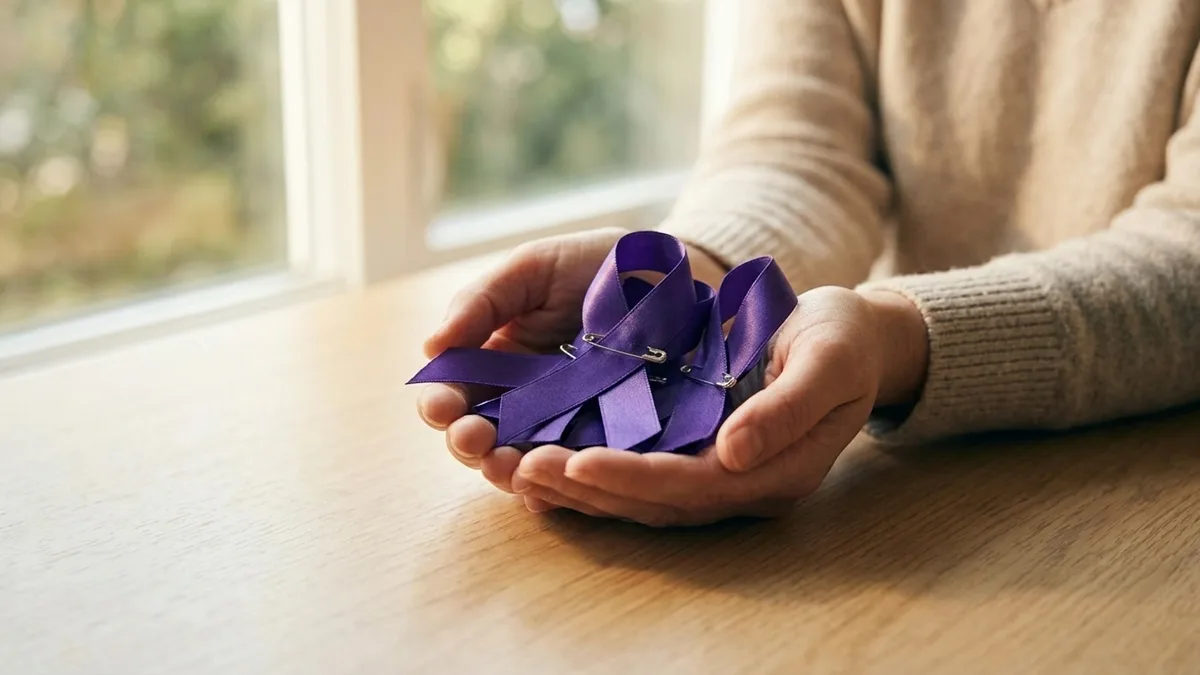
A purple ribbon symbolizes awareness, strength, and remembrance, but the precise cause depends on context. The purple ribbon meaning most people are searching for spans domestic violence awareness, Alzheimer's disease, pancreatic cancer, epilepsy, and lupus, and the same ribbon also stands for Crohn's disease and ulcerative colitis, among others.
Because so many causes share the same color, a purple ribbon's meaning usually comes from when and where you see it. A purple ribbon worn in October most often supports domestic violence survivors; the same ribbon in November typically means pancreatic cancer awareness, and on March 26 it marks epilepsy's Purple Day. This guide walks through every major meaning, the awareness month tied to each, and how to use the symbol for your own campaign: see our complete guide to awareness ribbon colors and months for the full chart.
Purple Awareness Wristbands
View all →

What Does a Purple Ribbon Mean?
A purple ribbon means awareness, strength, and remembrance: most commonly for domestic violence survivors, Alzheimer's disease, pancreatic cancer, epilepsy, or lupus. It is one of the most "shared" awareness colors, so the cause behind any given ribbon is usually clear from the time of year and the event where it appears.
Here is the quick-reference version, by cause:
| Cause | Awareness period | What the purple ribbon signals |
|---|---|---|
| Domestic violence | October (Purple Thursday, third Thursday of October) | Honor and support for victims and survivors |
| Alzheimer's disease | Year-round; Alzheimer's & Brain Awareness Month in June | Support for those living with Alzheimer's and their caregivers |
| Pancreatic cancer | November | "Wage Hope": research and patient support |
| Epilepsy | Purple Day, March 26 | Solidarity with people living with seizures |
| Lupus | May (World Lupus Day, May 10) | "Put on Purple" for lupus research and patients |
| Crohn's disease & ulcerative colitis | Year-round (IBD) | Awareness for inflammatory bowel disease |

Why Are People Wearing Purple Ribbons Right Now?
When purple ribbons show up everywhere at once, it almost always tracks one of the color's major awareness campaigns. Purple is tied to several well-organized national observances, so a wave of purple usually lines up with the calendar.
A few clues help you decode a specific moment:
- In October, especially the third Thursday: Domestic Violence Awareness Month and "Purple Thursday," when people wear purple to honor victims and survivors.
- In November: Pancreatic Cancer Awareness Month, when supporters "Wage Hope" in purple.
- On March 26: Purple Day for epilepsy, observed in countries around the world.
- In May, around the 10th: Lupus Awareness Month and World Lupus Day's "Put on Purple."
- At a memorial walk or vigil: often Alzheimer's, lupus, or pancreatic cancer remembrance.
If you're unsure, it's perfectly fine to ask. Starting that conversation is exactly what an awareness ribbon is designed to do.
Purple Ribbon for Domestic Violence Awareness
The purple ribbon is most widely recognized as the symbol of domestic violence awareness. October is Domestic Violence Awareness Month, and on "Purple Thursday," the third Thursday of October, supporters wear purple to honor victims and survivors. According to New York State's Office for the Prevention of Domestic Violence, communities mark the month by lighting landmarks purple (the Empire State Plaza, for example, is illuminated in purple) and inviting people to "wear purple to honor victims and survivors."
The scale of the issue is why the campaign matters. According to the CDC, more than 1 in 3 women (nearly 43.5 million) and more than 1 in 6 men (20.7 million) experienced contact sexual violence, physical violence, and/or stalking by an intimate partner during their lifetimes. Wearing a purple ribbon during October signals support for survivors and helps normalize seeking help. For more on the observance, see our guide to Domestic Violence Awareness Month. (In the U.S., anyone affected can call or text the National Domestic Violence Hotline at 1-800-799-7233.)
Purple Ribbon for Alzheimer's Disease
Purple is the color of the Alzheimer's movement. As the Alzheimer's Association puts it, "Red + Blue = Purple, The Color of the Alzheimer's Association." Supporters wear purple ribbons, shirts, and pins to show support for people living with the disease and the families who care for them.
The need behind the symbol is significant. According to the Alzheimer's Association, more than 7 million Americans age 65 and older are living with Alzheimer's, and Alzheimer's was the fifth-leading cause of death among people age 65 and older. Purple ribbons appear most visibly during Alzheimer's & Brain Awareness Month each June and at Walk to End Alzheimer's events, where they help fund research, education, and caregiver support.
Purple Ribbon for Pancreatic Cancer
The purple ribbon is the awareness symbol for pancreatic cancer. According to PanCAN (the Pancreatic Cancer Action Network), November is Pancreatic Cancer Awareness Month, when supporters "wear purple" and rally behind the "Wage Hope" campaign, shining a purple spotlight on a disease that is often diagnosed late.
The statistics underscore the urgency. The American Cancer Society estimates about 67,500 new pancreatic cancer cases and roughly 52,700 deaths in the United States each year, and notes the average lifetime risk is about 1 in 56 in men and 1 in 60 in women. Purple ribbons, wristbands, and apparel are common at November fundraisers, where every item worn helps fund research into earlier detection and better treatments.
Purple Ribbon for Epilepsy (Purple Day)
The purple ribbon represents epilepsy awareness, anchored by Purple Day. According to Purple Day, the observance is held annually on March 26, when "people in countries around the world are invited to wear purple and host events in support of epilepsy awareness."
Epilepsy is common, which is why the campaign reaches so far. According to the CDC, about 2.9 million U.S. adults (18 and older) and 456,000 U.S. children (17 and younger) have active epilepsy: roughly 3.4 million people in total. Wearing a purple ribbon on Purple Day helps challenge misconceptions about seizures and reassures people with epilepsy that they are not alone.
Purple Ribbon for Lupus
The purple ribbon stands for lupus awareness. According to the Lupus Foundation of America, May is Lupus Awareness Month and World Lupus Day falls on May 10, when supporters "Put on Purple," wearing purple to show solidarity with people who have lupus.
The patient community is large and often invisible. The Lupus Foundation of America estimates that 1.5 million Americans, and at least 5 million people worldwide, have a form of lupus. Because lupus symptoms are frequently unseen, a purple ribbon is an easy way to make support visible and start conversations during May.
Custom Purple Awareness Apparel
View all →





Purple Ribbon for Crohn's Disease & Colitis
The purple ribbon is the awareness symbol for inflammatory bowel disease (IBD), which includes Crohn's disease and ulcerative colitis. Both are chronic conditions of the digestive tract, and purple ribbons help make an often-private illness visible.
According to the CDC, up to 3.1 million U.S. adults have IBD. Awareness efforts, including Crohn's & Colitis Awareness Week each December, use the purple ribbon to fund research, support patients, and reduce the stigma around discussing digestive disease.
Other Causes the Purple Ribbon Represents
Beyond its best-known causes, the purple ribbon is also used for:
- Fibromyalgia: purple is the awareness color for this chronic pain condition, marked by a Fibromyalgia Awareness Day each spring.
- Sarcoidosis: purple ribbons are used for sarcoidosis awareness, including the condition's annual awareness month in spring.
- Hodgkin lymphoma: violet and purple ribbons are used for this blood cancer.
- Testicular cancer: often shown as orchid (a purple shade), recognized in April.
- Anti-bullying (Spirit Day): people "go purple" each October for GLAAD's Spirit Day to stand against bullying and support LGBTQ youth.
- Animal abuse awareness: purple ribbons are used to oppose cruelty to animals.
Because purple covers so many causes, always confirm the sponsoring organization or event before assuming which one a given ribbon represents.
Purple vs. Other Awareness Ribbon Colors
Not sure purple is the right color for your cause? Here's how it compares with the other most-searched ribbon colors, and see our complete guide to awareness ribbon colors and months for the full chart and calendar:
| Ribbon color | Best-known causes | Learn more |
|---|---|---|
| Purple | Domestic violence, Alzheimer's, pancreatic cancer, epilepsy, lupus | This guide |
| Pink | Breast cancer awareness | Complete guide to pink awareness ribbons |
| Orange | Leukemia, kidney cancer, MS, gun-violence awareness | What the orange ribbon stands for |
| Yellow | Military support, suicide prevention, childhood cancer | Complete guide to yellow awareness ribbons |
One color can serve many causes, so pair your ribbon with a short message, event name, or date whenever possible. It removes the guesswork for everyone who sees it. Purple rarely travels alone on campaign merchandise. Our free color palette generator builds a supporting palette around your exact shade and names the closest colors we stock.
How to Show Support With a Purple Ribbon
Ready to put the symbol to work? Here are the most effective ways to participate and raise money for a cause. Wear it visibly: a purple ribbon pin, custom wristband, or branded lanyard sparks the "what does your purple ribbon mean?" conversations that drive awareness. Outfit your team or walk group with matching custom t-shirts and tote bags to turn a fundraising walk into a sea of purple that's hard to miss. Distribute ribbons and pins at events, handing out custom pins or flashing LED lapel pins at vigils, walks, and workplace campaigns, with a card explaining the cause. And fundraise with branded merchandise: awareness organizations routinely sell custom keychains, silicone wristbands, and apparel to fund research, education, and support services.
Buying tips for purple awareness merchandise:
- Match the cause to the month. October (domestic violence), May (lupus), November (pancreatic cancer), and March 26 (epilepsy's Purple Day) are peak distribution windows, so start your order 3–4 weeks ahead.
- Print the cause on the item. Following our artwork guidelines, a purple ribbon plus three words ("Purple Thursday," "Put on Purple," "Wage Hope") doubles its clarity.
- Choose wearables for events, everyday items for offices. Pins, wristbands, and tees travel; custom tumblers, totes, and keychains keep a workplace campaign visible year-round.
- Order extras. Awareness merchandise tends to disappear fast at a well-attended event: build in a buffer, and request a free sample first to confirm the purple matches your cause.
Shop Custom Awareness Pins
View all →


Rally your community around a cause with custom purple awareness gear
Frequently Asked Questions About Purple Ribbons
What does a purple ribbon mean?
A purple ribbon is an awareness symbol representing strength, support, and remembrance. Its most common meanings are domestic violence awareness, Alzheimer's disease, pancreatic cancer, epilepsy, and lupus, and it also stands for Crohn's disease and ulcerative colitis. The exact cause usually depends on the awareness month and the context.
What kind of cancer uses a purple ribbon?
The purple ribbon is most associated with pancreatic cancer, especially during Pancreatic Cancer Awareness Month in November. Purple and violet shades are also used for Hodgkin lymphoma and, as orchid, for testicular cancer. Always check the sponsoring organization for the exact cancer a ribbon represents.
What disease awareness is purple?
Purple represents several conditions, including Alzheimer's disease, epilepsy, lupus, pancreatic cancer, Crohn's disease and ulcerative colitis (IBD), fibromyalgia, and sarcoidosis. It is also used for the social cause of domestic violence awareness. Purple is one of the most widely shared awareness colors.
Why are people wearing purple ribbons today?
Sudden, widespread purple displays usually track a current awareness campaign: domestic violence awareness in October (Purple Thursday), pancreatic cancer in November, epilepsy's Purple Day on March 26, or lupus around World Lupus Day on May 10. Landmarks lit purple typically signal one of these observances.
What color ribbon is for prostate cancer?
Prostate cancer uses a light blue ribbon, not purple. People sometimes confuse the two because some men's-health and survivor campaigns mix blue and purple, but the standard prostate cancer awareness color is light blue, recognized each September during Prostate Cancer Awareness Month.
What does a purple ribbon mean at a funeral or for death?
At a funeral or memorial, a purple ribbon usually expresses mourning, remembrance, and honor. Purple has long been associated with dignity and reflection, so it often appears at services and vigils for someone lost to a cause the color represents: such as pancreatic cancer, Alzheimer's, or domestic violence.
What is the difference between a dark purple and light purple ribbon?
There is no strict rule, but in practice darker purple ribbons are tied to causes like domestic violence, Alzheimer's, and pancreatic cancer, while lighter purple or lavender ribbons are often used for general cancer awareness, caregivers, and conditions such as epilepsy. The shade matters less than the cause printed alongside it.
What does a purple ribbon mean in February?
February isn't one of purple's major awareness months. Its peak observances fall in March (epilepsy), May (lupus), June (Alzheimer's & Brain Awareness), October (domestic violence), and November (pancreatic cancer). If you see purple ribbons in February, they most likely belong to a local campaign or an organization that uses purple year-round, so check the event for the specific cause.
What does the purple ribbon emoji mean?
There is no dedicated "purple ribbon" emoji in standard Unicode. The reminder-ribbon emoji 🎗️ renders yellow on most platforms. To signal a purple-ribbon cause online, people typically use the purple heart 💜 or pair 🎗️ with a cause hashtag like #PurpleThursday, #WageHope, or #PutOnPurple.
Conclusion
The purple awareness ribbon is one symbol with many meanings (domestic violence awareness, Alzheimer's disease, pancreatic cancer, epilepsy, lupus, and Crohn's and colitis among them), all united by a single idea: visible support for people facing something hard, and remembrance for those affected.
Wear purple on the third Thursday of October, on Purple Day in March, or hand out ribbons at a community walk, and you're joining campaigns that fund research, support survivors and caregivers, and start conversations. Understanding what the purple ribbon means lets you use it well, and explain it to the next person who asks.
Sources: NY Office for the Prevention of Domestic Violence · CDC: Intimate Partner Violence · Alzheimer's Association · Alzheimer's Disease Facts and Figures · PanCAN · American Cancer Society: Pancreatic Cancer · Purple Day · CDC: Epilepsy · Lupus Foundation of America · Lupus Facts and Statistics · CDC: Inflammatory Bowel Disease
Shop Related Categories
Related Articles

Football Quotes: Who Really Said the Famous Ones (Plus Game-Day Sayings)
Famous football quotes checked against the record, with the sources we could find, the lines nobody can trace, and original short sayings for rally towels, foam fingers, cups, shirts and signs.

Basketball Team Names: 150+ Original Ideas for Every Kind of Team
More than 150 original basketball team name ideas sorted by team type: funny, cool, youth, women's, co-ed, rec league, church and work teams, plus a checklist for choosing one your whole roster likes.

Friendsgiving Ideas: How to Plan, Host and Send Guests Home Happy (at Home or at Work)
A planner's guide to Friendsgiving for friends or coworkers: a potluck signup plan, what to assign each guest, easy games, a table-setup checklist, and take-home favors people actually keep.

Veterans Day Coloring Pages: Free Printable Sheets for Kids and Classrooms
These free Veterans Day coloring pages give kids and classrooms 12 original designs to print, from a thank-you flag and a red poppy to a word search, a fold-over card and a letter of thanks for a veteran.