
Black Ribbon Meaning: What the Black Ribbon Stands For

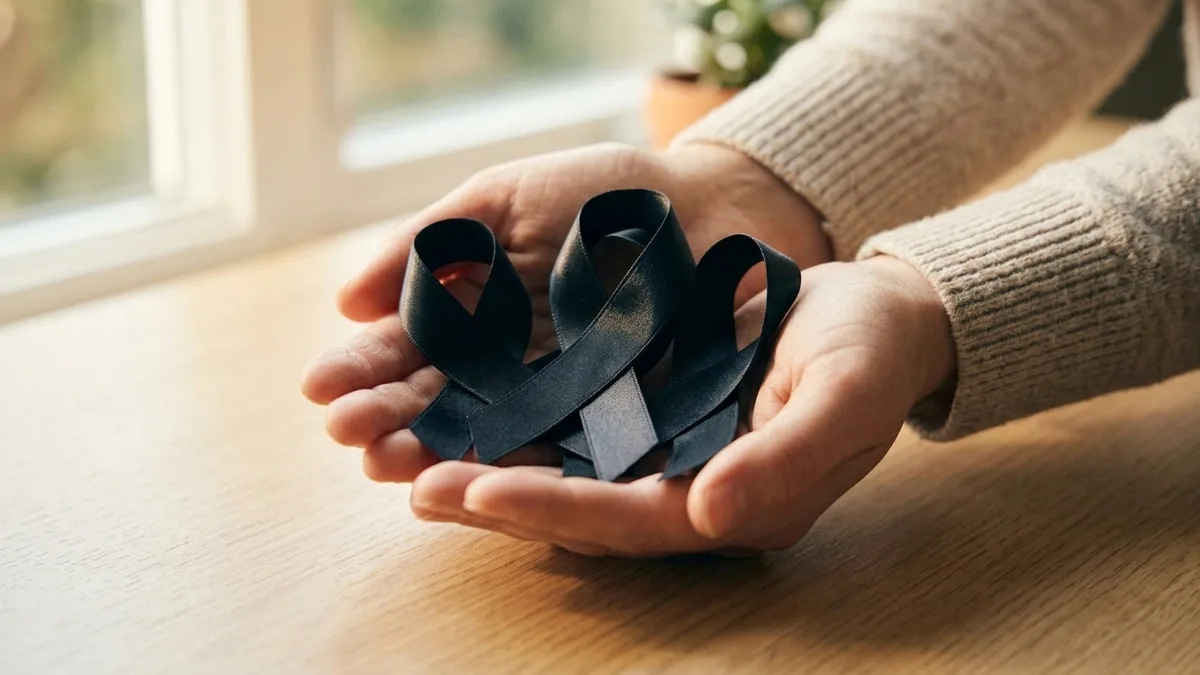
A black ribbon symbolizes mourning, remembrance, and solidarity. The black ribbon meaning most often signals grief for someone who has died, support after a public tragedy or disaster, melanoma and skin cancer awareness, and (in its black-and-white form) remembrance of prisoners of war and service members missing in action.
Because the same dark ribbon carries several meanings, the exact message depends on context. A black ribbon worn after a tragedy almost always signals mourning and solidarity with the victims, while a black ribbon worn as a lapel pin in May usually represents melanoma awareness. This guide walks through every major meaning: including why black ribbons suddenly appear in the news, what a black bow on a door means, and what the black-and-white POW/MIA flag stands for.
Shop Awareness Ribbons & Pins
View all →





What Does a Black Ribbon Mean?
A black ribbon means mourning, remembrance, and solidarity. According to Wikipedia, the black ribbon is "a symbol of remembrance or mourning" that is "often worn or put on a public display to express consolation," used to commemorate the victims of tragedies. It is the symbol most strongly tied to grief, but it is also the awareness color for melanoma and skin cancer, and (in its black-and-white form) for prisoners of war and the missing in action.
Here is the quick-reference version, by context:
| Where you see it | What it usually means |
|---|---|
| Worn or displayed after a public tragedy | Mourning and solidarity with the victims and their families |
| As a lapel pin in May | Melanoma and skin cancer awareness (sometimes shown black with white polka dots) |
| A black-and-white flag, patch, or pin | POW/MIA remembrance: service members held captive or still missing |
| A bow or ribbon on a front door | A death in the household; a home in mourning |
| At a funeral, vigil, or memorial | Grief and lasting remembrance for someone who has died |
| On a profile picture or avatar | Online solidarity in the wake of a tragic event |
Why Are People Wearing Black Ribbons Right Now?
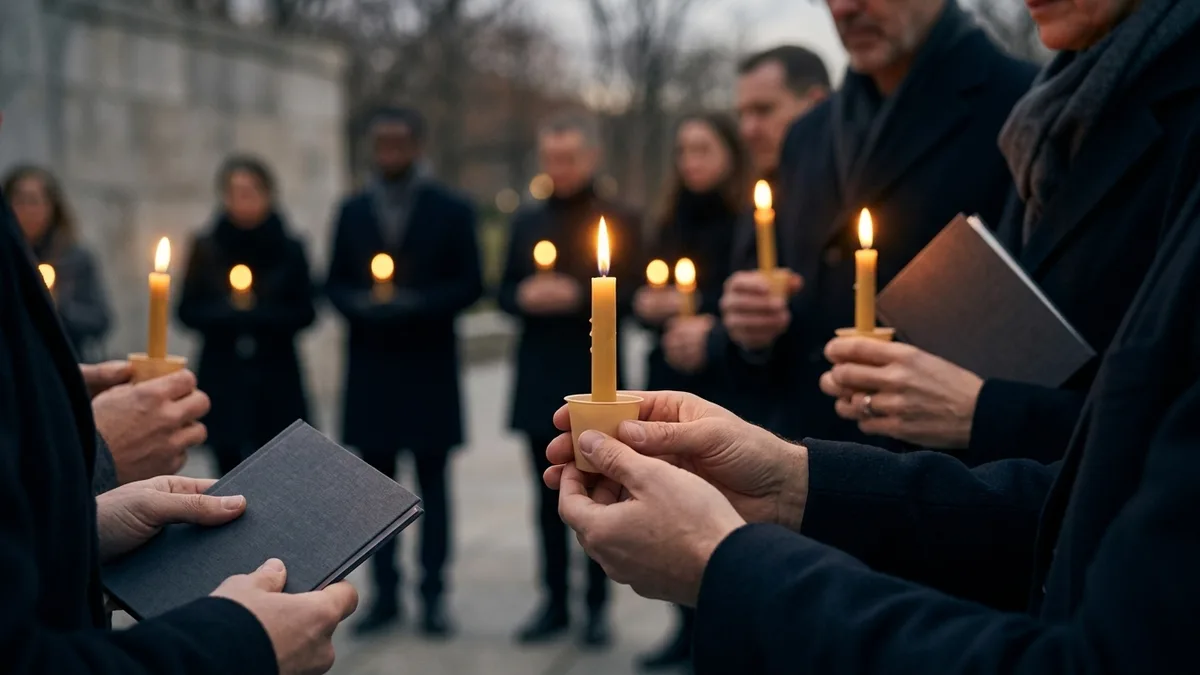
When black ribbons suddenly appear in public, it almost always means mourning and solidarity after a tragedy. The black ribbon is the default "we grieve with you" symbol, so it resurfaces every time a disaster, an act of violence, or another major loss of life dominates the news. Historically, Wikipedia records black ribbons used in mourning the death of Diana, Princess of Wales, in 1997 and displayed after the April 2007 Virginia Tech shooting.
A few clues help you decode a specific moment:
- Worn by public figures or at vigils: usually mourning for the victims of a current tragedy in the news.
- Displayed across a community, town, or campus: typically a local loss, a death, accident, or act of violence affecting that community.
- Appearing on profile pictures and avatars: online solidarity after a high-profile tragedy.
- Worn as a pin in May: more likely melanoma and skin cancer awareness, since that observance runs all month.
If you're unsure, it's perfectly acceptable to ask. Sparking that conversation is exactly what awareness ribbons are designed to do.
Black Ribbon for Mourning & Remembrance
A black ribbon for mourning means grief and lasting remembrance for someone who has died. It is one of the oldest and most universal uses of the symbol, worn at funerals, vigils, and memorial services, or displayed publicly to honor those lost in a tragedy. Wikipedia notes the black ribbon's modern memorial uses include the death of Diana, Princess of Wales (1997) and the April 2007 Virginia Tech shooting.
People use the black mourning ribbon in a few common ways:
- As a personal pin or armband worn to a funeral or memorial to signal that you are in mourning.
- As a public display: a ribbon, bow, or wreath placed where a community gathers to grieve a shared loss.
- As a digital tribute: a black ribbon graphic shared online to honor someone who has passed away.
There is no single rule for how long a black mourning ribbon should be worn. The custom varies by family, faith, and culture; many people wear it through the funeral and memorial period and remove it when that chapter of grieving closes.

Black Ribbon for Melanoma & Skin Cancer Awareness
The black ribbon is the awareness color for melanoma and skin cancer. According to the National Foundation for Cancer Research, "Black ribbons are used to raise awareness of melanoma and other forms of skin cancer, encouraging sun safety and early detection," and the associated awareness month is May. You'll sometimes see a black-with-white-polka-dot version used specifically for melanoma.
The cause behind the ribbon is significant. According to the American Academy of Dermatology, skin cancer is the most common cancer in the United States: approximately 9,500 people are diagnosed with skin cancer every day, and one in five Americans will develop skin cancer in their lifetime. The AAD also notes that "the vast majority of skin cancer deaths are from melanoma." The CDC explains why melanoma draws so much attention: "Of all types of skin cancer, melanoma causes the most deaths because of its tendency to spread to other parts of the body, including vital organs like the brain and liver."
Awareness peaks in May, which is Skin Cancer Awareness Month. Melanoma Monday falls on the first Monday in May. According to the American Academy of Dermatology, the AAD launched Melanoma Monday on Monday, May 1, 1995, and has observed it every year since. Schools, dermatology clinics, and nonprofits frequently distribute black custom awareness ribbons and pins at screenings and fundraising events throughout the month. (For prevention and screening guidance, follow the CDC and the American Academy of Dermatology.)
The Black-and-White POW/MIA Flag & Ribbon
The black-and-white POW/MIA ribbon and flag honor American service members who were held captive or remain unaccounted for. According to the U.S. Department of Veterans Affairs, the flag was designed by Newt Heisley, a former World War II pilot; its gaunt silhouette, strand of barbed wire, and watchtower honor service members held under brutal captivity and those never accounted for, especially from the Vietnam War.
The remembrance has an official observance: National POW/MIA Recognition Day falls on the third Friday of September, a date Congress designated in August 1990. According to the U.S. Department of Veterans Affairs, "more than 83,000 U.S. service members… remain classified as either prisoners of war or missing in action," per the Defense Logistics Agency.
This military remembrance is closely related to the yellow ribbon's "come home safe" tradition. If you're researching military symbolism, see our guide to what the yellow ribbon means for the military, which covers POW/MIA, deployment, and homecoming customs in depth.
What Does a Black Bow or Ribbon on a Door Mean?
A black bow or ribbon on a front door traditionally means there has been a death in the household and the home is in mourning. It is a quiet, visible way to tell neighbors, visitors, and the wider community that the family is grieving and to approach with care. The practice belongs to the same family of mourning customs as black armbands, wreaths, and draped cloth: long-used signals of loss that ask for respect and consolation rather than explanation.
You'll most often see a black door bow in the days surrounding a funeral or memorial. Like the black mourning ribbon itself, there is no fixed rule for how long it stays up; families typically remove it once the immediate mourning period has passed.
Other Causes the Black Ribbon Represents
Beyond mourning, melanoma awareness, and POW/MIA remembrance, the black ribbon is also adopted by grassroots and community campaigns for related causes:
- Solidarity after violence. Communities use black ribbons to grieve and stand with the victims of shootings, accidents, and other tragic loss of life.
- Anti-violence and safety campaigns. Local organizations sometimes adopt the black ribbon for anti-gun-violence and anti-gang efforts that honor those lost and call for safer communities.
- Memorial and remembrance drives. Schools, workplaces, and nonprofits hand out black ribbons during remembrance events for community members who have died.
Because black carries so many overlapping meanings, the symbol is clearest when it is paired with a printed cause name, date, or message. Otherwise viewers may read it simply as general mourning.
Black vs. Other Awareness Ribbon Colors
Not sure black is the right color for your cause? Here's how it compares with the other most-searched ribbon colors, and see our awareness ribbon colors guide for the full chart and month-by-month calendar:
| Ribbon color | Best-known meanings | Learn more |
|---|---|---|
| Black | Mourning & remembrance, melanoma/skin cancer, POW/MIA | This guide |
| Yellow | Military support, suicide prevention, missing persons | What the yellow ribbon means for the military |
| Pink | Breast cancer awareness | The pink breast-cancer ribbon |
| Orange | Leukemia, kidney cancer, MS, gun-violence awareness | The causes behind the orange ribbon |
One color can serve many causes, so pair your ribbon with a short message, event name, or date whenever possible. It removes the guesswork for everyone who sees it. Black needs one extra check as an imprint: black lettering on a dark shirt or tumbler can disappear, so run the pairing through our free contrast checker before you order.
How to Show Support with a Black Ribbon
Ready to put the symbol to work for a loved one or an awareness campaign? Here are the most effective ways to participate:
- Wear it visibly. A black ribbon pin, memorial lapel pin, or awareness wristband sparks the "what does your black ribbon mean?" conversations that drive awareness and remembrance.
- Distribute ribbons at events. Partner with local groups to hand out custom awareness ribbons at memorials, screenings, walks, and vigils, with a card explaining the cause.
- Unite a team or community. Matching awareness t-shirts help a group show up together at a remembrance walk, a melanoma screening drive, or a POW/MIA observance.
- Fundraise with branded merchandise. Awareness organizations routinely sell custom pins, wristbands, and apparel to fund research, education, and support services. See our nonprofit fundraising ideas for campaign formats that consistently raise more.
Buying tips for black-ribbon merchandise:
- Print the cause on the item. A black ribbon plus three words ("Melanoma Awareness," "In Loving Memory," "POW/MIA Remembrance") removes all ambiguity. Our artwork guidelines help keep small text crisp at ribbon and pin scale.
- Order for the calendar. May (melanoma and skin cancer awareness) and the weeks before the third Friday of September (POW/MIA Recognition Day) are peak distribution windows. Request free samples early and order 3-4 weeks ahead. New to bulk orders? Our how-to-order guide walks through every step.
- Match the format to the moment. Pins and wristbands travel well for events; ribbons and apparel anchor a walk, screening, or workplace campaign.
- Consider the polka-dot variant for melanoma. Black with white polka dots reads specifically as melanoma awareness when you want to distinguish it from general mourning.
Custom Memorial & Awareness Pins
View all →


Frequently Asked Questions About Black Ribbons
Why are people wearing black ribbons today?
Sudden, widespread black-ribbon displays almost always track a current event: most often mourning and solidarity after a tragedy, disaster, or act of violence in the news. Worn as a pin in May, a black ribbon more likely marks melanoma and skin cancer awareness.
What type of cancer is a black ribbon for?
The black ribbon represents melanoma and skin cancer. According to the National Foundation for Cancer Research, black ribbons "raise awareness of melanoma and other forms of skin cancer, encouraging sun safety and early detection," with an awareness month of May.
What does a black bow on the door mean?
A black bow on a front door traditionally signals that there has been a death in the household and the home is in mourning. It is a quiet way to tell neighbors and visitors that the family is grieving.
Is it okay to wear a black ribbon?
Yes. Wearing a black ribbon is a respectful, widely understood way to show mourning, remembrance, or solidarity. To make your meaning clear, pair it with a short cause name or message, especially if you're wearing it for awareness rather than personal grief.
What disease has a black ribbon?
In the awareness-ribbon system, the black ribbon is assigned to melanoma and skin cancer. The National Foundation for Cancer Research lists black for "Skin Cancer / Melanoma," observed in May.
What does the black ribbon symbolize?
A black ribbon symbolizes mourning, remembrance, and solidarity. It is most strongly tied to grief and is also the awareness color for melanoma and skin cancer, while the black-and-white version stands for POW/MIA remembrance.
Are black ribbons for mourning only?
No. Mourning and remembrance are the most common meanings, but the black ribbon is also the awareness symbol for melanoma and skin cancer, and the black-and-white ribbon represents prisoners of war and the missing in action.
How long do you wear a black ribbon for mourning?
There is no fixed rule. The custom varies by family, faith, and culture. Many people wear a black mourning ribbon through the funeral and memorial period and remove it once that stage of grieving has passed.
What is the ribbon for someone who passed away?
A black ribbon is the most common symbol for remembering someone who has died, worn at funerals, vigils, and memorials, or displayed publicly to honor the victims of a tragedy.
What does the black POW/MIA flag mean?
The black-and-white POW/MIA flag honors American service members held as prisoners of war or still missing in action. Designed by former WWII pilot Newt Heisley, it is recognized each year on National POW/MIA Recognition Day, the third Friday of September. According to the U.S. Department of Veterans Affairs, citing the Defense Logistics Agency, more than 83,000 U.S. service members remain classified as either prisoners of war or missing in action.
Raising awareness or honoring a loved one?
Conclusion
The black awareness ribbon is one symbol with several meanings (mourning and remembrance, melanoma and skin cancer awareness, and POW/MIA solidarity), all united by a single idea: that those we have lost, those who are fighting, and those who never came home are not forgotten.
Pin one on for a memorial, wear one in May to spread melanoma awareness, or hand out ribbons at a POW/MIA observance, and you're joining a long tradition of using a simple symbol to grieve, support, and remember. Understanding what the black ribbon means lets you use it well, and explain it to the next person who asks.
Sources: National Foundation for Cancer Research: Cancer Ribbon Colors · CDC: Skin Cancer Basics · American Academy of Dermatology: Skin Cancer Stats · American Academy of Dermatology: Skin Cancer Awareness Month · U.S. Department of Veterans Affairs: POW/MIA Observances · Wikipedia: Black ribbon
Shop Related Categories
Related Articles

Football Quotes: Who Really Said the Famous Ones (Plus Game-Day Sayings)
Famous football quotes checked against the record, with the sources we could find, the lines nobody can trace, and original short sayings for rally towels, foam fingers, cups, shirts and signs.

Basketball Team Names: 150+ Original Ideas for Every Kind of Team
More than 150 original basketball team name ideas sorted by team type: funny, cool, youth, women's, co-ed, rec league, church and work teams, plus a checklist for choosing one your whole roster likes.

Friendsgiving Ideas: How to Plan, Host and Send Guests Home Happy (at Home or at Work)
A planner's guide to Friendsgiving for friends or coworkers: a potluck signup plan, what to assign each guest, easy games, a table-setup checklist, and take-home favors people actually keep.

Veterans Day Coloring Pages: Free Printable Sheets for Kids and Classrooms
These free Veterans Day coloring pages give kids and classrooms 12 original designs to print, from a thank-you flag and a red poppy to a word search, a fold-over card and a letter of thanks for a veteran.