
Pride Month Ideas for Businesses: Dates, History & Tips


The best Pride Month ideas for businesses center on genuine, year-round support for the LGBTQ+ community (inclusive workplace activities, employee-resource-group events, donations to LGBTQ+ nonprofits, and custom campaign products) rather than one-off June marketing. Done well, your Pride Month program signals real values to employees and customers; done as a logo swap, it reads as performative.
This guide gives businesses, schools, and nonprofits the facts to get it right: when Pride Month is and why it's in June, a short history rooted in the Stonewall Uprising, what the rainbow Pride flag colors mean, and practical, respectful activities and custom-product campaigns you can run for staff, members, and fundraisers.
Custom Pride Pins for Staff & Events
View all →
When Is Pride Month?
Pride Month falls in June worldwide. It is the anniversary month of the Stonewall Uprising (covered in the next section). For organizations planning a campaign, this gives you a fixed, predictable window: programming, internal communications, and any fundraising or product orders should be ready before June 1, with key activities timed across the month.
| Question | Answer |
|---|---|
| When is Pride Month? | Every June |
| Why June? | Commemorates the Stonewall Uprising (began June 28, 1969) |
| Where did it start? | Manhattan, New York City |
| Key anniversary date | June 28 (Stonewall, and the first Pride march in 1970) |
| Official U.S. recognition | First presidential proclamation in 1999 |

Why Is Pride Month in June? The Stonewall Uprising
The Stonewall Uprising is the anchor event of Pride. According to the Library of Congress, the demonstrations that began on June 28, 1969 in Manhattan became a turning point for LGBTQ+ activism in the United States. One year later, on June 28, 1970, New York held the Christopher Street Liberation Day March, the first Pride march, on the uprising's one-year anniversary.
That is why, for a business, June is not an arbitrary marketing slot. It is a commemoration with a specific history, and acknowledging that history (rather than only the rainbow aesthetics) is part of participating respectfully.
The History of Pride Month: A Timeline
A few milestones help businesses speak about Pride Month accurately and with appropriate context:
- June 28, 1969: The Stonewall Uprising begins in New York City (Library of Congress).
- June 28, 1970: The Christopher Street Liberation Day March, the first Pride march, is held on the uprising's one-year anniversary.
- 1978: Artist Gilbert Baker creates the rainbow Pride flag, first flown at the San Francisco Gay Freedom Day Parade on June 25 (National Park Service).
- 1999: President Bill Clinton issues the first U.S. presidential proclamation recognizing June as Pride Month; the observance is later proclaimed Lesbian, Gay, Bisexual, Transgender, Queer, and Intersex (LGBTQ+) Pride Month.
This is a different story, and a different symbol and month, from the colored awareness ribbons many causes use. If you're comparing symbols across causes, see our awareness ribbon colors guide, which maps every ribbon color to its cause and month.
The Rainbow Pride Flag & What Its Colors Mean
Baker's original 1978 flag carried eight stripes, each assigned a meaning. The flag was later simplified to six colors, which is the version most people recognize today. The table below lists the meanings of the original eight stripes, as documented in text by the Gilbert Baker Foundation, the late artist's own foundation.
| Color | Meaning (Baker's original eight-stripe flag) |
|---|---|
| Hot pink | Sex |
| Red | Life |
| Orange | Healing |
| Yellow | Sunlight |
| Green | Nature |
| Turquoise | Magic / art |
| Indigo | Serenity |
| Violet | Spirit |
Hot pink and turquoise were later dropped, leaving the six-stripe flag (red, orange, yellow, green, blue, violet) in common use today.
If your campaign uses the flag's colors on custom products, getting the palette and order right matters. Supporters notice. And because color symbolism differs sharply across causes, it's worth seeing how other movements use it: compare the single-color pink awareness ribbon for breast cancer, the orange ribbon's meanings, or the blue-and-gold symbols of Autism Awareness Month.
Pride Month Ideas for the Workplace
For most businesses, schools, and nonprofits, the highest-impact Pride programming happens inside the organization. Host an ERG-led event, a panel, lunch-and-learn, or guest speaker organized with or by your LGBTQ+ employee resource group. Run a giving campaign that matches employee donations to an LGBTQ+ advocacy or direct-service nonprofit, and report the total back to staff. Outfit your team with custom rainbow t-shirts, pins, and lanyards for staff at a Pride event, volunteer day, or parade contingent. Review the basics: make sure inclusive policies (benefits, names/pronouns, restrooms) are in place, since the Human Rights Campaign's Corporate Equality Index is the national benchmark for these. And educate rather than just decorate, pairing any visible swag with internal content on Stonewall, the flag's history, and your year-round commitments.
The Human Rights Campaign's Corporate Equality Index rates more than 1,400 U.S. businesses each year on LGBTQ+ workplace policies, benefits, and practices: a useful yardstick for auditing your own internal program before you focus on anything customer-facing.
Pride Campaign T-Shirts & Apparel
View all →


How to Celebrate Pride Month as a Business: Respectfully
The line between meaningful support and "rainbow washing" comes down to substance and consistency. GLAAD's guidance to corporate allies is direct: don't market to the moment, join the movement. A few principles to keep your program on the right side of that line:
- Give, don't just sell. Tie campaigns to real support for LGBTQ+ nonprofits, and consider a fundraising strategy so proceeds from any merchandise actually reach the cause.
- Match inside and outside. Don't post a rainbow logo externally if internal policies and benefits don't back it up. Fix the internal program first.
- Make it year-round (Pride 365). Support shouldn't switch off on July 1; recurring giving and policy work matter more than a June campaign.
- Center the community. Let your LGBTQ+ employees and partner nonprofits lead the message rather than speaking for them.
- Be accurate. Get the history, dates, and flag right. The facts in this guide are a starting point.
| Respectful participation | Performative ("rainbow washing") |
|---|---|
| Year-round support (Pride 365) | Rainbow logo only in June |
| Donations to LGBTQ+ nonprofits | Merchandise with no cause tie-in |
| Inclusive internal policies & benefits | External messaging, no internal backing |
| Community-led programming | Top-down marketing with no community input |
Custom Pride Products for Campaigns & Fundraisers
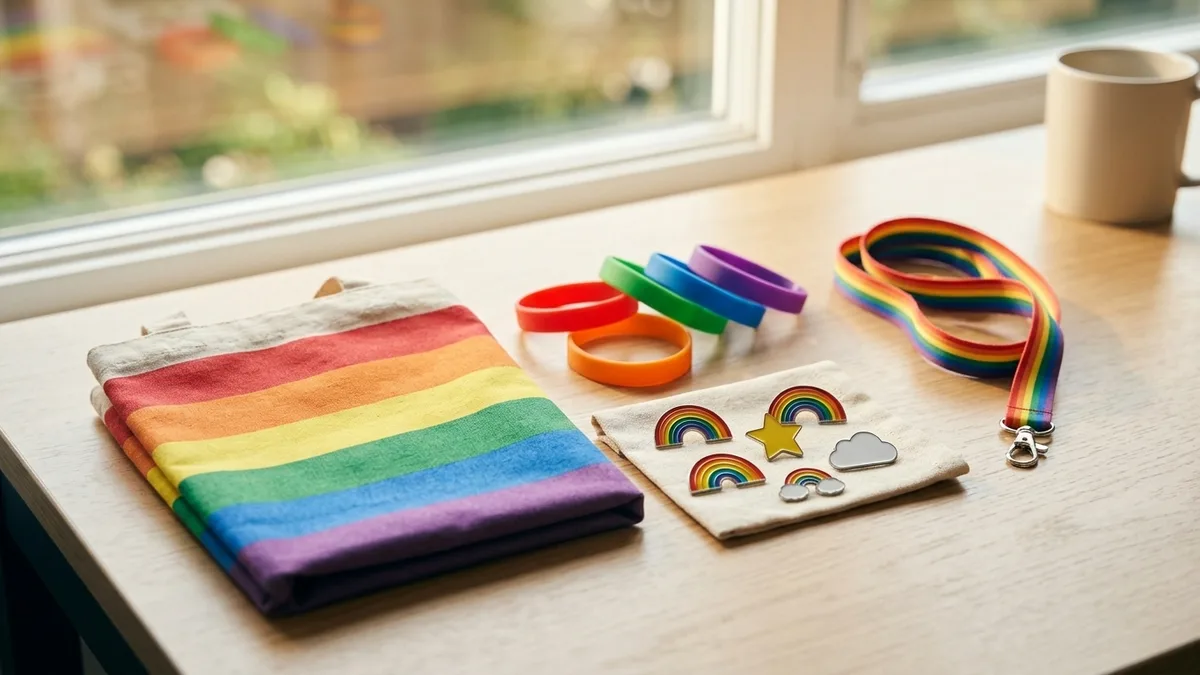
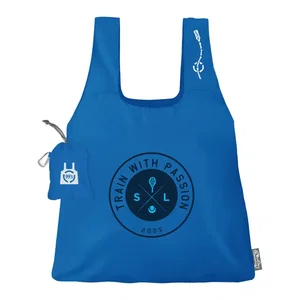
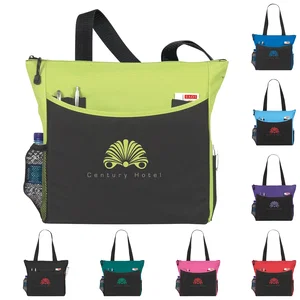
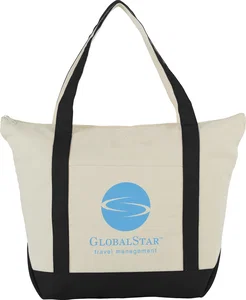
When products are tied to genuine support, they amplify a campaign: staff and supporters wear them at events, parades, and volunteer days, and proceeds can fund the nonprofits you partner with. See our nonprofit fundraising ideas for ways to structure a product-based drive. Bulk-friendly options that work for Pride campaigns and fundraisers include Pride pins, inexpensive at volume and easy to hand out at events and to employees; rainbow wristbands, durable, low-cost solidarity bands ideal for walks, school groups, and large giveaways; custom t-shirts for a parade contingent, volunteer crew, or staff Pride day; and lanyards and tote bags, practical, reusable items that keep your message visible long after June.
Whatever you choose, request a free sample to confirm the rainbow colors print true, then follow our how-to-order steps to place your bulk run early so the per-unit cost stays low and the proceeds that go to the cause stay high.
Pride Tote Bags for Giveaways & Fundraisers
View all →
Frequently Asked Questions About Pride Month
What can I do for Pride Month at work?
Host an employee-resource-group event (a panel, lunch-and-learn, or guest speaker), run a giving drive for an LGBTQ+ nonprofit, share internal content on Pride's history, and offer inclusive swag like custom pins, t-shirts, or wristbands for staff. The most effective workplace activities are internal and participatory rather than external marketing alone.
How do you acknowledge Pride Month at work?
Acknowledge Pride Month by pairing visibility with substance: communicate your year-round LGBTQ+ commitments, support inclusive policies and benefits, donate to or partner with an LGBTQ+ organization, and let your LGBTQ+ employees help lead the message. Avoid acknowledging it only with a rainbow logo and nothing behind it.
Why celebrate Pride Month at work?
Celebrating Pride at work signals to employees and customers that your inclusion values are real, supports your LGBTQ+ staff, and, when tied to giving, helps fund the community. The Human Rights Campaign's Corporate Equality Index, which rates more than 1,400 U.S. businesses on LGBTQ+ workplace practices, shows how central these commitments have become to corporate culture.
How can companies celebrate Pride Month respectfully?
GLAAD advises companies to "not market to the moment, join the movement": support LGBTQ+ advocacy and direct-service nonprofits all year (Pride 365), make sure internal policies match external messaging, center the community in your programming, and get the history and facts right.
Why is Pride Month in June?
Pride Month is in June to commemorate the Stonewall Uprising, which began on June 28, 1969 in New York City. The first Pride march, the Christopher Street Liberation Day March, was held on June 28, 1970, on the uprising's one-year anniversary.
What do the Pride flag colors mean?
The rainbow Pride flag was designed by Gilbert Baker in 1978. In his original eight-stripe version, hot pink stood for sex, red for life, orange for healing, yellow for sunlight, green for nature, turquoise for magic and art, indigo for serenity, and violet for spirit. The flag was later simplified to the now-standard six colors.
Planning a Pride Month campaign or fundraiser?
Conclusion
The best Pride Month ideas for businesses are the ones with substance behind them: know the history, get the rainbow flag right, run inclusive activities for your team, and support LGBTQ+ causes year-round, then let custom pins, wristbands, t-shirts, and tote bags carry that message to your events and fundraisers. Plan before June, partner with the community, and keep your support going long after the month ends.
Sources: Library of Congress: About LGBTQ+ Pride Month, LOC: Pride history overview, NYC LGBT Historic Sites: first Pride march, National Park Service: Gilbert Baker, Gilbert Baker Foundation: rainbow flag color meanings, GLBT Historical Society: rainbow flag, HRC Corporate Equality Index, GLAAD: recommendations for corporate allies.
Related Articles

Autism Awareness Month: Dates, Colors & How to Help
Autism Awareness Month, explained: when it is, why many now call it Autism Acceptance Month, the debate over the color and the puzzle-piece symbol, and simple, respectful ways to show support in April.

Awareness Ribbon Colors & Months: The Complete Guide
A complete guide to awareness ribbon colors and awareness months: what each color stands for, a month-by-month calendar of major causes, and how to choose the right ribbon for your campaign or fundraiser.

Black Ribbon Meaning: What the Black Ribbon Stands For
Black ribbon meaning, explained in plain language: why people wear black ribbons for mourning and remembrance, what the black melanoma ribbon stands for, the black-and-white POW/MIA flag, and why black ribbons appear in the news after a tragedy.

Blue Ribbon Meaning: What the Blue Ribbon Stands For
Blue ribbon meaning, explained in plain language: why dark blue stands for colorectal cancer, light blue for prostate cancer, and how the blue ribbon is also worn for child abuse prevention, autism awareness, and anti-bullying, plus what "blue ribbon" means as a first prize or a blue-ribbon panel.