
How to Wash a Tote Bag by Material (Canvas, Jute, Non-Woven)


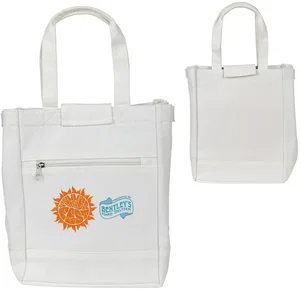
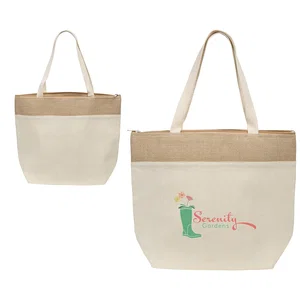
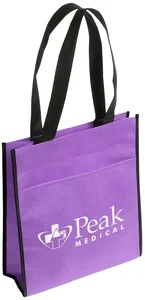
How to wash a tote bag depends on what it's made of. A cotton canvas tote can handle a gentle machine cycle, a jute tote usually can't, a non-woven polypropylene tote is best washed by hand, and any tote with a printed logo needs lukewarm water and a light touch. This guide covers each material, how to avoid shrinking, how to dry the bag, how to get out stains and smells, and when to leave the bag alone.
What Should You Check Before You Wash a Tote Bag?
Look for a care label, then read the product page, then test a hidden spot. Those three checks prevent most ruined totes.
- The care label. Sewn-in labels are common on apparel, because the FTC's Care Labeling Rule requires care instructions on clothing and some piece goods. A tote bag isn't clothing, so a label isn't guaranteed. Many promotional totes have none.
- The product page. Fabric, decoration method and coatings all change the answer, so the care information on the page the bag came from is your best source.
- A hidden spot. Dab a little detergent and water on the inside of a seam. If the color transfers to the cloth, wash the bag by hand and keep it away from other laundry.
Also empty every pocket, shake out crumbs and sand, and remove any detachable strap or insert.
How Do You Wash a Cotton Canvas Tote Bag?
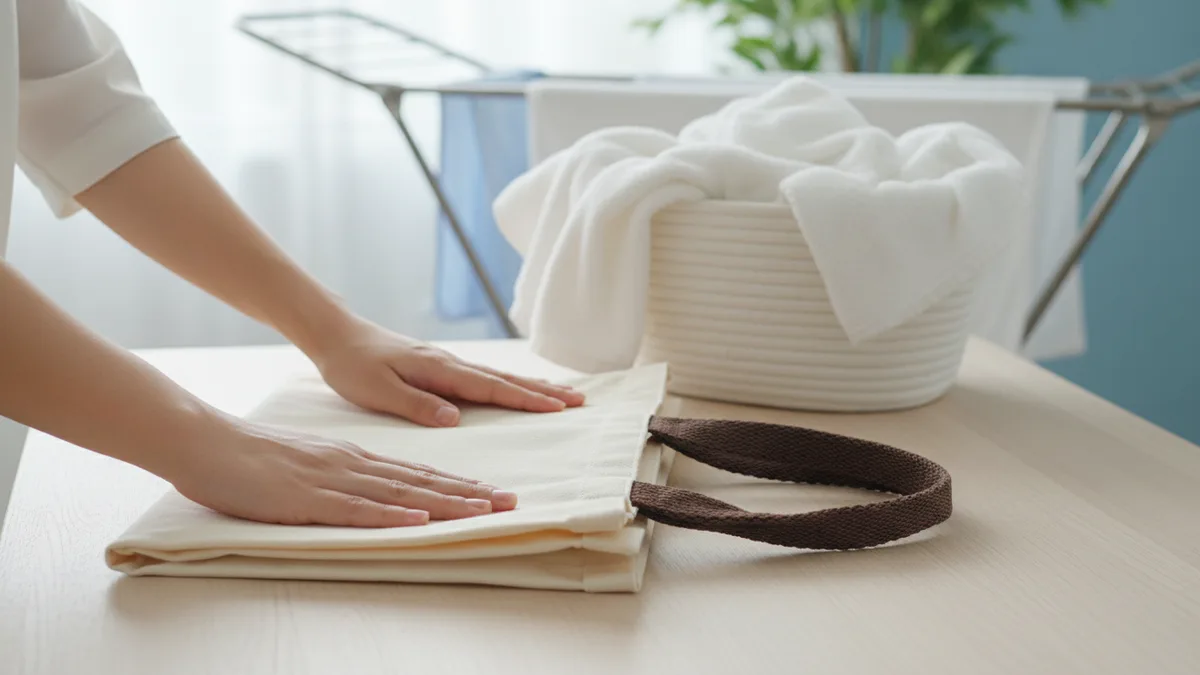
Cotton canvas is the most forgiving tote fabric, and the one most people mean when they search for how to wash a tote bag. Canvas, though, can shrink or lose its shape if it's washed improperly, and the same source recommends cold water, a gentle detergent, and drying flat after reshaping the bag while it's still damp.
- Hand wash: Fill a basin with lukewarm water and a squirt of mild detergent. Squeeze the bag through the suds, pay attention to the handles and bottom, then rinse until the water runs clear.
- Machine wash: Turn the bag inside out, close it with a pillowcase or mesh laundry bag if it has loose threads, and use a delicate cycle with cold water. Wash it with similar colors, because new canvas can bleed.
- Avoid: Chlorine bleach, fabric softener and stain removers with brighteners.
How Do You Wash a Jute Tote Bag?
Jute is a natural plant fiber. One tote supplier's care guide says hand washing is safer than the machine, since jute weakens when wet, and that heavy-duty bags are the only ones suited to a gentle, cold, no-spin cycle. It also says tumble drying can shrink jute and make it brittle, and bleach damages and discolors it.
- Take the bag outside and shake out loose dirt.
- Blot stains with a sponge dampened with mild dish soap and water. Blot, don't rub.
- For grease, sprinkle baking soda, wait, then brush it off.
- Lay the bag flat on a towel, away from direct sun, until it's completely dry.
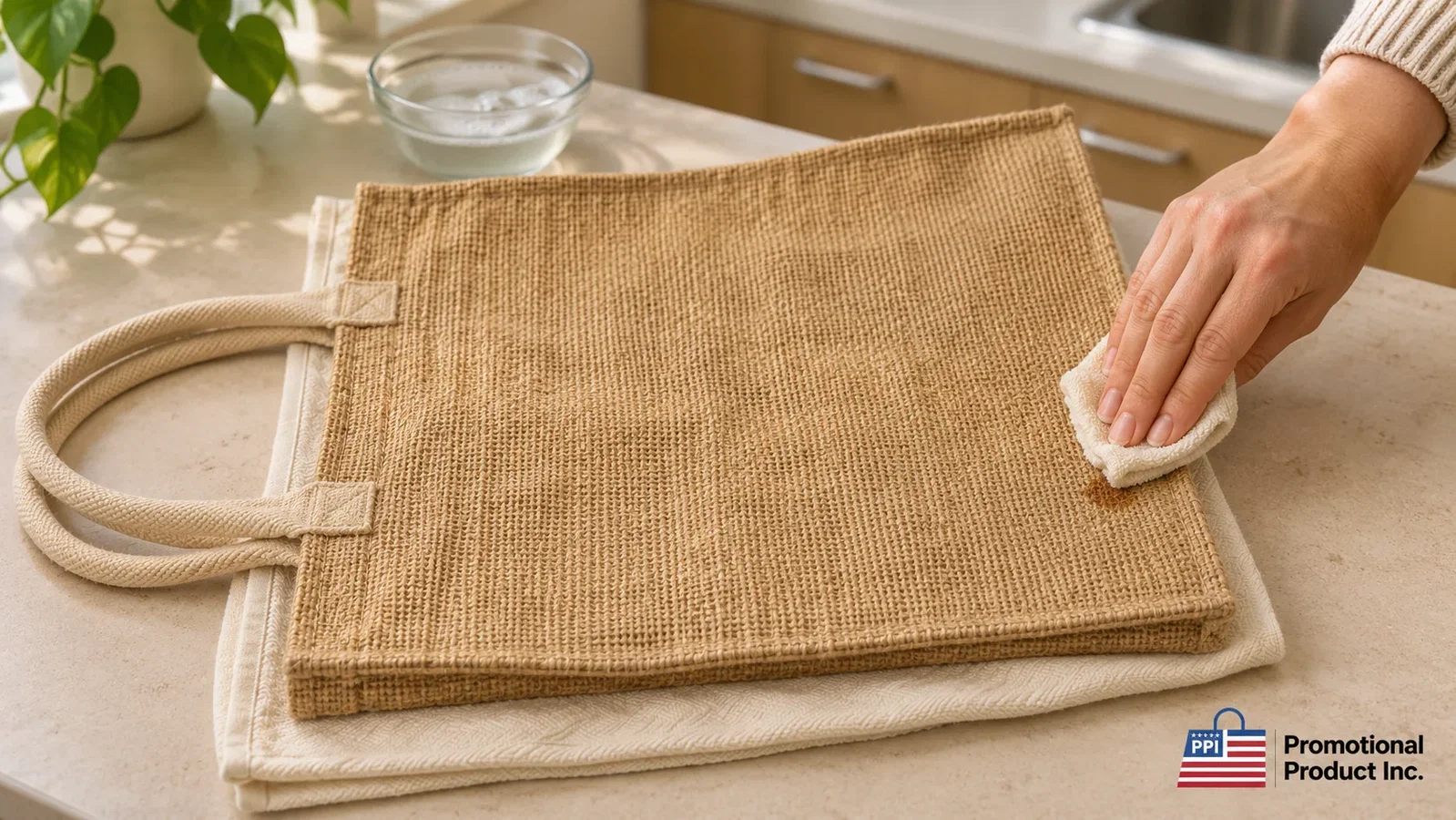
Damp jute can grow mildew, so never fold or store it until it's dry all the way through. Many jute totes also have a laminated lining. Wipe that with a damp cloth instead of soaking it.
How Do You Wash a Non-Woven Polypropylene Tote?
Non-woven polypropylene is the lightweight, budget-friendly fabric behind many grocery and trade-show totes. It repels spills, so most dirt wipes straight off. A consumer guide quoted by Food Republic says hand washing helps keep seams and handles from failing, and warns that the machine can shorten these bags' lives. That is a consumer-press claim, not a lab test, so treat it as a reason to be gentle rather than a rule.
Wipe the inside and outside with a soft cloth, rinse with a clean damp cloth, and hang the bag open to dry. Skip the dryer: polypropylene is a plastic and heat can warp it.
If the tote has carried groceries, wash it more often. Virginia Tech's food-safety extension team advises cleaning reusable bags after every use, with extra attention to any bag that has held raw meat, and letting plastic and nylon bags dry completely before they're stored. Keep raw meat in its own bag or wrap.
How Do You Wash a Polyester, Nylon or Laminated Tote?
Polyester is tougher than cotton and doesn't shrink much, but it can warp under heat. The Rush Order Tees guide recommends cold water, a mesh laundry bag for machine washing, and air drying for synthetic blends, because they can be damaged by high heat and harsh detergents.
Laminated or coated totes, including recycled-fabric bags with a plastic-like outer layer, are best treated like a raincoat: wipe the surface with a damp cloth and mild soap, and avoid scrubbing, which can scratch or peel the coating.
For a deeper walkthrough on nylon bags in particular, including backpacks, see our guide to cleaning nylon totes and backpacks.
How to Wash a Tote Bag: Machine or Hand?
| Tote material | Machine wash? | Water | Drying |
|---|---|---|---|
| Cotton canvas | Usually yes, gentle cycle | Cold | Air-dry, reshape while damp |
| Jute | No | Minimal; spot clean | Flat, in the shade |
| Non-woven polypropylene | Hand wash is safer | Lukewarm | Hang open to air-dry |
| Polyester or nylon | Gentle cycle in a mesh bag, if the label allows | Cold or lukewarm | Air-dry |
| Laminated or coated | No | Wipe only | Air-dry |
| Any printed or embroidered logo | Hand wash | Lukewarm | Air-dry |
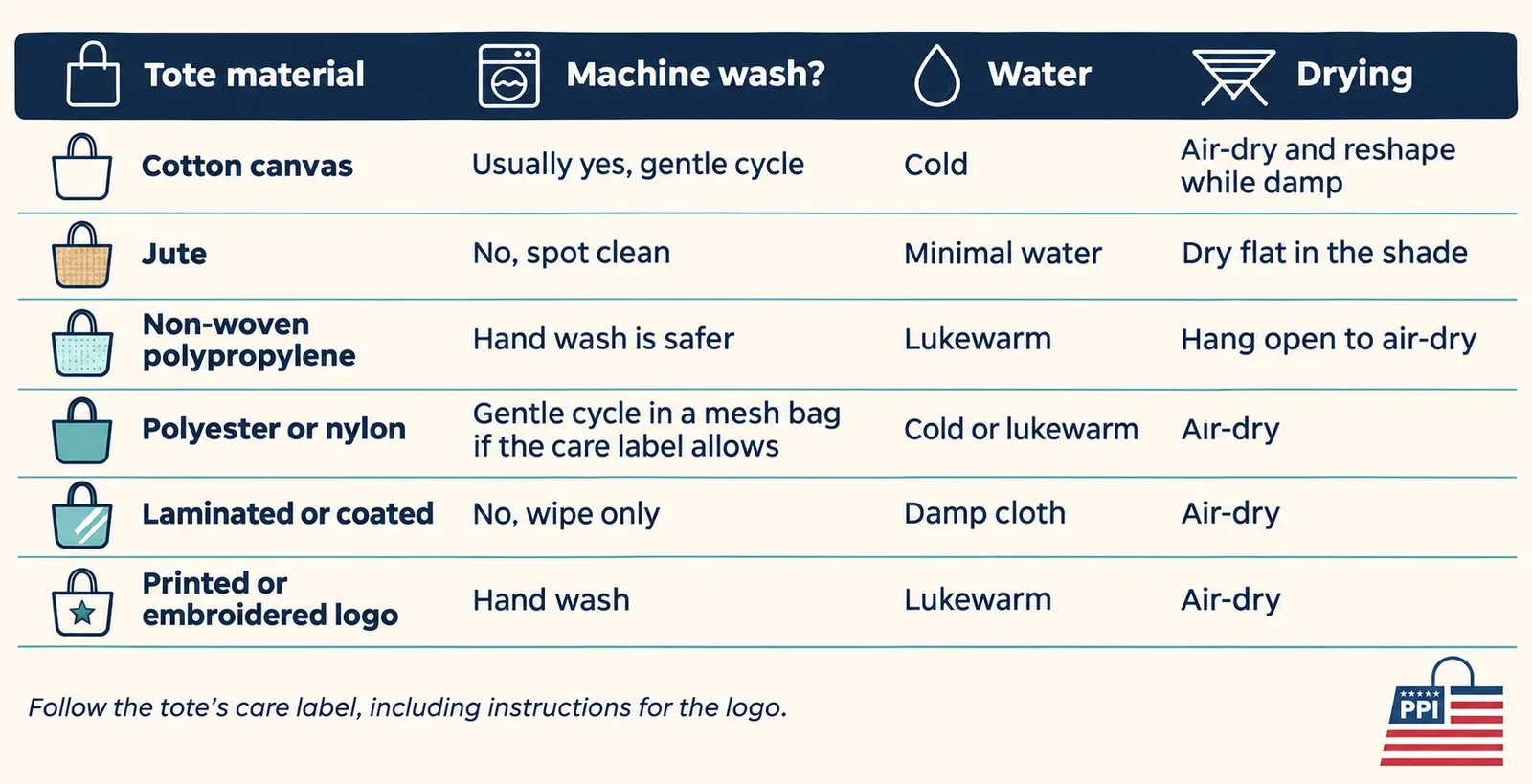
If you're unsure how to wash a tote bag, hand wash it. It takes ten minutes and rarely goes wrong.
How Do You Protect a Printed or Embroidered Logo When Washing a Tote?
Decoration is usually the most delicate part of a tote. Rush Order Tees notes that screen prints are generally durable but can crack or fade under harsh washing, and that rough washing can make a heat transfer peel or crack. Here is how to protect each style:
- Screen print: Wash inside out in lukewarm water and don't rub the ink with a brush.
- Heat transfer: Use the gentlest approach. Hot water and the dryer's heat are the quickest way to lift the edges.
- Full-color imprint: Hand wash in lukewarm water. Never use hot water, and never put it in the dishwasher, no matter what.
- Embroidery: Brush around the stitching, not across it, and dry flat so the threads don't pucker.
Because decoration methods and fabrics vary from bag to bag, read the care information on the product page. If you are ordering custom tote bags for a team or event, contact our team at promotionalproductinc.com before you order and ask how the decoration you pick should be cared for.
How Do You Avoid Shrinking a Tote Bag?
Keep the water cold or lukewarm, keep the bag out of the dryer, and reshape it while it's damp. Cotton shrinks the most, and jute can shrink too, as noted above. Polypropylene and polyester don't shrink the same way, but heat can warp them. If a bag comes out a little small, ease it back into shape by hand while it's still damp and let it air-dry.
How Should You Dry a Tote Bag?
Blot out extra water with a towel instead of wringing the bag. Hang it by its handles for canvas, or lay it flat on a towel for jute. Direct sun can fade colors and yellow jute, so choose a shaded, airy spot. A damp bag shut in a closet is how mildew starts.
How Do You Get Stains and Odors Out of a Tote Bag?
Treat stains early, test the cleaner first, and keep it off the logo.
- Food and drink: Blot, then dab mild dish soap and water. Rinse with a clean damp cloth.
- Grease: Sprinkle baking soda to absorb it, brush it off, then use a drop of dish soap.
- Ink: On canvas or jute, dab rubbing alcohol on a cotton swab around the mark, not on a logo. Test a hidden spot first.
- Mud: Let it dry fully, brush it off, then spot clean.
- Odors: Leave the bag open in fresh air, or sprinkle baking soda inside and shake it out after a few hours. A musty smell means the bag was stored damp. Wash it, then dry it more completely.
When Should You Not Wash a Tote Bag?
Some totes are better left alone. Skip a full wash when the bag has:
- a care label or product page that says spot clean only
- a leather trim, a cardboard base, a foam insert or glued hardware
- a heat-transfer or painted design that is already lifting
- a jute or laminated build, where a damp wipe is plenty
For a lightly dirty bag, a spot clean does the job and spares the fabric and the logo.
Did You Know?
- Federal food-safety guidance says reusable bags need regular washing. The USDA Food Safety and Inspection Service notes that reusable bags can hold onto bacteria, dirt and debris, so they should be washed frequently (USDA FSIS).
- Plain cloth and printed totes aren't washed the same way. Extension guidance for plain cloth bags is warm water, regular detergent and the warmest dryer setting (Virginia Tech and NC State Extension). For a bag with a full-color imprint, stay with lukewarm water, never hot, and follow the care instructions on the product page.
Need logo totes that are easy to care for?
Frequently asked questions
Can you put a tote bag in the washing machine?
Often yes for cotton canvas and some polyester totes, but not for jute or laminated bags. Use a delicate cycle with cold water, a mesh bag, and no bleach or fabric softener, then air-dry. Follow the care label if there is one.
Can you wash a canvas tote bag with a logo on it?
Yes, but hand wash it. Use lukewarm water and mild soap, turn the bag inside out, and don't scrub the print. Hot water and the dryer can crack or fade the decoration.
Will a canvas tote shrink in the wash?
It can. Heat is the main cause, so use cold or lukewarm water, skip the dryer, and reshape the bag while it's damp. Shrinking is most likely with cotton and jute.
Can you put a tote bag in the dryer?
It's best not to. Heat shrinks cotton and jute, warps polypropylene and polyester, and can crack or peel a printed logo. Air-dry instead.
How do you wash a non-woven tote bag?
Wipe it, or hand wash it quickly, in lukewarm water with mild soap. Rinse well and hang it open to dry. Non-woven fabric can tear at the seams and handles when it's tumbled in a machine.
How often should you wash a reusable shopping tote?
Clean it regularly, and after every trip if it has held raw meat or leaked. Virginia Tech's extension service advises cleaning reusable bags after every use and letting them dry fully before storage.
How do you get the smell out of a tote bag?
Air it out, wash it by hand with mild soap, and dry it completely. Baking soda sprinkled inside overnight helps with lingering smells. A musty smell usually means the bag was put away damp.
Is it OK to use bleach on a tote bag?
Skip it. Chlorine bleach can fade dyed fabric, damage jute and break down a printed logo. A mild detergent and some patience clean better with less risk.
Keep Reading
- How to clean nylon totes and backpacks for synthetic bags.
- How to wash a backpack at home for the hand-wash method.
- Bulk canvas tote bags: materials, printing and order tips before you order.
- November awareness month guide has tote ideas for caregiver and awareness events.
- Solar lights not working? 9 checks to fix them is another care and fix-it guide.
The Short Version
Read the care label or the product page first. Cotton canvas can take a gentle cold wash, jute and laminated totes should only be spot cleaned, and non-woven and polyester totes do best by hand. Anything with a printed or embroidered logo gets lukewarm water, a light touch and an air dry, with no hot water and no dishwasher. When in doubt, skip the dryer. Browse our custom canvas tote bags, jute totes and non-woven totes if you're choosing a material, or read our guide to bulk canvas tote bags before you order.
AI tools were used to help research and draft parts of this post. Like every post we publish, it is reviewed by its author and peer-read by our team before it goes live.
Shop Related Categories
Share this post with your team
Send it to a colleague or save it for later.
Related Articles

Solar Lights Not Working? 9 Checks to Fix Them
Solar lights not working? Work through nine quick checks in order, from the on/off switch and a hidden protective film to old batteries and a sensor fooled by a porch light.

Employee Appreciation Ideas: 60 Ways to Say Thanks
Employee appreciation ideas sorted by day, budget, theme and team size, plus a one-week plan if Employee Appreciation Day sneaks up on you.
Planning a Class Reunion: Timeline, Ideas and Checklist
Planning a class reunion? Get a 12-month timeline, class reunion ideas for the 10th through the 50th, themes, name tags, shirts and favors, plus a quiz and a free checklist.
Custom T-Shirt Cost: What Drives the Price and How to Pay Less in Bulk
What sets the price of a custom T-shirt, how quantity breaks work, how to read a price table, twelve ways to pay less, and a copy-ready quote request with a free printable worksheet.