
Teal Ribbon Meaning: What the Teal Ribbon Stands For

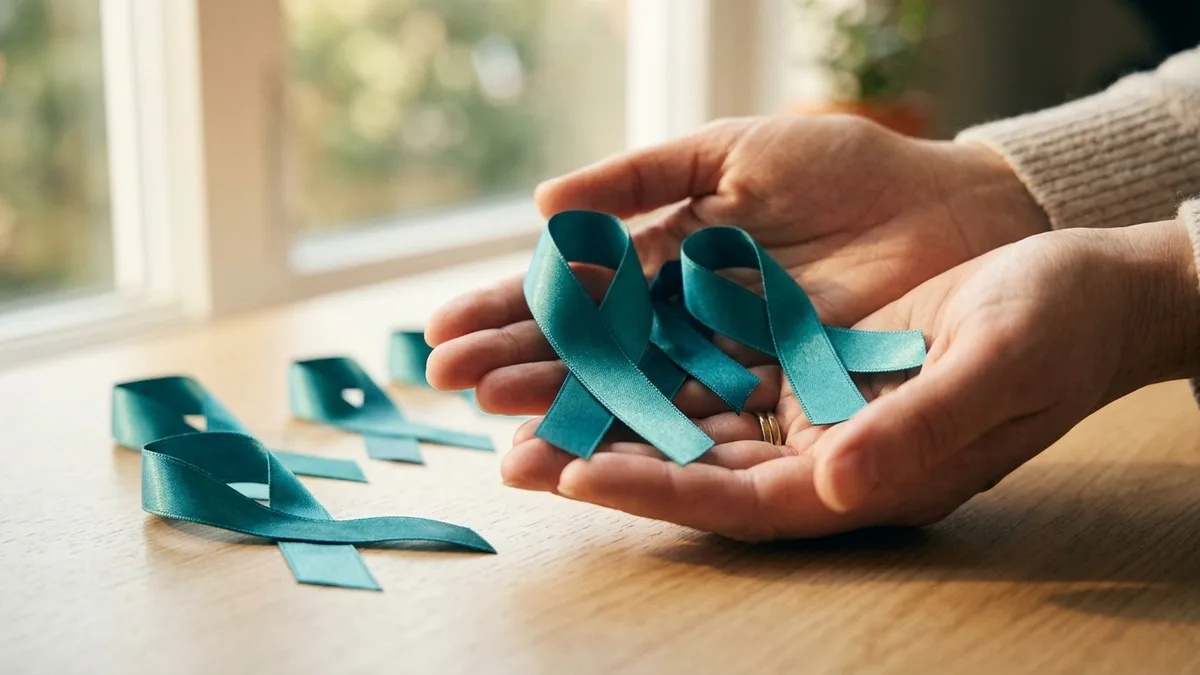
A teal ribbon most commonly represents ovarian cancer awareness, sexual assault awareness, and PTSD. The same teal also stands for food allergy awareness through the Teal Pumpkin Project, plus anxiety and a handful of other conditions, so the exact meaning depends on the month and the context.
Because one color carries so many causes, a teal ribbon in September almost always points to ovarian cancer, while teal in April signals sexual assault awareness and teal in June marks PTSD Awareness Month. This guide walks through every major meaning: why a teal pumpkin appears on porches at Halloween, how teal differs from turquoise, and how to use the symbol so its meaning is never in doubt.
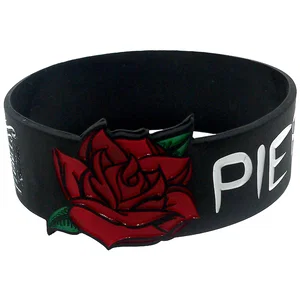
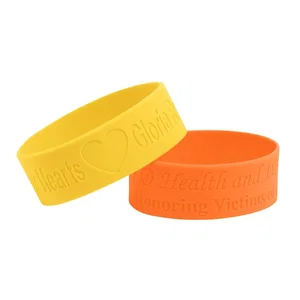
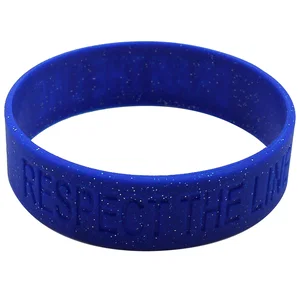
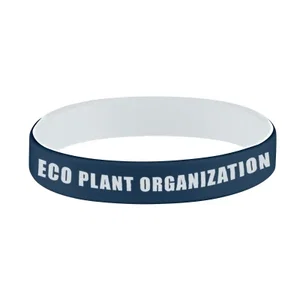
Teal Wristbands for Awareness Campaigns
View all →
What Does a Teal Ribbon Mean?
A teal ribbon means awareness and support for several causes that share the color teal. It is most strongly associated with ovarian cancer, but it is also the recognized symbol for sexual assault awareness, post-traumatic stress disorder (PTSD), food allergy awareness, anxiety, and more.
Here is the quick-reference version, by context:
| Where or when you see it | What it usually means |
|---|---|
| In September | Ovarian cancer awareness (Wear Teal) |
| In April | Sexual assault awareness (SAAM) |
| In June | PTSD awareness |
| A teal pumpkin at Halloween | Non-food treats for kids with food allergies |
| Worn as a pin year-round | Anxiety, OCD, scleroderma, Tourette, or dysautonomia |
A few clues help you decode a specific teal ribbon. One worn in September, often at a walk or fundraiser, almost certainly signals ovarian cancer awareness. One worn in April, or alongside the word "survivor" or "prevention," points to sexual assault awareness (SAAM). One worn in June, especially by veterans' groups, marks PTSD awareness. And a painted pumpkin displayed in October represents the Teal Pumpkin Project for food allergies.
If you are ever unsure, it is perfectly fine to ask. Starting that conversation is exactly what awareness ribbons are for.

Teal Ribbon for Ovarian Cancer
Teal is the official awareness color for ovarian cancer, and September is National Ovarian Cancer Awareness Month. Supporters wear teal all month, a campaign the Ovarian Cancer Research Alliance (OCRA) runs as #30DaysofTeal, and rally communities around Wear Teal Day in early September. When people search for "teal ribbon cancer," ovarian cancer is the answer.
The campaign exists because the numbers are serious. OCRA estimates that in 2026, 21,010 new cases of ovarian cancer will be diagnosed and 12,450 women will die from the disease in the U.S. The Centers for Disease Control and Prevention (CDC) adds important context: "Ovarian cancer is the second most common gynecologic cancer in the United States," and it "causes more deaths than any other cancer of the female reproductive system."
That is why teal campaigns emphasize early symptom awareness rather than a single fundraising day. Wearing teal in September (on a pin, a custom silicone wristband, or a shirt) keeps the conversation going during the month when it matters most. For medical guidance on symptoms and screening, always refer to OCRA and the CDC.
Teal Ribbon for Sexual Assault Awareness (SAAM)
Teal is the color of sexual assault awareness and prevention. Sexual Assault Awareness Month (SAAM) is observed every April, a date the Pennsylvania Coalition Against Rape (PCAR) confirms grew from an awareness week into a full month by the 1990s, and it was first observed nationally in 2001.
The teal ribbon itself was chosen deliberately. According to the National Sexual Violence Resource Center (NSVRC), a 2000 poll of state, territory, and tribal coalitions (run by NSVRC and the Resource Sharing Project) selected a teal ribbon as the symbol for sexual assault awareness and chose April as the awareness month. Today survivors, advocates, and prevention organizations wear teal throughout April to support survivors and promote prevention.
For campaigns, teal shows up across a range of items advocates can hand out or wear: lapel pins and ribbons for staff, volunteers, and survivors at April events; custom t-shirts for awareness walks, vigils, and campus marches; and tote bags stocked with resources and hotline information for resource fairs.
Teal Ribbon for PTSD
Teal is the PTSD awareness ribbon color, and June is PTSD Awareness Month. The U.S. Department of Veterans Affairs (VA) marks National PTSD Screening Day on June 27 and uses the month to spread one core message: PTSD treatment works.
The need is widespread. The VA reports that "about 1 out of every 20 adults in the U.S. (or 5% of Americans) has PTSD in any given year." Post-traumatic stress disorder can follow combat, assault, accidents, disasters, and other trauma, and it affects veterans and civilians alike. Wearing a teal ribbon in June helps normalize seeking help and points people toward screening and care, for which the VA's National Center for PTSD is the authoritative resource.
The Teal Pumpkin Project: Food Allergy Awareness
A teal pumpkin on a porch signals that the home offers non-food Halloween treats so children with food allergies can trick-or-treat safely. Run by Food Allergy Research & Education (FARE), the Teal Pumpkin Project asks households to set out a teal-painted pumpkin and keep a bowl of non-food items (glow sticks, stickers, bouncy balls, small toys) alongside or instead of candy.
The reason is simple math: FARE notes that "in the U.S., one in 13 children has a food allergy," which it describes as "roughly two in every classroom." A teal pumpkin tells allergy families, at a glance, that a house has a safe option for their child. To take part:
- Paint or buy a teal pumpkin and place it where trick-or-treaters can see it.
- Stock non-food treats so every child gets something fun and safe.
- Add your home to the map on FARE's site and spread the word in your neighborhood.

Other Causes the Teal Ribbon Represents
Beyond ovarian cancer, sexual assault awareness, PTSD, and food allergy, the teal ribbon also stands for several other conditions:
Teal is widely used for anxiety and OCD awareness. The National Institute of Mental Health (NIMH) estimates that "19.1% of U.S. adults had any anxiety disorder in the past year." (For diagnosis and treatment, refer to NIMH and a qualified provider.) The color also represents scleroderma, a rare autoimmune connective-tissue disease whose community has adopted teal for awareness; Tourette syndrome, which uses teal ribbons in its awareness campaigns; and dysautonomia, disorders of the autonomic nervous system that also use teal.
Because so many causes share the color, "teal ribbon cancer" searches almost always lead back to ovarian cancer, but the safest way to read any teal ribbon is to look at the month or ask the person wearing it.
Teal vs. Turquoise vs. Other Awareness Ribbon Colors
People often ask "what cancer has the color teal?" The answer is ovarian cancer. They also confuse teal with turquoise, a lighter blue-green that supporters use for its own separate causes. The two shades sit close together on the color wheel, so the only reliable way to tell them apart is the context or a printed label. Our free color wheel shows how close they really sit, and the image color picker reads the true value straight out of a ribbon photo so you know which one you are holding.
Here is how teal compares with the other most-searched ribbon colors. See our complete guide to awareness ribbon colors and months for the full chart and calendar:
| Ribbon color | Best-known causes | Learn more |
|---|---|---|
| Teal | Ovarian cancer, sexual assault awareness, PTSD, food allergy | This guide |
| Pink | Breast cancer awareness | Complete guide to pink awareness ribbons |
| Yellow | Military support, suicide prevention, childhood cancer | Complete guide to yellow awareness ribbons |
| Orange | Leukemia, kidney cancer, MS, gun-violence awareness | What the orange ribbon stands for |
Because teal, like many ribbon colors, serves several causes at once, pair it with a short message, event name, or date whenever you can. It removes the guesswork for everyone who sees it. If your cause touches mental health, our guide to Mental Health Awareness Month covers related observances and ideas.
Here is the teal calendar at a glance:
| Month | Teal observance |
|---|---|
| April | Sexual Assault Awareness Month (SAAM) |
| June | PTSD Awareness Month (Screening Day June 27) |
| September | Ovarian Cancer Awareness Month (Wear Teal) |
| October | Teal Pumpkin Project (Halloween) |
How to Show Support with a Teal Ribbon
Ready to put the symbol to work? Here are the most effective ways to show support and run a teal awareness campaign:
- Wear it visibly. A teal ribbon pin, custom wristband, or branded lanyard sparks the "what does your teal ribbon mean?" conversations that drive awareness.
- Distribute ribbons and pins at events. Partner with local nonprofits (our nonprofit fundraising ideas guide has more) to hand out custom awareness ribbons and lapel pins at walks, vigils, and resource fairs, with a card explaining the cause.
- Outfit your team in teal. Custom t-shirts and tote bags turn volunteers into a visible, walking awareness campaign.
- Set out a teal pumpkin. For food allergy awareness, a teal pumpkin and a bowl of non-food treats make Halloween inclusive for allergy families.
Buying tips for teal awareness merchandise:
- Match the shade. Confirm true teal (a deep blue-green) so your items don't read as turquoise or plain blue. Ordering a free sample is the easiest way to check before a big run.
- Print the cause on the item. A teal ribbon plus three words ("Ovarian Cancer Awareness," "Survivors Supported") doubles its clarity. Follow our artwork guidelines so the imprint reproduces cleanly.
- Order for the calendar. April (SAAM), June (PTSD), and September (ovarian cancer) are peak distribution windows. See how to order and place yours 3–4 weeks ahead.
- Choose wearables for events, everyday items for offices. Pins and wristbands travel; tote bags and tumblers anchor a workplace campaign.
Custom Teal Apparel for Awareness Events
View all →





Frequently Asked Questions About Teal Ribbons
What does a turquoise ribbon stand for?
Turquoise is a lighter blue-green that is easy to confuse with teal, and supporters use it for its own separate causes. Because the shades are so close, the most reliable way to read any blue-green ribbon is the awareness month or a printed cause name. When in doubt, ask the person wearing it.
What cancer has the color teal?
Teal is the awareness color for ovarian cancer. National Ovarian Cancer Awareness Month is observed every September, when supporters wear teal and mark Wear Teal Day in early September.
Which cancer uses a blue ribbon?
Blue ribbons are generally associated with colon cancer (dark blue) and prostate cancer (light blue). For the full color-to-cause chart, see our guide to awareness ribbon colors and months.
What does each cancer ribbon color mean?
Different colors represent different cancers: pink for breast cancer, teal for ovarian cancer, orange for leukemia, and many more. Our complete guide to awareness ribbon colors and months maps every color to its cause and awareness month.
Is the ovarian cancer ribbon teal?
Yes. Teal is the official awareness color for ovarian cancer, and the Ovarian Cancer Research Alliance runs its September campaign as #30DaysofTeal.
When is Ovarian Cancer Awareness Month?
Ovarian Cancer Awareness Month is observed every September in the United States, with Wear Teal Day in early September.
What color represents sexual assault awareness?
Teal is the color of sexual assault awareness and prevention. Sexual Assault Awareness Month (SAAM) is observed every April, and the teal ribbon was selected as its symbol through a national poll of sexual-assault coalitions.
What does a teal pumpkin on a porch mean?
A teal pumpkin means the household has non-food treats, like glow sticks and small toys, available for trick-or-treaters with food allergies. It is part of FARE's Teal Pumpkin Project, which makes Halloween safer for kids with allergies.
What is the PTSD awareness ribbon color?
Teal is the PTSD awareness ribbon color. June is PTSD Awareness Month, and June 27 is National PTSD Screening Day.
Shop Awareness Pins
View all →


Rally your community around a cause with custom teal awareness gear
Conclusion
The teal awareness ribbon is one symbol with many meanings (ovarian cancer, sexual assault awareness, PTSD, food allergy, anxiety, and more), all united by a single idea: making an invisible struggle visible so people can find support. Because teal serves so many causes, the smartest move is always to pair it with a cause name, a date, or a short message.
Wearing a teal pin in September, handing out ribbons at an April event, or setting out a teal pumpkin at Halloween all join a tradition that turns a quiet color into a conversation. Understanding what the teal ribbon means lets you use it well, and explain it to the next person who asks.
Sources: Ovarian Cancer Research Alliance (OCRA) · CDC: Ovarian Cancer Statistics · National Sexual Violence Resource Center (NSVRC) · Pennsylvania Coalition Against Rape (PCAR) · U.S. Department of Veterans Affairs: PTSD Awareness · Food Allergy Research & Education (FARE) · National Institute of Mental Health (NIMH)
Shop Related Categories
Related Articles

Football Quotes: Who Really Said the Famous Ones (Plus Game-Day Sayings)
Famous football quotes checked against the record, with the sources we could find, the lines nobody can trace, and original short sayings for rally towels, foam fingers, cups, shirts and signs.

Basketball Team Names: 150+ Original Ideas for Every Kind of Team
More than 150 original basketball team name ideas sorted by team type: funny, cool, youth, women's, co-ed, rec league, church and work teams, plus a checklist for choosing one your whole roster likes.

Friendsgiving Ideas: How to Plan, Host and Send Guests Home Happy (at Home or at Work)
A planner's guide to Friendsgiving for friends or coworkers: a potluck signup plan, what to assign each guest, easy games, a table-setup checklist, and take-home favors people actually keep.

Veterans Day Coloring Pages: Free Printable Sheets for Kids and Classrooms
These free Veterans Day coloring pages give kids and classrooms 12 original designs to print, from a thank-you flag and a red poppy to a word search, a fold-over card and a letter of thanks for a veteran.