
A Practical Guide to Picking the Best Notebooks and Journals for Your Team

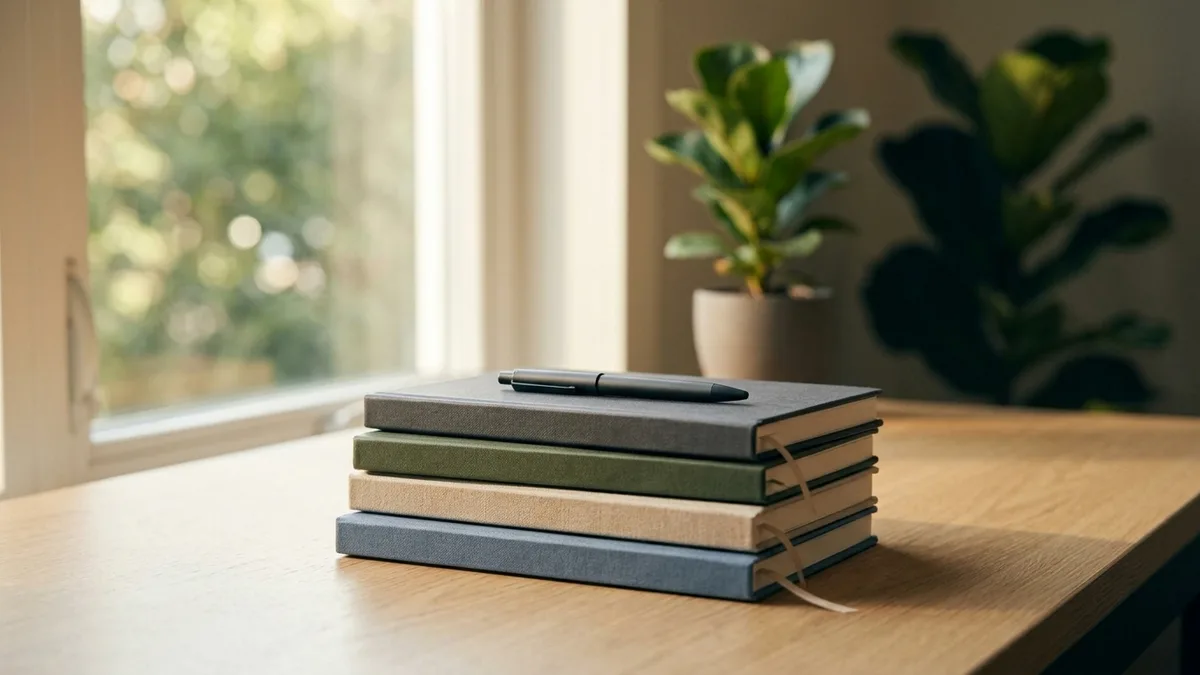
In this blog post, you'll discover everything you need to know about selecting the perfect custom notebooks for your team. This guide covers branded notebooks for company-wide rollouts, promotional notebooks for events, bulk notebooks for training sessions, wholesale journals for resale, custom journals for client gifts, personalized journals for employee recognition, personalized notebooks for daily workplace use, and custom spiral notebooks that lay flat for easy note-taking. You'll learn which features truly matter, how to match notebook styles to different roles, where to invest your budget for maximum impact, and how to avoid the costly mistakes most companies make when ordering branded stationery.
What is the best notebook for work?
The best notebook for work is one that matches the way the person actually takes notes: an A5 (5.8" x 8.3") size with at least 80gsm paper covers most office and client-facing roles, while creative teams do better with blank, lay-flat pages and technical staff prefer durable, grid-ruled pocket notebooks. There is no single "best." The right pick depends on size, paper weight, binding, and how hard the notebook will be used.
Choosing the best notebook for work is something many businesses overlook. Custom notebooks appear everywhere in the corporate world, yet companies still struggle to select the right ones. Some look for the best notebook for everyday use while others try to find the best work notebook for their whole team, but the real challenge is understanding what people actually need before placing an order.
Our team at Promotional Product Inc. has spent years helping organizations choose branded notebooks, from bulk notebooks for company-wide rollouts to promotional logo journals for executive groups. There are countless options, including branded notebooks for events, personalized journals for client gifts, and custom spiral notebooks for teams that prefer lay-flat functionality. With so many variations available, it becomes easy to choose something that wears out quickly or something too premium to be practical. Finding the right balance requires careful thought: the same kind of thinking that goes into any promotional gift for your business.
Why Custom Notebooks Still Matter in a Digital World
You might be wondering if branded notebooks are even relevant anymore. Fair question.
But here's what research shows: people who write things down by hand retain information better than those who type notes, according to research summarized in the National Library of Medicine on the longhand-versus-laptop note-taking studies originally reported in Psychological Science. Writing by hand forces you to summarize rather than transcribe verbatim, which is what aids memory.
Quality personalized notebooks increase engagement during meetings by giving people a dedicated space for ideas. Custom spiral notebooks or hardcover journals sitting on desks also strengthen company culture through repeated brand visibility: the same logic behind using promotional products to boost employee morale and retention. A branded notebook is also a natural anchor item for an onboarding kit; our guide to employee welcome kit ideas for small businesses shows what to pack alongside it. When used strategically, the best work notebooks provide real value rather than generic giveaways.
Understanding What Your Team Actually Needs
Before you order bulk notebooks, you need to think about how your people work. Sales teams constantly moving between client meetings? They need something compact and durable. Creative departments brainstorming all day? Blank pages work better than lined ones.
I always recommend surveying your team first. Ask them what frustrates them about their current note-taking setup. You'll discover insights that surprise you. For instance, one company I worked with learned their engineers preferred grid paper for sketching technical diagrams. Nobody had thought to ask before ordering thousands of standard ruled notebooks.
The size matters more than you think. A5 fits perfectly in most bags, while A4 provides generous writing space for detailed planning. Consider where these notebooks will actually be used: desk, field, or constant travel.
Features That Separate Good Notebooks from Great Ones
Let me share what's worked in my experience with promotional notebooks.
Paper Quality Makes or Breaks the Experience: Cheap paper bleeds through and creates a frustrating writing experience. Look for at least 80gsm paper weight. Anything less feels flimsy and unprofessional. If your team uses fountain pens or markers, bump that up to 100gsm. The extra investment pays off in user satisfaction.
Binding Style Affects Durability: Spiral binding lies flat and makes flipping pages effortless. That's why spiral notebooks and wholesale journals with spiral binding remain popular for daily use. Hardcover binding looks more professional and protects pages better: ideal for client-facing roles where appearance matters. Stitched binding offers the best longevity but costs more. Choose this for notebooks you want people using for years, not months.
Cover Material Sends a Message: Leather or faux leather screams premium. Use these for executive gifts or top performers. Hardcover cardstock works brilliantly for most teams. It's durable, affordable, and accepts branding beautifully. Softcover keeps costs down for large orders but won't survive heavy use. Best suited for short-term projects or event giveaways.
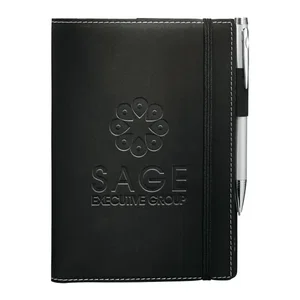
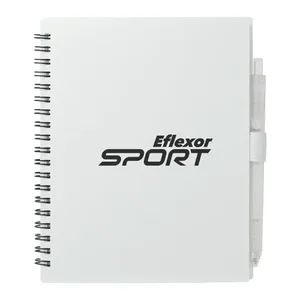
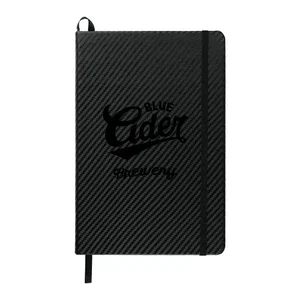
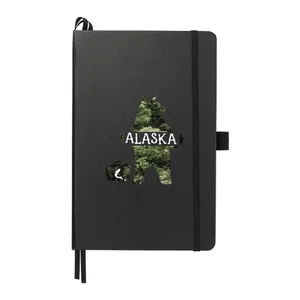
If you want to browse real options as you read this section, our custom journals and notebooks collection covers everything from leather-bound journals to recycled spiral notebooks in one place.
Shop Custom Notebooks & Journals
View all →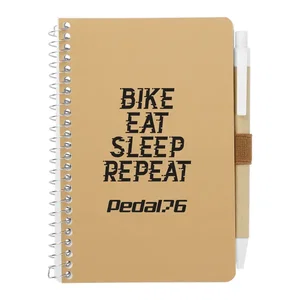
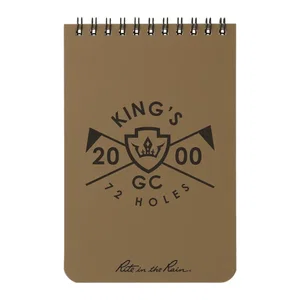
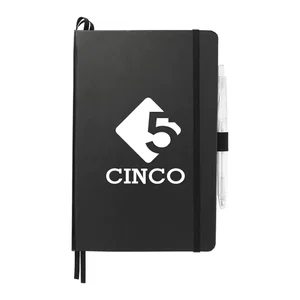
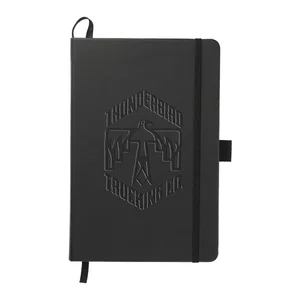
How do you match a notebook to each role on your team?
Not everyone needs the same type of personalized journals. Here's how I typically break it down, based on what I've seen actually work in real workplace environments.
For Leadership and Client-Facing Teams
Executive teams need notebooks that command respect. I recommend leather-bound journals with minimal branding: just a subtle logo emboss on the bottom right corner of the cover or spine. These folks take notes in high-stakes meetings where appearance matters. A premium notebook reinforces your company's attention to detail. A pineapple (apple) leather bound journal is a good example: it looks and feels premium while staying sustainable, which resonates with clients. When you pair quality journals with personalized stationery for everyday communication, you create a cohesive professional image that clients remember.
- Size matters here: A5 (5.8" x 8.3") hits the sweet spot. It's substantial enough to look professional but compact enough to carry effortlessly between meetings. Avoid anything larger. Nobody wants to lug around an oversized notebook to lunch meetings.
- Page count considerations: Go for 100-120 pages. Too few and executives run out of space during lengthy projects. Too many and the notebook becomes bulky and never gets finished, which means your branding disappears into a drawer.
I've found that lined pages with a subtle grid work best for this group. They provide structure for note-taking but enough flexibility for quick diagrams during strategy sessions. Color-wise, stick with classic black, navy, or burgundy. These never go out of style and maintain professionalism across all industries.
One company I worked with made a brilliant move: they added a ribbon bookmark and an expandable inner pocket. These features cost only a little more per unit but transformed the notebooks from nice gifts into genuinely useful tools that executives actually reached for daily. Leather-bound journals also make excellent corporate employee gifts for milestones and recognition programs.
For Creative and Design Teams
Blank pages beat ruled lines every time for creative work. Sketching, mind-mapping, and visual brainstorming all work better without constraints. Lay-flat binding is crucial here. Nothing kills creative flow faster than fighting with a notebook that won't stay open. Wire-o binding or sewn binding both work brilliantly: just test them before ordering. A spiral notebook with a pen is a simple, affordable way to give creatives a book that stays open flat.
- Paper weight is critical for this group. Creatives often use markers, pens, and sometimes light watercolors. Go with 100gsm minimum, ideally 120gsm. The slight cost increase pays dividends in user satisfaction. Nobody wants their sketches bleeding through to the next page.
- Think about orientation too. Landscape format (horizontal) works beautifully for storyboarding and wide sketches. Portrait format suits traditional drawing better. I usually recommend ordering a mix (maybe 70% portrait, 30% landscape) and let people choose their preference.
Size recommendations vary by use case. A4 (8.3" x 11.7") provides generous space for detailed work at desks. But many creatives also need pocket-sized options (3.5" x 5.5") for capturing ideas on the go. Consider offering both.
Here's something most companies miss: tooth and texture matter. Smooth paper works for technical drawing and clean lines. Slightly textured paper (around 90-110 lb) gives better results for sketching and adds a premium feel that creative teams appreciate.
Color choices can be bolder here. Charcoal gray, deep teal, or even burnt orange covers resonate with creative personalities. Your brand colors work great if they're not too corporate. One design agency I know uses vibrant gradient covers that their team genuinely loves showing off.
For Operations and Technical Staff
Grid paper helps with diagrams, charts, and technical drawings. Many engineers swear by this format: specifically 5mm grid spacing, which provides enough structure without feeling cramped. Durable covers matter because these notebooks live in challenging environments: warehouses, construction sites, manufacturing floors. Polypropylene covers resist water and wear far better than cardboard.
- Binding strength is non-negotiable. Double-loop wire binding holds up better than standard spiral binding when notebooks get tossed in toolboxes or shoved in cargo pockets. The extra durability justifies the slight cost increase.
- A6 (4.1" x 5.8") or even smaller pocket notebooks work better than larger formats. These fit in shirt pockets, tool belts, and small bags. Technical staff rarely sit at desks. They're moving around constantly, so portability trumps page size.
Page count should be higher: aim for 150-200 pages. These notebooks get used hard and fast. Running out of pages mid-project frustrates users and means they'll switch to a competitor's notebook, losing your brand visibility. I've learned that perforated pages are incredibly valuable for this group. They need to tear out pages to share measurements, hand off instructions, or file documentation. Without perforation, pages tear messy and the notebook deteriorates quickly.
Cover colors should be practical. Bright colors (safety orange, lime green, bright yellow) make notebooks easy to spot in cluttered work environments. Black or dark gray hides dirt and wear better. Ask your team which they prefer. The answer might surprise you. One manufacturing company added a plastic sleeve to the back cover for holding safety cards and quick-reference guides. Brilliant move that cost pennies but made the notebooks genuinely more useful than generic alternatives.
For General Office Teams
Classic ruled notebooks work perfectly for standard note-taking. They're familiar, functional, and cost-effective for large orders. But there's room to optimize here that most companies overlook.
Consider adding useful features like perforated pages or built-in bookmarks. These small touches boost daily usability significantly. You might also complement these notebooks with branded desk accessories like custom notepads and sticky notes to create a complete workspace solution that keeps your brand visible throughout the workday.
- The sweet spot size is A5 (5.8" x 8.3"). It's large enough for comfortable writing but small enough to fit in standard bags. This size also fits perfectly in most desk drawers and filing systems, increasing the likelihood people will keep using them.
- Here's what actually matters for daily office use: Wide ruling (around 9-11mm spacing) makes writing more comfortable than narrow college ruling, especially for people who write larger or use thicker pens. Most office workers aren't filling notebooks at lightning speed, so the extra space improves the writing experience without wasting pages.
Page count of 80-100 pages works perfectly for most office applications. Lighter notebooks feel less intimidating to fill, which means they actually get used rather than saved for "something important" that never comes.
Margin lines are surprisingly valuable. A vertical margin line (about 1-1.5 inches from the left) helps people organize notes, add bullets, or mark action items. This simple feature transforms a basic notebook into a productivity tool.
Date fields at the top of each page help tremendously with reference and organization. Adding light grey headers that say "Date:" or "Topic:" costs almost nothing in production but adds real utility.
For cover colors, give people choices if ordering in volume. Offering 3-4 color options (maybe black, navy, grey, and one accent color) lets people express some personality while maintaining professionalism. People are more likely to use and value notebooks they selected themselves.
Practical tip from experience: Add page numbers. Sounds obvious, but many promotional notebooks skip this. Pre-numbered pages make it vastly easier to create a table of contents or reference specific notes later. The production cost is minimal but the functionality boost is significant. Consider including a few reference pages at the back: conversion charts, time zones, keyboard shortcuts, or industry-specific quick references. These transform a simple notebook into a desk reference that people keep within arm's reach, maximizing your brand impressions.
Customization Options That Actually Add Value
When ordering custom journals, you've got choices beyond just slapping a logo on the cover.
Smart Placement of Branding
Front cover branding grabs attention but can feel corporate. Inside cover creates a subtle, sophisticated look that people appreciate more over time. I've seen companies add inspiring quotes or company values on inside covers. This reinforces culture without being heavy-handed.
Useful Add-Ons Worth Considering
- Built-in pen loops prevent the endless "where's my pen?" frustration. Simple but effective.
- Elastic closures keep pages protected and look professional. They add minimal cost but significant perceived value.
- Pocket folders in the back cover are incredibly practical. People actually use these for business cards, receipts, or loose notes.
How much do custom notebooks cost?
Here's where many companies mess up: they either overspend or cheap out entirely. According to the Promotional Products Association International (PPAI), promotional products consistently deliver one of the lowest costs-per-impression of any advertising medium, which is why a notebook that lives on a desk for years outperforms ads that disappear in seconds. When you choose quality notebooks that people actually use, you get strong ROI for a modest per-unit cost.
For sustainability-minded teams, a recycled bound journal made from FSC-certified and recycled materials proves you don't have to choose between quality and eco-credentials.
When to Invest More
Premium personalized notebooks make sense for:
- Client gifts and new customer welcomes
- Employee milestone recognition
- Executive leadership teams
- Trade show VIP bags
These situations demand quality that reflects your brand standards. (For the broader event-swag picture, see our trade show swag guide.)
When Budget Options Work Fine
Bulk notebooks at lower price points work great for:
- Large team rollouts (100+ employees)
- Training sessions and workshops
- Event swag for mass distribution
- Seasonal campaigns with shorter lifespans
The key is matching quality to context, not treating every situation the same.
Practical Tips for Your First (or Next) Order
Start with a small sample order if you're trying a new supplier. Most promotional product companies offer free samples before committing to a bulk order. Check turnaround times early. Custom notebooks typically need 2-4 weeks for production, plus shipping. Rush orders cost significantly more.
Request physical proofs of your customization. Colors look different on screens than printed covers. This step prevents expensive mistakes. Consider sustainability if your team values environmental responsibility. Recycled paper options and eco-friendly covers exist at competitive prices now.
Promotional products also have remarkable staying power: industry research from the Advertising Specialty Institute (ASI) has long found that the large majority of recipients can recall the advertiser on a promotional item, and many keep useful items like notebooks for years, far longer than any digital ad campaign.
Ready to design notebooks your team will actually use?
Making Your Final Decision
Choosing the right branded notebooks for your team doesn't have to be complicated. Focus on these priorities:
- Match the notebook style to actual usage patterns, not assumptions.
- Consider paper quality a non-negotiable baseline.
- Select binding types based on durability needs.
- Invest more in customer-facing scenarios, save on internal-only use.
The notebooks you choose will sit on desks, travel to meetings, and represent your brand daily. That makes this decision more important than it might seem. Understanding how branded stationery builds stronger business relationships helps you see these notebooks not as expenses, but as strategic tools for connection and brand reinforcement.
Shop Related Categories
Related Articles
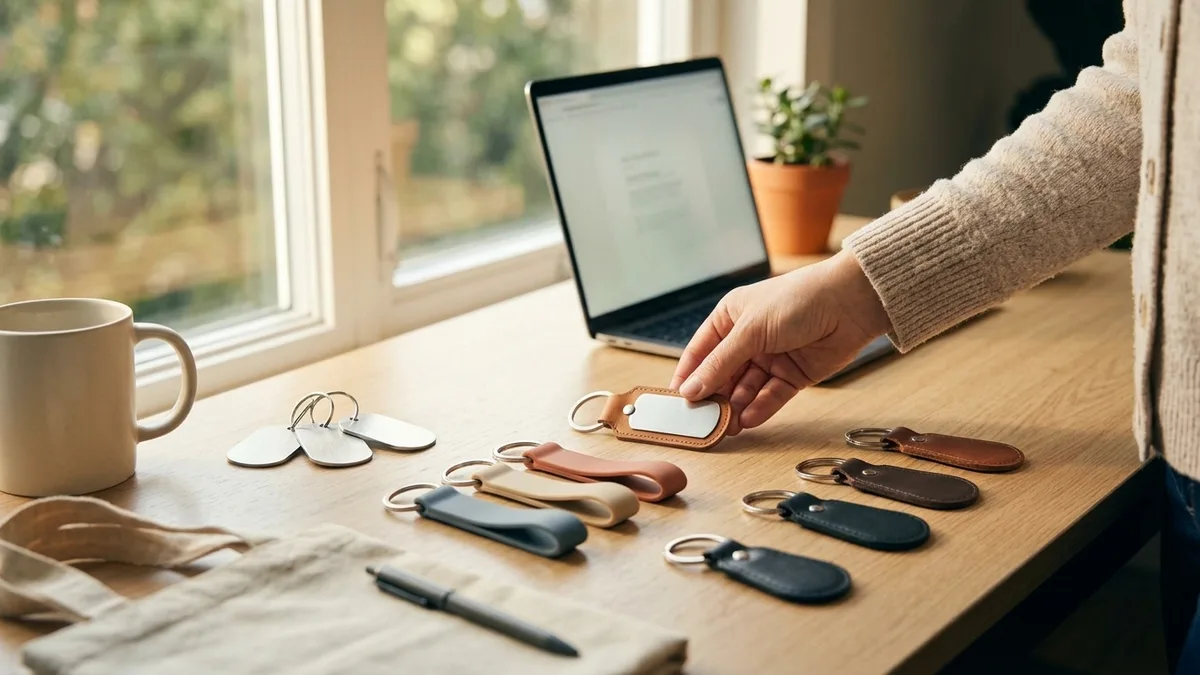
Custom Keychain Ideas: Materials, Styles & Bulk Buying
Custom keychain ideas for bulk brand giveaways: compare metal, leather, acrylic and silicone, weigh engraving against printing, and learn the minimums, costs, and lead times for ordering branded keychains in volume.

Custom Lanyard Ideas: Materials, Clips & Bulk Buying
Custom lanyard ideas for conferences, schools, and staff IDs: compare polyester, nylon, and woven materials, standard widths, clips and ID holders, and how to order in bulk or with no minimum.
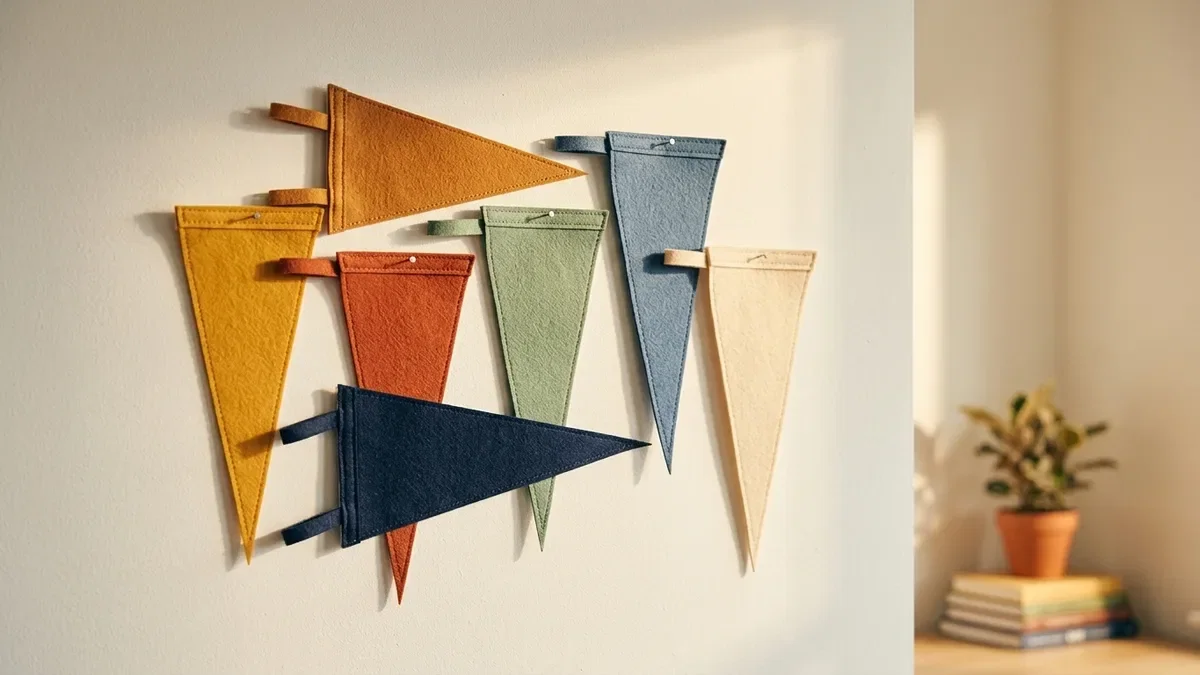
Custom Pennants: Ideas, Sizes, Materials & Bulk Ordering
A B2B buyer's guide to custom pennants: felt vs. printed materials, standard sizes and shapes, pennant string banners, decoration methods, and 10+ bulk campaign ideas for schools, teams, and events.
Custom T-Shirt Design Ideas: A Bulk Buyer's Guide
Custom t-shirt design ideas for teams, events, and staff tees, plus how to choose screen printing vs. DTG, the right fabric, and print-ready artwork so your bulk order comes back exactly how you pictured it.