

Promotional Yardsticks: The Complete History and Modern Marketing Applications

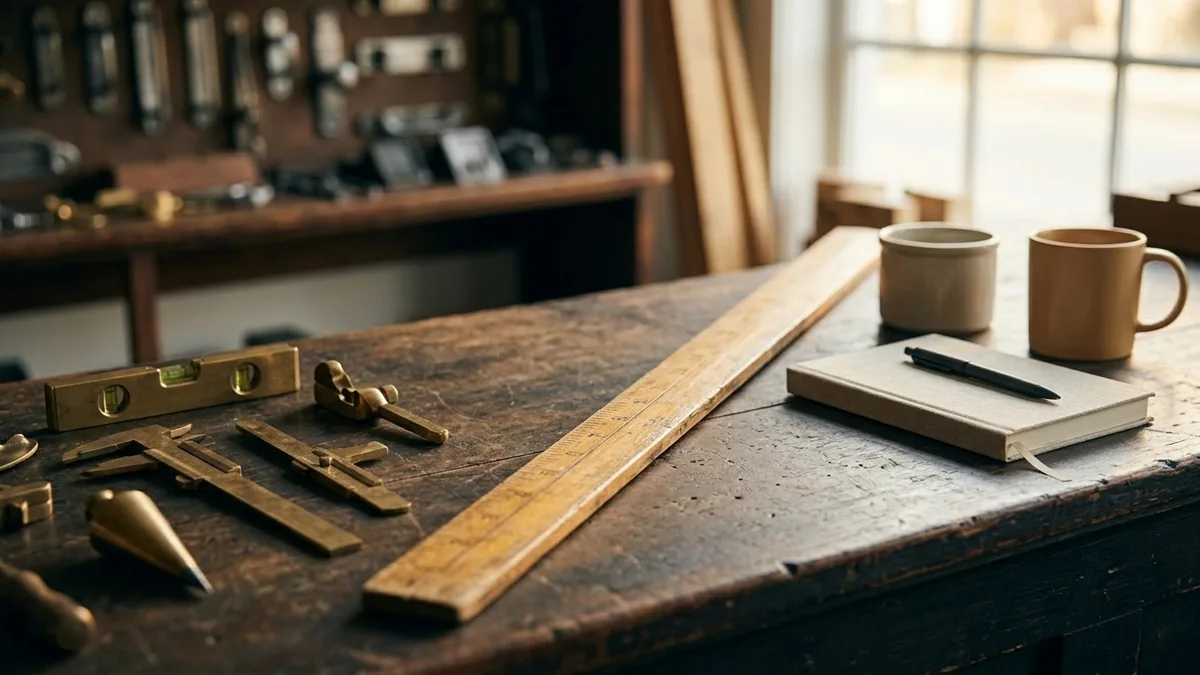
A yardstick is a flat measuring stick exactly one yard long—36 inches, or 3 feet—marked with inch and fraction graduations. Beyond the basic measurement facts that bring most people here, the yardstick has a rich centuries-long history and a surprisingly modern second life as a low-cost marketing tool. This guide answers the common length, size, and "what is it used for" questions first, then walks through how a simple wooden rod became both a cultural icon and an effective branded giveaway.
How Long Is a Yardstick?
The length of a yardstick never varies, because a yard is a fixed unit of measure. One yard equals three feet, and one foot equals twelve inches, so a yardstick spans 3 × 12 = 36 inches. In metric terms, that is 0.9144 meters or 91.44 centimeters, a value formally defined by the international yard agreement of 1959 (adopted by the U.S. National Bureau of Standards).
So when people ask "how long is a yard stick," "yard stick length," "how big is a yardstick," or "how tall is a yardstick," the answer is the same every time: 36 inches, three feet, one yard. A standard yardstick is also typically about 1 to 1.25 inches wide and roughly 1/8 to 1/4 inch thick, dimensions chosen so the rod stays rigid and easy to read.
How Many Inches and Feet Are on a Yardstick?
Reading a yardstick is straightforward once you know how the marks are laid out:
- Inches: 36 numbered inch lines run end to end, from 1 to 36.
- Feet: Three feet are represented; the foot boundaries sit at the 12-inch, 24-inch, and 36-inch marks.
- Fractions: Between the inch lines, shorter graduations mark halves (1/2), quarters (1/4), eighths (1/8), and on better yardsticks sixteenths (1/16) of an inch.
That is why related questions—"how many inches in a yardstick," "how many feet is a yardstick," "a yard stick is how many feet," "how long is a yardstick in inches"—all resolve to the same simple facts: 36 inches and 3 feet. The measurements on a yardstick (the lines and numbers) are uniform along its full span, so any inch you measure is identical to any other.
What Is a Yardstick?
Put simply, a yardstick is a wooden, metal, or plastic rod exactly one yard long, marked in inches and feet, used to transfer that unit of measure to real-world tasks. It bridges the gap between a short 12-inch ruler and a flexible tape measure: long enough to span large surfaces, yet rigid enough to draw a straight line or check that something is flat and level.
The word "yardstick" also lives on as a metaphor. In everyday language, a "yardstick" is any standard or benchmark you measure success against—"a yardstick of quality." That figurative meaning grew directly out of the literal tool's job: providing a consistent, trusted reference.
What Is a Yardstick Used For?
Because of its versatility, questions like "what can you measure with a yardstick," "what is a yardstick used to measure," and "yardstick used for" all point to the same answer: a yardstick measures and marks any length up to three feet. Common uses include:
- Carpentry and DIY: Marking lumber, checking flatness, and laying out 36-inch finish-carpentry cuts.
- Sewing and textiles: Measuring fabric, wallpaper, and trim by the yard.
- Gardening: Spacing rows and sizing raised beds.
- Classrooms: Teaching measurement and drawing straight lines on whiteboards.
- Drafting: Acting as a long straightedge for clean, accurate lines.
Beyond classrooms, custom measuring sticks play a crucial role in construction and DIY projects, particularly in finish carpentry where 36-inch measurements are common. For everyday measuring you might pair one with a custom tape measure or a printed wood ruler, each suited to a different scale of job.
Who Invented the Yard? A Short Yard History
The yard as a unit has intriguing roots in medieval England. It was developed as a practical measurement influenced by human anatomy. Legend credits King Henry I of England with fixing the yard as the distance from his nose to the thumb of his outstretched arm; some scholars also suggest the original ancient yard may have been the length of a man's belt or girdle. Regardless of the origin story, the yard was later standardized as three feet, so early yardsticks provided a 36-inch reference.
Early yardsticks aimed to standardize measurements across England and played a critical role in construction and trade. As towns grew, so did the need for consistent measuring tools. Initially, yardsticks were simple wooden rods that craftsmen fashioned to be about three feet long; these early forms lacked precision but set the groundwork for future designs.
During the Middle Ages, the use of the yard expanded across trades:
- Textile merchants measuring cloth by the yard and inch—a replacement for the older "yard and handful" system mandated by law
- Stone masons calculating dimensions for cathedral construction
- Carpenters crafting furniture and architectural elements
- Land surveyors establishing property boundaries
- Blacksmiths creating tools and metal components to standard sizes
These applications underscore the yard's versatile nature. Uniform yardsticks let communities trade fairly and build ambitiously, and over time this widespread adoption solidified the yard's status in measurement history.
The Origins of Measurement Tools
The earliest measurement tools—true ancient measuring devices—emerged thousands of years ago. Early societies needed these tools to measure land for farming and construction, and Ancient Egypt and Mesopotamia were among the first to develop such systems.
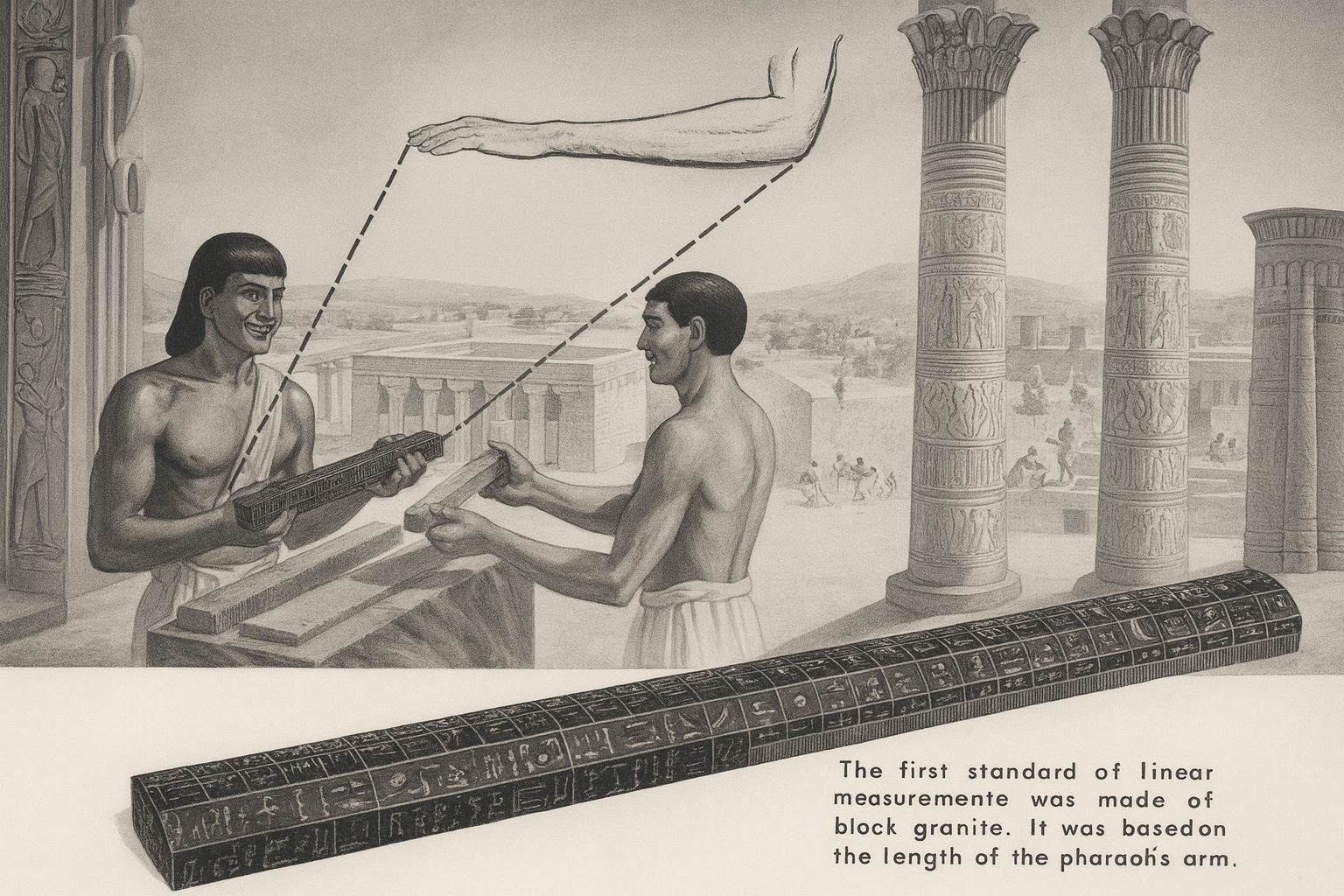
These early tools were simple but effective. They often included basic units like cubits, based on the human body—the cubit was the length of a forearm. This system, though crude, was crucial for building structures like the pyramids.
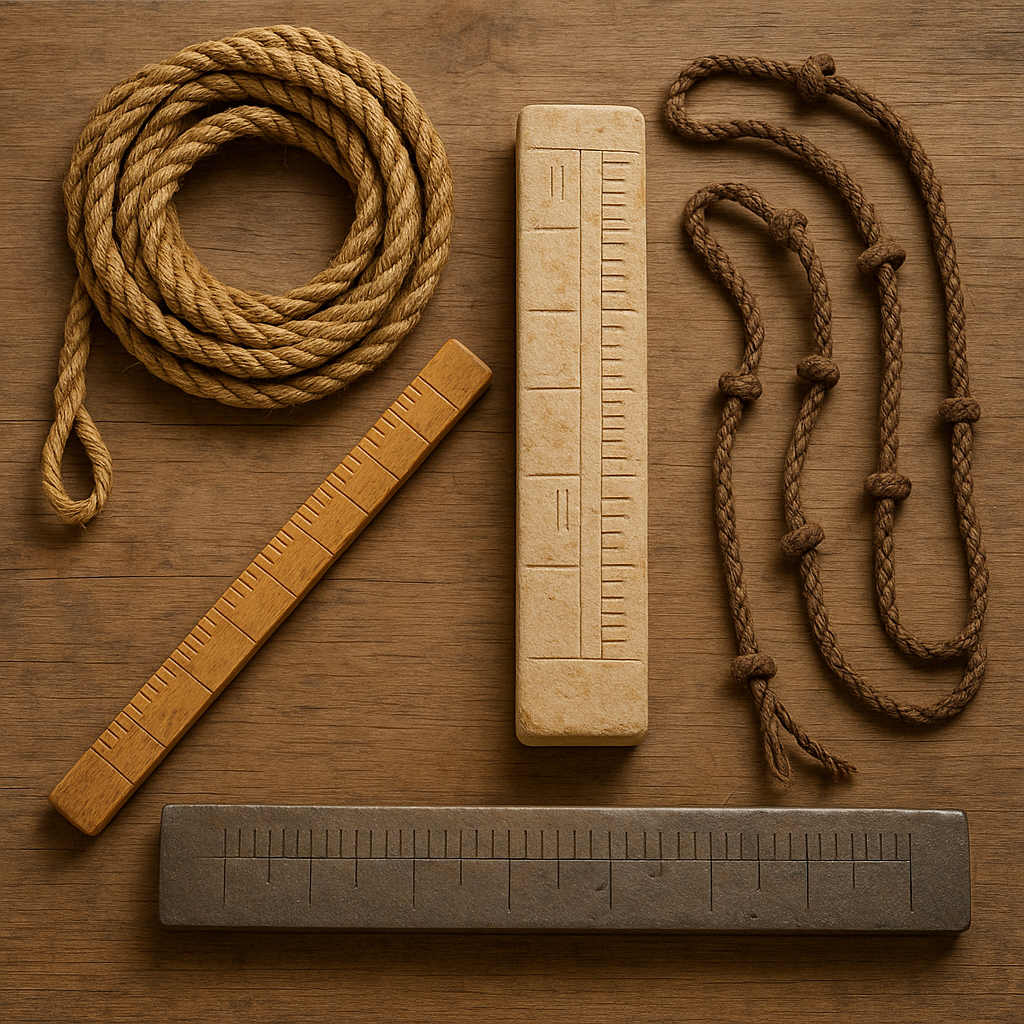
Measurement became more sophisticated over time. Knotted cords served as primitive surveyors' ropes for land measurement and were gradually replaced by measuring chains. Rulers from the Indus Valley Civilization were calibrated to fractions of an inch, showing that ancient measuring tools could be surprisingly precise. As trade expanded, merchants and builders required consistent units to ensure fair trade, which drove the development of uniform tools and measurements.
Some of the earliest tools also included:
- Measuring ropes made from natural fibers for land surveying
- Graduated wooden rods for construction projects
- Stone cubit rods with precise markings for official standards
- Knotted cords for textile and fabric measurements
- Metal calibration bars for temple and palace construction
With the rise of the Roman Empire, measurement systems spread across Europe, and Roman tools standardized the foot and the mile. These innovations laid the groundwork for future tools like the custom yardstick, reflecting humanity's enduring need for precision and uniformity in daily life.
Standardization and the Evolution of Yardsticks
The Industrial Revolution marked a pivotal moment in yardstick history. With rapid advancements in manufacturing, precise measurement became crucial, and yardsticks transitioned from handcrafted tools to mass-produced items. Factories used new materials and machines to ensure precision, making yardsticks more reliable and widely available—including in schools, where they helped students learn accurate measurement.
Key changes during this period included:
- Machine-cut graduations replacing hand-etched markings for consistency
- Introduction of metal end caps to prevent wear and splitting
- Clear lacquer protective coatings for enhanced durability
- Standardized numbering systems with bold, easy-to-read graduations
- Mass production techniques reducing costs and improving availability
As manufacturing matured, the measurements on a yardstick became highly uniform, ensuring each inch and fraction was accurate. Today, many manufacturers showcase custom promotional yardsticks on their websites, offering branded measuring sticks as marketing tools. Each improvement contributed to the overall effectiveness of these instruments—yardsticks, once simple rods, had become indispensable.
Promotional Yardsticks in Everyday Life: Uses and Cultural Significance
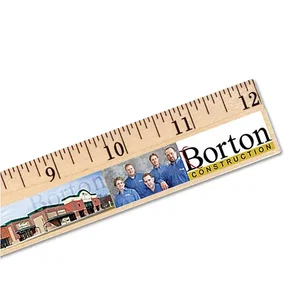
Promotional yardsticks hold a special place in everyday life and modern marketing strategies. Custom yardsticks with logo imprints serve dual purposes as functional tools and effective business giveaways. In schools, they introduce students to measurement concepts while subtly reinforcing brand awareness for educational suppliers, and they serve as hands-on learning tools in mathematics and science.
The cultural significance of yardsticks is multifaceted. They symbolize standards and benchmarks. The phrase "be a yardstick of quality," widely attributed to Steve Jobs, uses the tool as a metaphor for excellence and continues to inspire individuals and organizations. In language, a "yardstick" often represents a measure of success or quality—a metaphorical use that highlights the tool's broader impact.
Modern applications for promotional yardsticks include:
- Construction companies using branded yardsticks for client giveaways and project measurements
- Educational suppliers providing custom rulers to schools as marketing tools
- Corporate promotional items for trade shows and business events
- Interior designers using personalized measuring sticks for brand recognition
- Lumber yards distributing advertising yardsticks to customers
- Craft stores offering promotional measuring tools for customer loyalty
Trade show promotional yardsticks have become particularly popular because they offer practical value that recipients actually use, ensuring repeated brand exposure—a point we explore further in our ultimate guide to trade show swag. For the contractor and skilled-trades audience, yardsticks also rank among the best promotional products for construction workers.
Shop Custom Yardsticks & Rulers
View all →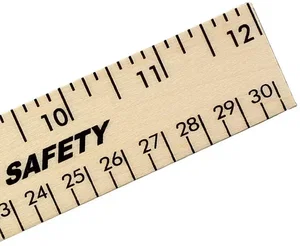

Materials and Design: How Promotional Yardsticks Have Changed
Over time, the design of promotional yardsticks has adapted to meet evolving marketing and functional needs. Initially, yardsticks were simple handcrafted wooden tools with markings etched by skilled artisans. As industrialization progressed, materials diversified—metal and plastic joined wood—enhancing durability, extending lifespan, and increasing precision.
Modern custom yardsticks reflect technological advancements and branding requirements, with design enhancements focused on accuracy, ease of use, and maximum logo visibility. Contemporary promotional measuring sticks often feature additional graduations down to sixteenth-inch divisions, making the tool more precise for detailed work while keeping the brand presentation clear.
Common materials used in promotional yardstick manufacturing include:
- Natural hardwood: Hand-selected hard maple for premium custom yardsticks with clear lacquer protection
- Aluminum: Lightweight yet sturdy with an anodized protective finish for industrial promotional applications
- Fiberglass: Weather-resistant for outdoor construction branded measuring tools
- Composite materials: Wood lamination combined with synthetic reinforcement for durability
- Eco-friendly plastic: Cost-effective and suitable for educational promotional giveaways
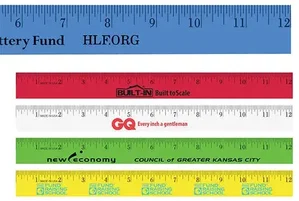
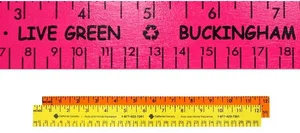
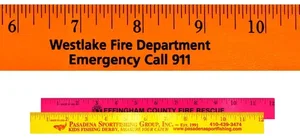
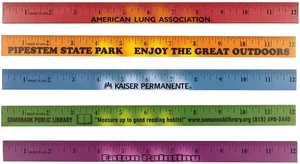
Design innovations have also improved aesthetics and marketing effectiveness. Bright colors and ergonomic features make custom yardsticks more user-friendly and eye-catching, and a maximum logo imprint area of roughly 35 inches in length by 1/2 inch in height provides excellent brand visibility. Their evolution demonstrates the balance between maintaining tradition and embracing modernity in both design and marketing applications. A practical example is our best-selling clear-lacquer-finish yardstick, which pairs hardwood durability with a generous imprint area.
Promotional Yardsticks in the Age of Metrication and Digital Tools
The rise of the metric system reshaped how we measure, offering a uniform standard that simplified international trade. Despite this, promotional yardsticks persist in the United States, where customary (Imperial) measurements remain standard in construction and education.
Digital tools have made measurement faster and more precise, yet custom yardsticks remain popular for their simplicity and marketing effectiveness. They don't require batteries or software—an advantage in many situations—and offer a tactile engagement that digital devices cannot match.
The continued use of promotional yardsticks can be attributed to several factors:
- Familiarity with Imperial measurements in construction and trades
- Cost-effectiveness compared to digital measuring devices for bulk promotional orders
- Reliability in harsh working conditions without electronic failure
- Educational value for teaching both Imperial and metric systems
- Excellent brand visibility for companies serving traditional industries
- Long-term advertising exposure as recipients keep useful tools
When someone asks how many feet are in a yardstick, the answer remains three—a simple fact that underscores the enduring practicality of this tool. In a world dominated by technology, the promotional yardstick's reliability and marketing value stand out.
Ordering Custom Promotional Yardsticks: A Business Guide
Businesses considering promotional yardsticks should understand the practical aspects of custom ordering. Minimum order quantities typically range from 250 to 300 pieces across major suppliers, making them accessible for small to medium businesses. Setup charges for custom artwork commonly run around $30 per color, with most suppliers accepting vector files in AI, EPS, or PDF formats.
Quality considerations for promotional yardsticks include:
- Wood selection: Premium suppliers use hand-selected hard maple for consistency
- Thickness options: Standard 5/32″ versus premium 1/4″ for enhanced durability
- Finish types: Natural wood, lacquered, or enamel finishes affect both appearance and longevity
- Imprint specifications: Maximum logo height of 1/2″ with a minimum 7-point text for legibility
- Folding designs: Available for compact storage and mailing campaigns
Production timelines typically require about 6 to 7 business days after artwork approval, with rush options available. Shipping considerations include weight planning (roughly 52 pounds per 500 pieces) and packaging options for direct-mail campaigns. Volume discounts make yardsticks cost-effective for annual marketing campaigns or trade show distributions. For a deeper look at strategy, see our custom yardsticks marketing guide and our roundup of promotional gift ideas for business.
Put a 36-inch billboard in your customers' hands
Conclusion
A yardstick is, at its simplest, a rigid stick 36 inches—three feet, one yard—long, and that fixed length is exactly what has kept it useful for centuries. From ancient cubit rods to King Henry I's standardized yard to today's mass-produced classroom tool, the yardstick reflects a broader human story: the quest for order and accuracy.
Even amid digital advancements, promotional yardsticks remain valued for their versatility, marketing effectiveness, and ease of use. Custom yardsticks have transcended their functional role to become both cultural icons and powerful promotional tools that combine practical utility with sustained brand visibility in a competitive marketplace.
Ready to Measure Up Your Marketing with Custom Promotional Yardsticks?
Promotional Product Inc. specializes in high-quality custom yardsticks that combine centuries of measurement tradition with modern marketing effectiveness. Our promotional yardsticks are crafted from premium hardwood with precise graduations and offer maximum brand visibility for your business—whether you need branded measuring sticks for trade shows, custom yardsticks for educational markets, or personalized measuring tools for corporate giveaways. Request your free quote and artwork proof to see how these timeless tools can carry your brand message with precision and lasting impact.
Shop Related Categories
Related Articles
Custom Yardsticks: The Classic Tool That Builds Your Brand
In an era dominated by fleeting digital ads and complex gadgets, there is something powerful about a tool that just works.

How to Care for Fanny Packs
In this blog post, you’ll learn how to keep your custom fanny pack looking fresh and functional.
How to Buy Bulk Promotional Fanny Packs Without Hidden Fees: A Checklist for Corporate Buyers
Ordering bulk promotional fanny packs for a corporate event or trade show should be simple, but many buyers are hit with hidden fees that inflate the final cost.

The Complete History and Popularity of Fanny Packs in the USA
The fanny pack has traveled an extraordinary journey through American culture—from ancient utility pouches to 1980s fashion statements, through decades of ridicule, and back to its current status as a must-have accessory.