
Bulk Fanny Packs and Custom Belt Bags: A Hidden Fees Checklist



Hidden fees are the reason a bulk order of promotional fanny packs climbs past budget. A low advertised unit price quietly grows once setup charges, PMS color matching, run charges for extra logo colors, and rush fees land on the quote. This is a corporate buyer's checklist for catching those hidden fees on bulk fanny packs before you sign the purchase order, so the number you approve is the number you pay. Since 2008, Promotional Product Inc. has quoted one all-in delivered price per unit, and the steps below show you how to compare quotes, read the fine print, ask the questions that force a firm number, and browse the fanny pack collection with confidence.
Shop Budget-Friendly Custom Fanny Packs
View all →


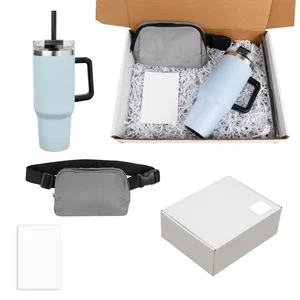

How Much Can Hidden Fees Add to a Bulk Fanny Pack Order?
The promotional products industry is known for layered pricing. A vendor might advertise a low price per fanny pack, then add a one-time setup fee, a per-bag run charge for a second logo color, and a proofing fee once the quote is written up.
On a bulk order, even a small difference per unit is multiplied across every bag in the run. If you build your spend from the ground up, our guide to bottom-up vs. top-down budgeting for promotional marketing explains how to set a realistic per-unit ceiling before you ever request a quote. To avoid blowing past it, you need to know exactly what questions to ask before you sign off on a purchase order.

What Goes Into an All-In Fanny Pack Price?
An all-in price is the base bag plus every one-time and per-unit charge, divided across your quantity and delivered to your door. One-time charges (setup, proof, freight) shrink per unit as the run gets larger, while per-unit charges (run charges, PMS matching) hit every bag no matter how many you order.
| Line item | How it's charged | What to confirm |
|---|---|---|
| Base bag | Advertised headline price | Which material, how many colors, how many locations it includes |
| Setup / screen charge | One-time, spread across the run | Whether it is waived on this item |
| Run charge, extra logo color | Per unit, on every bag | The charge per additional color, per location |
| PMS ink match | Per order or per unit | Whether a closest-stock color is free |
| Proof | One-time | Paper or digital, and whether it is included |
| Freight | One-time, spread across the run | An estimate to your ZIP, capped on the PO |
| Rush production | Usually a percentage of the order | The standard date versus the rush date |
The headline price is real. It just isn't the whole price. A transparent supplier hands you the all-in number before you sign, not a teaser that triggers a budget overrun at invoicing.
What Separates a Transparent Supplier From a Cheap One?
Cheap is not the same as transparent. A truly transparent supplier protects your spend by removing surprises, so the number you approve is the number you pay. Before you commit to a promotional products company, run their quote through the checklist below. A reputable partner, like Promotional Product Inc., will be happy to answer every point clearly.
What Should a Corporate Buyer Check on Every Quote?
Check four things on every quote: setup, PMS color matching, run charges, and rush fees. The answers reveal whether a low headline price is real or just bait for the fees that follow.
Jump straight to a question:
- Are setup fees included or extra?
- Is there a PMS color-matching charge?
- Does the price include run charges for extra colors?
- Are there rush production fees?
1. Are "Setup Fees" Included or Extra?
Setup is often extra, because most custom printing requires creating a screen (for screen printing) or a digitizing file (for embroidery). Some suppliers hide this cost until checkout.
The PPI Standard: We clearly label setup requirements. We frequently offer free setup options on popular items to keep your total cost predictable.
2. Is There a Charge for Specific PMS Color Matching?
Often yes, if your brand needs an exact ink color. PMS stands for the Pantone Matching System, which Wikipedia describes as a standardized color reproduction system that lets designers "color match" specific colors when a design enters production. Some vendors charge a fee to mix that custom ink. If you are flexible, ask for "closest stock color" to save money. If branding is strict, ensure the PMS fee is quoted upfront.

3. Does the Price Include "Run Charges" for Additional Colors?
Usually not: the base price typically covers a one-color logo in one location. If your logo has three colors, you will likely pay a "run charge" for each additional color.
The Fix: For colorful logos, consider full-color digital printed fanny packs like the All-Around Adaptive RPET Fanny Pack or the Sublime Series rPET Fanny Pack. These often allow unlimited colors in your design for one flat price, eliminating surprise run charges for complex artwork.
4. Are There "Rush Production" Fees?
Yes, compressing a standard production schedule usually adds a rush fee, and it can be steep.
The PPI Standard: We list production times clearly on every product page, so you can plan a standard order for your event date without panic fees.
How Do Minimums and Price Breaks Change the Unit Price?
Quantity is the single biggest lever on your per-unit cost: the price drops in steps ("price breaks") as the order grows. Decorated fanny packs almost always carry a minimum order quantity (MOQ), and each product page shows its own tiers.
- The first tier: Decorated orders start at the item's minimum. Blank (un-printed) packs sometimes ship in smaller counts, but the moment you add a logo the decorated minimum applies.
- The LTM trap: Order below the minimum and some suppliers add a less-than-minimum (LTM) surcharge on top of the higher small-batch unit price. Two costs, one mistake.
- Where the next break falls: Read the full price table, not just the lowest number, and note the quantity where the next tier starts.
| Quantity band | What usually happens |
|---|---|
| Under the minimum | Highest unit price, plus an LTM fee if one applies |
| First standard tier | The item's normal minimum and starting price |
| Middle tiers | Unit price steps down at each break |
| Top tier | Lowest per-unit cost on the table |
The buyer tactic: if your count sits just below a price break, price the break quantity too. Jumping just over it can drop your per-unit cost enough that the larger order costs the same, or less, in total, and you pocket the extras as backup stock.
When Should You Order to Avoid Rush Fees?
Order about three weeks before your in-hands date for a standard order, and about four weeks for a trade show. Rush fees are almost always self-inflicted: they happen when the order is placed too late, not because production is slow.
Work the timeline in reverse:
- In-hands date: the day you need bags in the booth. This is your anchor; everything counts back from here.
- Minus shipping transit: ground freight varies by distance; add a buffer for large pallets.
- Minus production: use the production time listed on the product page. This is where the rush fee lives if you compress it.
- Minus proof approval: the clock pauses while a proof waits for your sign-off, so reply fast.
- Minus art review / digitizing: the supplier checks your file prints clean before anything runs.
Show logistics and travel leave no room to absorb a proof delay, and the extra cushion keeps you out of rush-fee territory entirely.
Which Quote Lines Hide Future Charges?
Vague line items such as "TBD," "actual," or "see chart" are where a future charge hides. When you see one of these, don't nod past it. Ask the matching question and make the rep put a firm number on the record before the PO.
| Vague quote line | The exact question to ask |
|---|---|
| "Setup: TBD" | "What is the exact setup charge for this item and decoration method, in dollars?" |
| "Freight: actual" | "What's the estimated freight to my ZIP for this quantity, and will you cap it on the PO?" |
| "EQP pricing" | "Does end-quantity pricing apply at my exact quantity, or only at the next tier up?" |
| "LTM fee" | "What is the less-than-minimum fee, and what quantity removes it?" |
| "PMS on request" | "What does a PMS match cost per unit, and is a closest-stock color free?" |
| "Run charge: see chart" | "What's the run charge per additional color, per unit, for my specific logo?" |
If a rep won't commit to numbers in writing, that is your answer, and your cue to get the quote elsewhere.
Which Fanny Pack Material Is Best for the Budget?
Price transparency also means understanding product quality. You shouldn't pay top-tier prices for budget materials. When comparing quotes, check the denier rating, a measure of fiber thickness that Wikipedia defines as grams per 9,000 metres of yarn, so a higher number means a heavier, thicker weave:
- 210D Polyester (the budget-friendly choice): Lightweight and well suited to high-volume giveaways like parades, festivals, and 5K runs. It is cost-effective but less rigid: the right call when reach matters more than heft.
- 600D Polyester (the corporate standard): If you are gifting employees or clients, you want something substantial. The 600D Polyester Zippered Fanny Pack feels thicker and more durable; it costs slightly more than 210D, but the perceived value is much higher. For a versatile mid-tier option, the Tri-Zip Fanny Pack balances durability and price.
- Eco & recycled (sustainability on a budget): Recycled-content packs like the All-Around Adaptive RPET Fanny Pack let you meet sustainability goals while keeping full-color printing affordable.
If you want to see how styles drive demand at events, read our history of fanny packs in the USA for context on why the style keeps coming back.
Why Do Promo Fanny Packs Get Used Instead of Tossed?
A fanny pack is a wearable, hands-free bag, so it goes wherever the recipient goes. Getting the fees right only pays off if the bag actually gets worn, and that's the quiet advantage of this product: a fanny pack clips on at festivals, gym runs, theme parks, and commutes, putting your logo in front of new eyes each time it goes out. That repeat exposure is exactly what makes the per-unit math worth getting right. These are giveaways people genuinely wear: here's how recipients will actually style them.
Is the Cheapest Fanny Pack Quote the Best Value?
Not always, because a bag that fails early costs you a second order. We all want a deal. But chasing a "too good to be true" price often leads to quality-control nightmares: zippers that stick, seams that fray, or buckles that snap. A bag that fails on day one is budget spent twice.
At Promotional Product Inc., we balance affordability with reliability. We take care in what we sell, across our fanny pack lineup, sling backpacks, and broader bags and totes, and we make sure the hardware holds up to real-world use. Heading to a booth or expo? Our trade show swag guide covers which giveaways earn the most pickups, and our wellness and recovery kits pair naturally with packs for health-focused events. To keep those packs looking new after the event, our fanny pack care guide walks recipients through cleaning by material.
The Promotional Product Inc. Guarantee
We know that purchasing custom merchandise involves trust. You are trusting us with your deadline, your budget, and your brand's reputation. That is why we adhere to strict standards that distinguish us from faceless overseas aggregators:
- Lowest Price Guarantee: If you find a better price on the same item elsewhere, let us know and we will match it.
- A+ BBB Accreditation: We have been serving clients since 2008.
- No Hidden Fees: We believe in upfront communication. The quote you get is the price you pay.
- Personal Expert Review: Our team checks your artwork to ensure it will print correctly on your chosen material (be it canvas, clear PVC, or nylon) before production begins.

Frequently asked questions
Do promotional fanny packs have setup fees?
Yes, most decorated fanny packs carry a one-time setup or screen charge to create the print screen or embroidery file. It is usually charged per color per location, not per bag, so it shrinks per unit on larger runs. Ask whether the item qualifies for free setup if your budget is tight.
What is a typical minimum order quantity for fanny packs?
The minimum depends on the style and decoration method, and each product page lists its own starting quantity. Blank packs can sometimes ship in smaller counts, but once you add a logo the decorated minimum applies. Order below it and you may pay a less-than-minimum (LTM) surcharge on top of a higher small-batch unit price.
What is a run charge?
A run charge is a per-unit fee for each additional imprint color or location beyond the one included in the base price. A three-color logo printed against a one-color base price means two run charges on every bag. To avoid them, choose a full-color digital print that allows unlimited colors for one flat price.
How far ahead should I order fanny packs for an event?
Plan about three weeks for a standard order and four weeks for a trade show. Work backward from your in-hands date through shipping transit, production, proof approval, and art review so you never trigger a rush fee.
Can I avoid rush production fees entirely?
Usually, yes, as long as you order early. Lock your artwork early, approve the proof quickly, and place the order at least three weeks before your in-hands date. Rush production is only needed when the calendar is tight.
Copy-Paste RFQ Template to Force an All-In Quote
The fastest way to surface hidden fees is to ask for the all-in number up front. Paste this request into any supplier's inbox and fill in the brackets. It forces every charge onto one quote so you can compare apples to apples.
Subject: RFQ: Bulk Fanny Packs (All-In Quote Requested)

Item / style: [link or item name]
Quantity: [e.g. 500] (please also quote the next price break up)
Decoration: [screen print / embroidery / full-color], [# of colors], [# of locations]
Color match: [closest stock OR PMS ____ (please quote any PMS fee)]

Please send ONE all-in, delivered price per unit that includes:
- Base unit price
- Setup / screen / digitizing charges
- Run charges for additional colors or locations
- PMS color-match fee (if any)
- Proof (paper or digital)
- Freight to ZIP [_____]
- Rush option + fee (needed in-hands by [date])

Also confirm: MOQ, any less-than-minimum (LTM) fee, and standard
production time in business days.
Send that to any vendor, or drop it in our lap and our team will reply with a single, all-in number and zero surprises at checkout. That's the whole point of a no-hidden-fees quote.
Ready to Order with Confidence?
Don't let hidden fees derail your next event. Skip the surprise setup and shipping charges and order custom fanny packs in bulk with all-in, transparent pricing. From eco-friendly rPET options to durable 600D corporate-grade packs, we have the right fit for your brand and your budget, at a price you can plan around.
Get an all-in quote with no hidden fees
Shop Related Categories
Share this post with your team
Send it to a colleague or save it for later.
Related Articles

Hat Sizes: How to Measure Your Head, a Full Hat Size Chart and What OS Means
A plain-English guide to hat sizes: how to measure your head in one minute, a full hat size chart in inches and centimeters, what OS means on a size label, and how to size hats for a group.
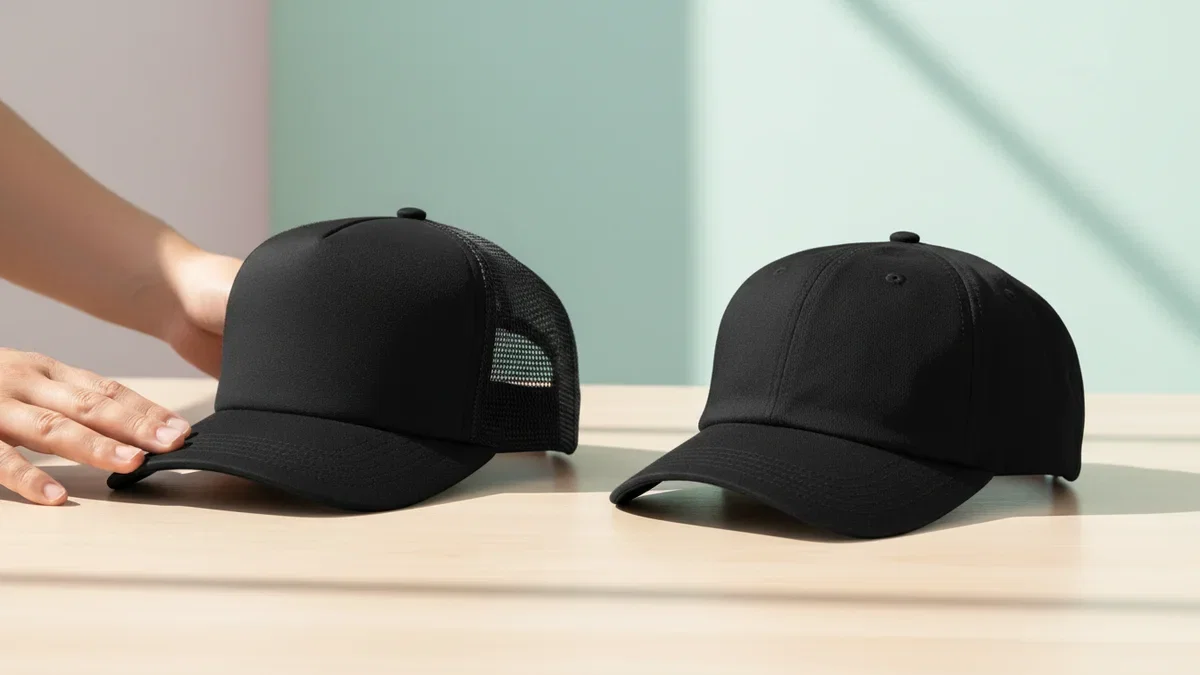
Structured vs Unstructured Hats: The Difference, and Which Cap to Choose
A structured cap stands up on its own and an unstructured cap relaxes and lies flat. Here is how each looks, fits and takes a logo, with a one-minute chooser and a free printable.
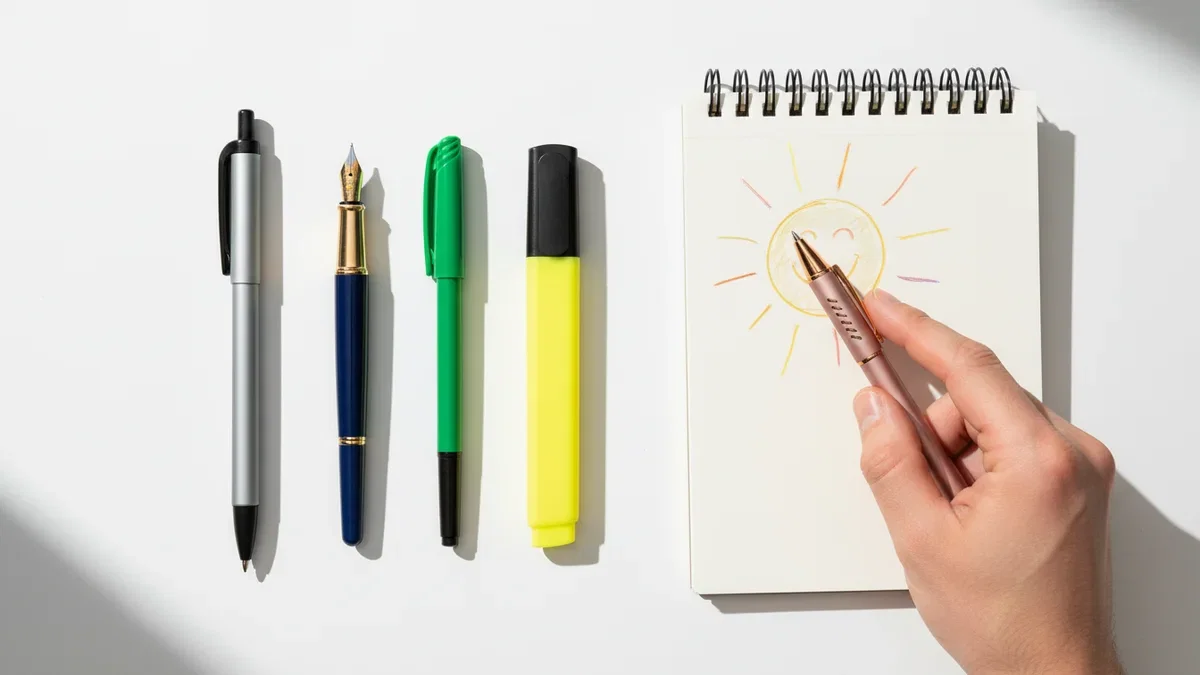
Types of Pens: How to Pick the Right One for Every Job (With a Free Cheat Sheet)
A chooser, not an encyclopedia: which pen to buy or hand out for each job, how pen tips and inks differ, head-to-head verdicts, left-handed tips and a free printable pen picker.
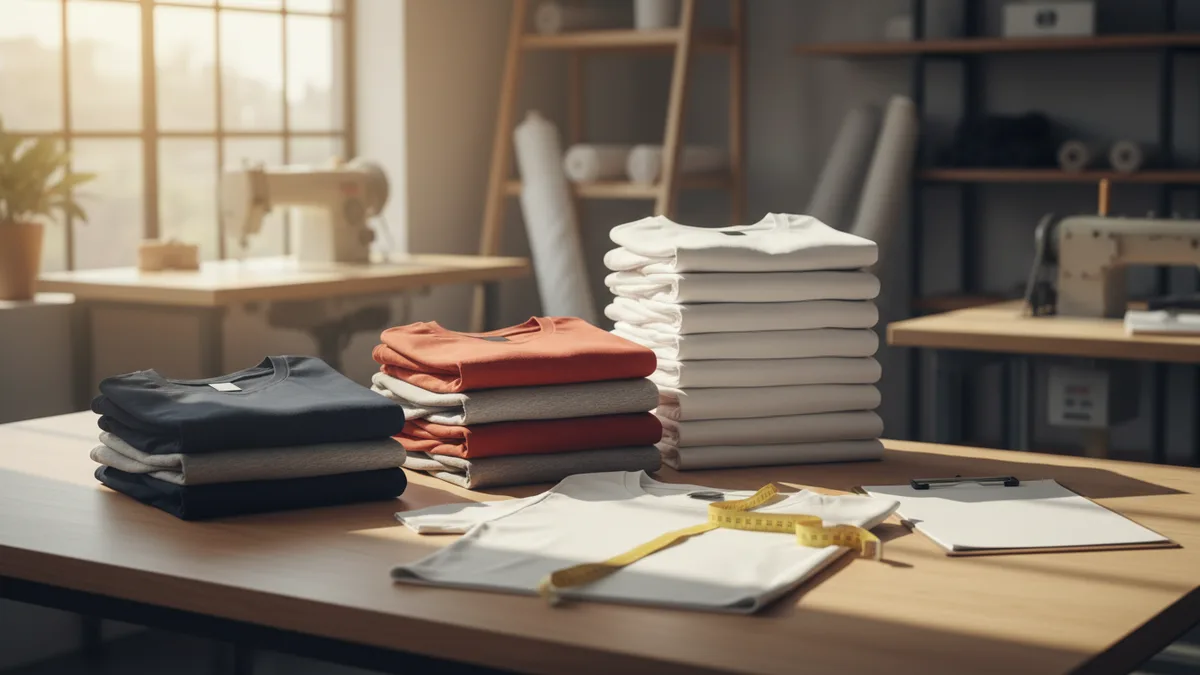
T-Shirt Size Chart: Gildan, Comfort Colors, Bella+Canvas and Youth Sizes
A T-shirt size chart in inches with the published measurements for Gildan, Comfort Colors, Bella+Canvas and youth tees, a two-minute way to measure a shirt, and a worksheet for how many of each size to order.