
Are Promotional Items Tax Deductible? Company Swag Tax Guide


In this post, we answer two questions every business owner eventually asks about company swag: are promotional items tax deductible, and what does branded swag actually cost per employee? Company swag goes beyond giving away free products. It builds lasting impressions while, in many cases, lowering your tax bill. From branded t-shirts and water bottles to tech gadgets, these items can make your brand memorable and may qualify as a deductible marketing or gift expense.
Company swag refers to promotional items customized with a company’s logo or message, ranging from simple items like pens and mugs to more premium items like tech gadgets. Swag serves as a marketing tool to increase brand recognition and loyalty. Whether used at trade shows, product launches, or for employee gifts, custom printed swag items are an effective way to keep your brand top of mind.
To maximize its impact, select items that resonate with your audience. For instance, a tech company might choose a branded USB flash drive, while an eco-conscious brand may prefer tote bags or sustainable products. For a deeper dive on choosing the right pieces, see our guide to why custom promotional products are essential for small business success.
Shop Corporate Employee Gifts
View all →
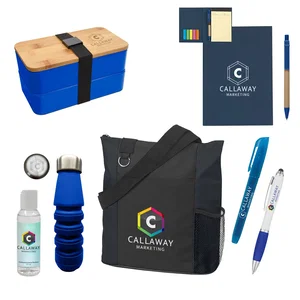

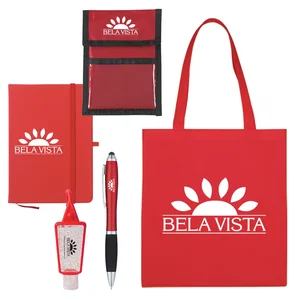
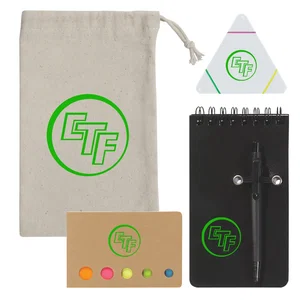
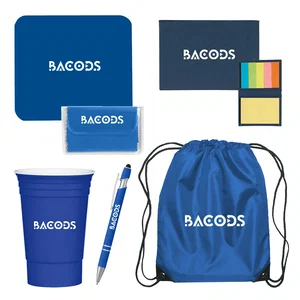
Are Promotional Items Tax Deductible?
The key distinction the IRS draws is between advertising and a gift. Branded merchandise distributed widely (think pens at a trade show booth, tote bags at a conference, or t-shirts at a community event) is typically treated as an ordinary and necessary advertising expense and is fully deductible, because the primary purpose is promoting your brand rather than benefiting one individual.
A business gift, by contrast, is something given to a specific client or contact. Per IRS Publication 463, you can deduct no more than $25 per recipient per year for direct or indirect gifts. The good news: items costing $4 or less that have your name permanently imprinted and that you distribute regularly (along with signs, display racks, and other promotional materials) are excluded from that limit entirely. Always confirm your specific situation with a tax professional, as IRS rules change. Deductibility is a separate question from whether the swag counts as taxable income to the person who receives it; for a closer look at is company swag taxable to employees, see our companion guide.
What Is the Average Cost of Company Swag Per Employee?
Because "average cost of company swag per employee" varies so widely, it's more useful to think in tiers than in a single number:
| Swag tier | Typical per-employee spend | Example items |
|---|---|---|
| Everyday staples | $1–$10 | Logo pens, notepads, stickers |
| Welcome / onboarding kit | $25–$75 | Tote bag, tumbler, t-shirt |
| Premium / milestone gift | $75–$150+ | Tech gadgets, branded apparel, gift sets |
Ordering in bulk is the single biggest lever on per-unit cost. The more you buy, the less each piece costs. Pairing a few low-cost staples with one standout item usually delivers the best mix of reach and impression without inflating your per-employee budget. For ideas on what to include, our roundup of the best promotional items for small business breaks down proven products by budget. For onboarding specifically, our guide to new hire welcome kit ideas sorts the contents into the same budget tiers.
Is Company Swag Worth It?

Branded merchandise, also known as company swag, is more than a giveaway. It’s a tool for building connections and boosting brand awareness. The Advertising Specialty Institute's recurring Global Ad Impressions Study consistently finds that most people who own a promotional product can recall the brand on it, and that a majority keep items they find useful. That sustained exposure is what drives customer loyalty and repeat engagement.
Picture a small tech company that hands out branded USB drives at a conference. Long after the event, attendees keep plugging that drive into their laptops: each use a quiet reminder of who gave it to them. That is the practical mechanism behind swag's value: useful, high-quality items keep your brand in someone's daily routine far longer than a one-time ad.
Think of it as an investment in your relationships. Every time someone uses a branded mug or tech gadget, your brand becomes part of their day, increasing the likelihood that they’ll remember and engage with your business. The key to making swag worth it is choosing quality, useful products that reflect your brand values. When done right, the return on investment (ROI) can be significant. And our guide to trade show swag shows how to put these items to work at events.
Tax Deductions for Company Swag
Tax deductions reduce the amount of money a business has to pay in taxes. When a small business buys things like company swag (pens, mugs, or other branded items), they can often deduct part of the cost from their taxes.
Here’s how it works:
-
You spend money on gifts or swag for clients and employees.
-
You report the cost of these items when filing taxes.
-
The government lowers your taxable income, which means you pay less in taxes.
Tax Deductions for Client and Customer Swag
-
Businesses can deduct up to $25 per person per year for gifts to clients or customers.
-
Only tangible items qualify for this deduction. Cash, gift cards, or other cash equivalents are not eligible.
-
The $25 limit applies per client, not per gift. So if you're gifting to a business with multiple people, you can deduct up to $25 for each person.
Additional Considerations
Incidental costs, like engraving, packing, or shipping, don’t count toward the $25 deduction limit, provided they don’t significantly add to the gift's value. Small promotional items under $4, such as pens or USB drives with your company logo, that are given out regularly are also exempt from this limit. However, if a gift could be classified as both entertainment and a gift, it should be reported as entertainment, meaning it won’t be eligible for deduction.
Record Keeping
It's crucial to keep detailed records of all gifts and promotional items given to clients and customers. For each gift, document:
- The cost
- A description of the gift
- Date of purchase
- Date given
- Recipient's name and business relationship
- Reason for giving the gift
3 Easy Tips to Follow
- Consider giving multiple small gifts throughout the year instead of one large gift to maximize your deductions.
- Utilize promotional items under $4 with your company logo, as these don't count towards the $25 limit.
- When possible, combine client gifts with business meals, as you can deduct up to $25 per attendee for business meals.
By following these 3 simple tips, you can make the most of your client and customer swag while staying compliant with tax regulations. Remember, tax laws can change, so it's always advisable to consult with a tax professional for the most up-to-date advice.
Swag for Employees
Small, occasional non-cash gifts of nominal value are typically not taxable to employees. These are considered de minimis fringe benefits. Importantly, the IRS does not set a fixed dollar threshold for what counts as de minimis: the test is whether the item is so small and infrequent that accounting for it would be unreasonable or impractical. (The IRS has, however, informally indicated that items worth more than around $100 are not de minimis.) Branded swag is a natural fit here, and well-chosen items also help boost employee morale and retention. Common de minimis examples include:
-
Snacks, coffee, or doughnuts provided occasionally
-
Tickets to entertainment events
-
Small holiday gifts with a low market value
-
Occasional personal use of company equipment
However, it’s important to note that cash gifts or cash equivalents like gift cards are always considered taxable income to employees, regardless of the amount.
Employee Award Tax Rules
The IRS allows up to $1,600 per year in non-cash awards for employees, like prizes for doing a great job. These awards can include holiday gifts, employee-of-the-month prizes, or safety awards. Be sure to follow specific IRS rules if giving out awards for length of service or safety achievements.
Tax Deductions for Employers
Employers can benefit from specific tax rules regarding business gifts and employee swag. The business gift deduction lets employers deduct up to $25 per recipient per year for business gifts, whether given to clients or employees, though keep in mind that this limit applies to gifts, not promotional items. Non-cash employee gifts that qualify as de minimis fringe benefits can generally be deducted as a business expense without being counted as taxable income to the employee. Gift cards work differently: the full value of a gift card given to an employee can be deducted, but it must be reported as taxable wages to the employee, since gift cards are treated as cash equivalents. Incidental costs such as engraving, packing, or shipping a gift do not count toward the $25 deduction limit if they don’t add substantial value to the gift itself.
Key Considerations
If the value of a gift exceeds $100, even if it’s in the form of swag or a gift basket, it may be subject to taxation as compensation. Employers should also maintain detailed records of gifts, including the recipient’s name, the value of the gift, and the occasion for which it was given; this documentation can help when calculating deductions or reporting taxable gifts. And because IRS treatment of a gift can vary based on its type, frequency, and value, even a gift you intend to be non-taxable may be classified as compensation under certain circumstances.
For specific tax situations or complex cases, it’s always advisable to consult a tax professional. This ensures that your company remains compliant while making the most of available deductions. For expert guidance on tax-related matters, be sure to check out the IRS's advice on choosing a tax professional.
Additional Resources for Compliance
For further clarification, refer directly to the IRS guidelines on fringe benefits. Staying informed on the latest IRS rules will help you ensure that you provide gifts and swag appropriately without unintentionally incurring taxes. Understanding the tax rules ensures that you can maximize deductions while staying compliant with IRS regulations.
The Bottom Line
Company swag is worth it when you choose useful, on-brand items and keep clean records. Most promotional products are tax deductible (fully, as advertising, or up to $25 per recipient as a business gift) and many employee items qualify as tax-free de minimis benefits. Budget roughly $50–$150 per employee per year, lean on bulk pricing, and pair a few low-cost staples with one standout piece. Then document every gift and let a tax professional confirm the details for your situation.
Ready to put your swag budget to work?
Shop Related Categories
Related Articles

Customer Appreciation Gift Ideas That Build Real Loyalty
A thoughtful gift does more than say thank you, it keeps customers coming back. Here are the branded customer appreciation gift ideas that actually move retention, from budget swag to premium client gift sets.

Grand Opening Marketing Ideas to Pack the House
A great grand opening does not happen by luck. It is engineered weeks in advance. Here is a practical playbook of promotions, giveaways, and signage that fills your store on day one and keeps people coming back.

Top Ways to Use Tower Gift Sets for Corporate Gifting and Promotions
Gift tower promotions leverage multi-tiered unboxing psychology to boost employee recognition, client loyalty, and brand visibility through strategic marketing that creates lasting emotional connections.

When Your Logo Redesign Backfires: What Cracker Barrel's Mistake Teaches Us About Brand Identity
A logo redesign can refresh your brand, but when it misses the mark, it risks alienating loyal customers. Cracker Barrel’s recent rebrand dropped its iconic “Old Timer” imagery, sparking backlash and forcing a quick reversal.