
Bottom-Up vs. Top-Down Budgeting for Promotional Marketing


In this blog post, we’re breaking down the two most powerful budgeting methods—bottom-up vs. top-down—and showing you how each shapes your promotional product strategy. You’ll get clear definitions, the pros and cons of each approach, a side-by-side comparison, and real-world examples that help you build smarter marketing budgets and maximize ROI.
In promotional marketing, every dollar counts, and the choice between bottom-up and top-down budgeting is one of the first strategic decisions you'll make. Whether you're a seasoned marketing manager or a small business owner, the question is the same: how do you get the most out of your budget?
Top Down vs Bottom Up Budgeting: What's the Difference?
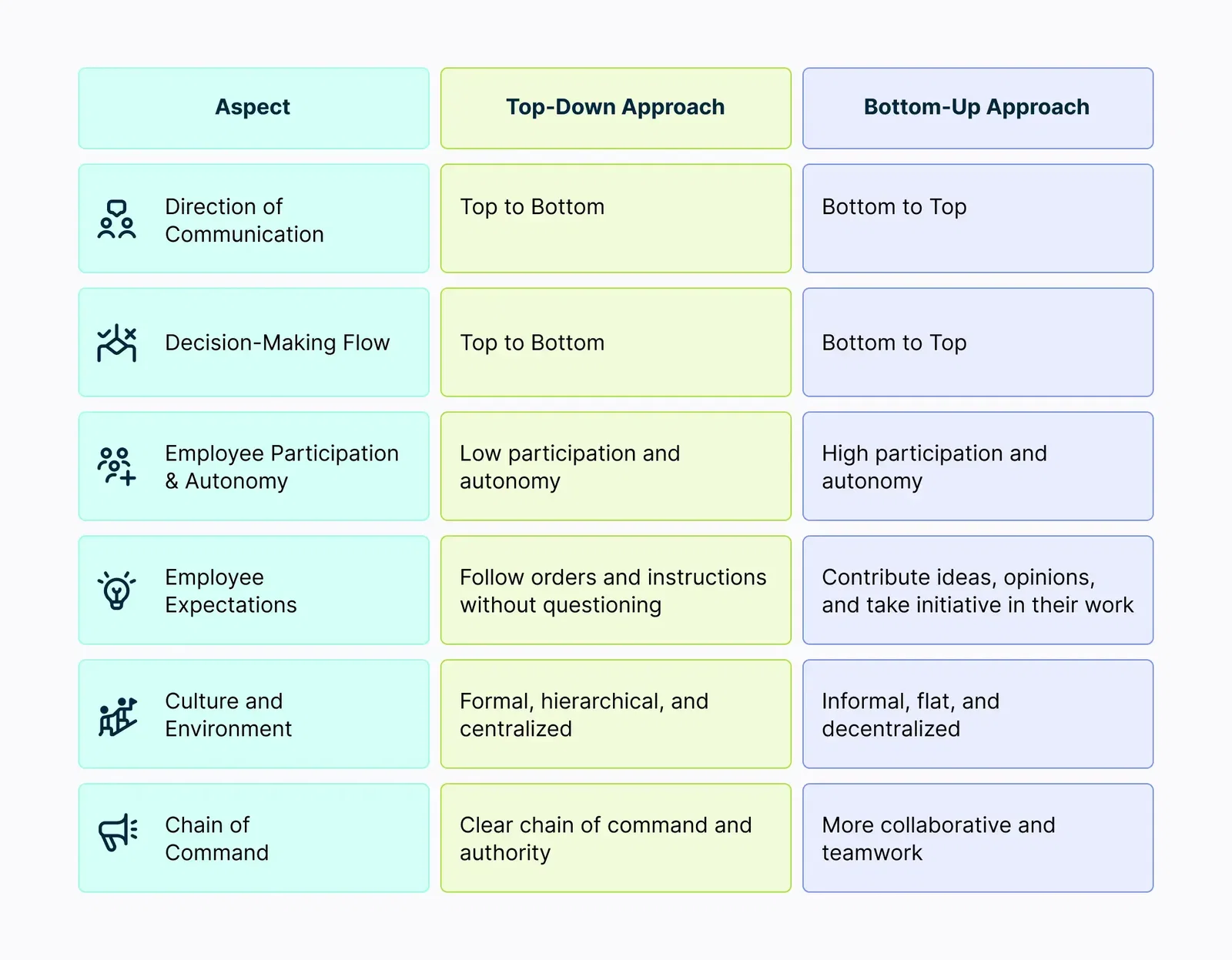
The simplest way to remember it: top-down starts with a number and works down to the items, while bottom-up starts with the items and works up to a number. Both are legitimate budgeting methods—they just optimize for different things. The rest of this guide defines each approach, weighs the advantages and disadvantages, and shows how real businesses combine them.
| Factor | Top-Down | Bottom-Up |
|---|---|---|
| Starts with | Total budget | Individual needs/items |
| Best for | Speed, financial control | ROI precision, flexibility |
| Main risk | Rigid, wasted spend | Time-consuming, cost buffers |
| Decision owner | Leadership/finance | Marketing teams |
What Is Top-Down Budgeting?
The defining trait of the top-down approach is that the total comes first and constrains everything below it. It is simple and fiscally conservative—which is exactly why large organizations favor it—but that simplicity is also its biggest limitation.
Advantages of Top-Down Budgeting
Simplicity: Quick and easy to implement, especially for large organizations with many departments to coordinate.
Alignment with financial goals: Ensures promotional spending stays inside broader company financial objectives.
Predictability: Provides clear spending limits upfront, which aids cash-flow planning.
Disadvantages of Top-Down Budgeting
Lack of flexibility: It's hard to adapt to new opportunities or changing promotional needs once the number is fixed.
Inefficiency: Teams may spend on less effective items just to use up an allocated budget before it expires.
Missed opportunities: Rigid caps leave little room for innovative campaigns or reacting to emerging trends.
What Is Bottom-Up Budgeting?
Because the budget is assembled from real, justified line items, bottom-up budgeting tends to produce tighter spending and clearer ROI tracking. The trade-off is time: it requires more planning and more input from stakeholders.
Advantages of Bottom-Up Budgeting
Targeted product selection: Every product is chosen to match a marketing goal and audience need.
Cost efficiency: Avoids overspending on items nobody needs, improving overall ROI.
Flexibility: Lets you adjust spend to real-time needs and constraints.
Improved ROI tracking: When each product has a defined purpose, it's far easier to measure its promotional product ROI once the campaign is live.
Disadvantages of Bottom-Up Budgeting
Time-consuming: Requires detailed planning and analysis up front.
Complexity: Often involves more stakeholders, especially for larger campaigns.
Over-buffering costs: It's easy to pad each line item "just in case," which can quietly inflate the total—a risk we cover in the pitfalls section below.
How the Two Budgeting Approaches Compare to Other Methods
Top-down and bottom-up aren't the only promotional budget methods in use. Two others come up constantly when teams plan spend, and understanding them sharpens your choice.
Bottom-Up Budgeting vs. Zero-Based Budgeting
Zero-Based Budgeting (ZBB) requires justifying every expense from scratch each cycle, starting from a "zero base" with no carryover. It's thorough, but it can overlook the compounding value of consistent, long-running promotional programs. Bottom-up budgeting also builds from individual needs, but it keeps ongoing programs on the table alongside new opportunities—making it more flexible for repeat brand-building.
Percentage-of-Sales Budgeting vs. Bottom-Up
Some businesses simply allocate a fixed percentage of sales revenue to promotional products. It's easy to calculate, but it ties your marketing investment to past performance rather than to current goals, and it doesn't adapt when market conditions shift. Bottom-up budgeting lets you tailor spend to today's objectives instead of last year's revenue.
For a deeper look at how these line items become tangible campaigns, see our guide to promotional materials examples and our primer on what promotional products are and how they work.
Shop Custom Tote Bags for Your Next Campaign
View all →



Real-World Case Studies: How Businesses Apply These Methods
Definitions are useful, but the difference between top-down and bottom-up budgeting becomes obvious once you see them in practice.
Top-Down in Action: The Automotive Industry
An automotive company allocates its marketing budget based on past and projected sales volume. High-volume models get larger budgets; smaller models get whatever's left. This top-down approach streamlines spending, but it can leave niche models with too little to invest in impactful promotional items—like custom tech accessories—that could have built awareness in an underserved market.
Bottom-Up in Action: A Small Business's Trade Show Plan
A local coffee shop planning its first trade show appearance uses bottom-up budgeting. They start with their goals—brand recognition and customer engagement—then choose branded items like a 10 oz. ceramic mug and a cotton canvas convention tote that match those goals. Because each item maps to an objective, the budget stays lean and every dollar is accountable. (For more on this scenario, see our trade show swag guide.)
The Hybrid Approach: Combining Flexibility and Control
A global beverage company uses both. They set a total marketing budget per brand top-down, then select promotional products bottom-up so each item fits the specific campaign or market. The result is financial control with room to adapt.
How Do You Combine Top-Down and Bottom-Up Budgeting?
For example, a financial services firm might allocate a fixed amount of its marketing budget to promotions top-down, but use bottom-up selection to pick items tailored to specific client events. This hybrid balances predictability with the ability to react to changing needs—which is why "combining top-down and bottom-up budgeting" is one of the most common questions marketers ask.
Avoiding Common Pitfalls in Promotional Budgeting
Both methods have failure modes. Here's how to sidestep the most common ones.
Top-Down Pitfalls
Inflexibility: Rigid caps can stop teams from acting on last-minute promotional opportunities.
Wasted spend: Allocating a fixed slice to promo products without measuring effectiveness leads to spending on low-impact items.
Bottom-Up Pitfalls
Over-buffering costs: It's easy to add contingency padding to every line, which inflates the total. This is especially common when third-party agencies overestimate production time and resources.
Hidden agency fees: If an agency manages your promo products, confirm that costs reflect value, not undisclosed markups. Unchecked, this causes budget creep and lowers efficiency.
Build a promotional budget that maximizes ROI
Conclusion: Choosing the Right Budgeting Strategy
Choosing between top-down and bottom-up budgeting depends on your company's size, goals, and how predictable your promotional needs are. If your needs are large and stable, top-down can streamline the process. If you want targeted spending and higher ROI, bottom-up gives you more flexibility and customization. For most businesses, a hybrid—top-down control with bottom-up product selection—delivers the best of both.
Maximizing Your Promotional Product Investment: Pro Tips
Quality over quantity: Invest in durable items recipients actually use, like custom water bottles or a high-utility 10000 mAh power bank. Our roundup of the best promotional products for small businesses ranks the highest-ROI picks if you need a shortlist.
Longevity: Choose items with staying power for long-term brand exposure.
Align with brand values: Pick products that reflect your mission—eco-friendly items for green brands, for instance.
Strategic timing: Plan purchases around key industry events and seasonal trends, and account for production lead times so your budget and calendar line up.
Creative packaging: Don't overlook packaging—well-designed presentation elevates any promotional item.
At Promotional Products Inc., we help you build a promotional strategy that fits your marketing goals, whether you favor a bottom-up approach, a top-down cap, or a hybrid. For more small-business guidance, see why custom promotional products are essential for small business success.
Shop Related Categories
Related Articles

Employee Welcome Kit Ideas for Small Businesses (That New Hires Keep)
A practical guide to employee welcome kit ideas for small businesses—what to include, ideas by budget, remote vs. in-office kits, and how to assemble and ship them without an in-house team.

How to Choose a Promotional Products Company (Buyer's Guide)
Picking the wrong promo vendor costs you money, time, and a botched logo on 500 shirts. Here's how to evaluate companies, what to ask, and the red flags that signal trouble.

How to Measure Promotional Product ROI (Without Guessing)
Promotional products feel hard to measure—but they don't have to be. This guide shows you the exact formulas, tracking setup, and worksheet to prove the ROI on your next branded order.

Is Company Swag Taxable? Your Complete Guide to Avoiding Tax Headaches
You ordered branded merchandise for your team or clients, and now tax season has you wondering: is company swag taxable?