

What Is a Shot Size? How Many Ounces You Really Get

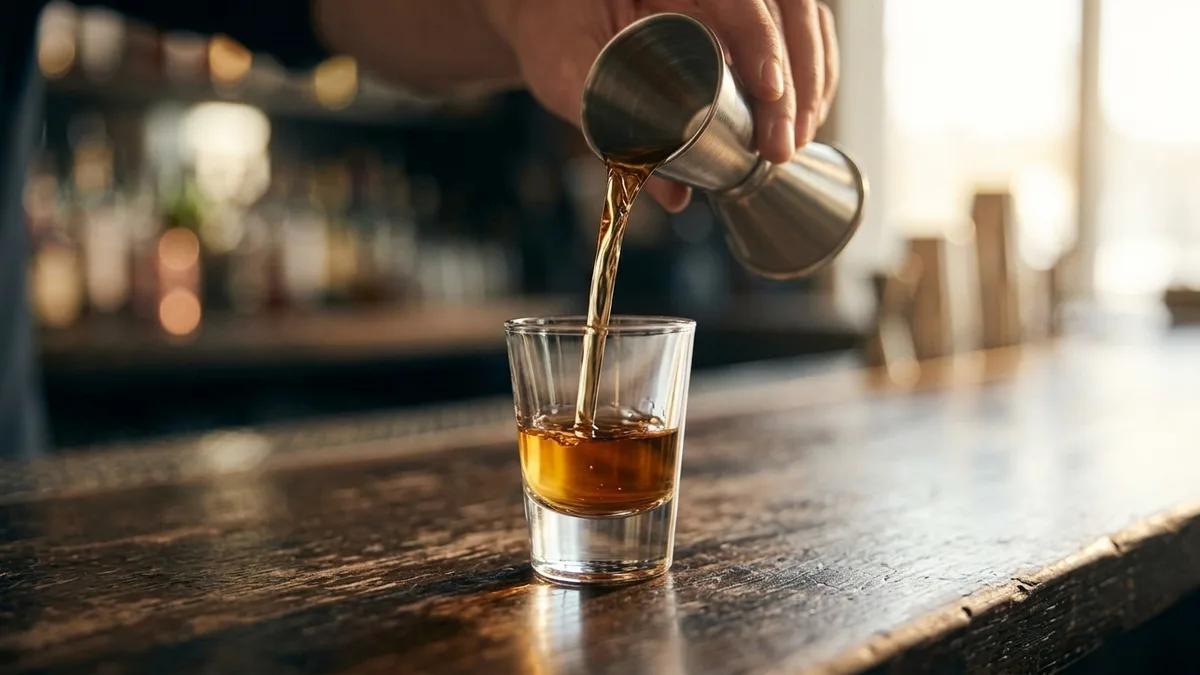
A standard shot glass holds 1.5 ounces (44 ml) in the United States. This is the default pour used by bartenders, cocktail recipes, and most bars nationwide. But shot sizes vary worldwide—from 20 ml in Germany to 60 ml in Japan—and glass shapes can quietly change the actual volume. Below you'll find clear answers on whether a shot glass equals 1/4 cup, how big a shot really is, bottle-to-shot conversions, and how to measure a shot without a jigger.
Is a Shot Glass 1/4 Cup?
This is one of the most common kitchen mix-ups, because a 2 oz shooter and a 1/4 cup measure are nearly the same size. Here is the quick math so you can swap between them with confidence:
| Measure | Fluid Ounces | Milliliters |
|---|---|---|
| Standard shot | 1.5 oz | 44 ml |
| 1/4 cup | 2 oz | 59 ml |
| 2 oz shooter | 2 oz | 59 ml |
| Pony shot | 1 oz | 30 ml |
So if a recipe asks for 1/4 cup of liquid, a standard 1.5 oz shot glass will come up about half an ounce short. A 2 oz shot glass filled to the brim is the closer match.
How Big Is a Shot? The Short Answer
The 1.5 oz pour is used in most bars, tasting rooms, and cocktail recipes. Here is what that means in practice:
- Utah is the only state that legally defines a single shot as exactly 1.5 ounces (Utah Code §32B-5-304).
- Large chain restaurants use the same 1.5 oz pour to keep portions consistent.
- Smaller bars may pour between 1.25 oz and 2 oz, especially when using different glass shapes.
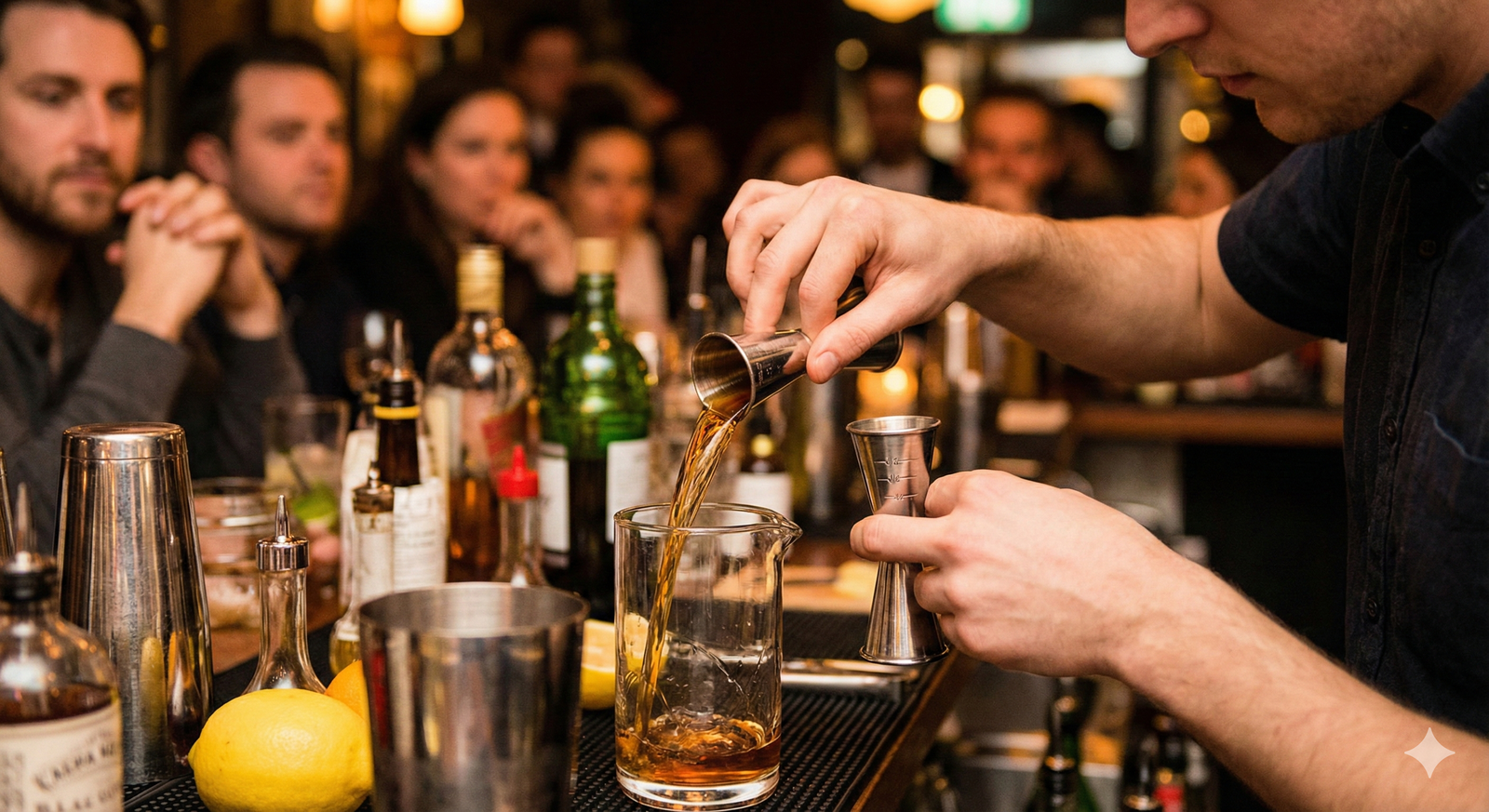
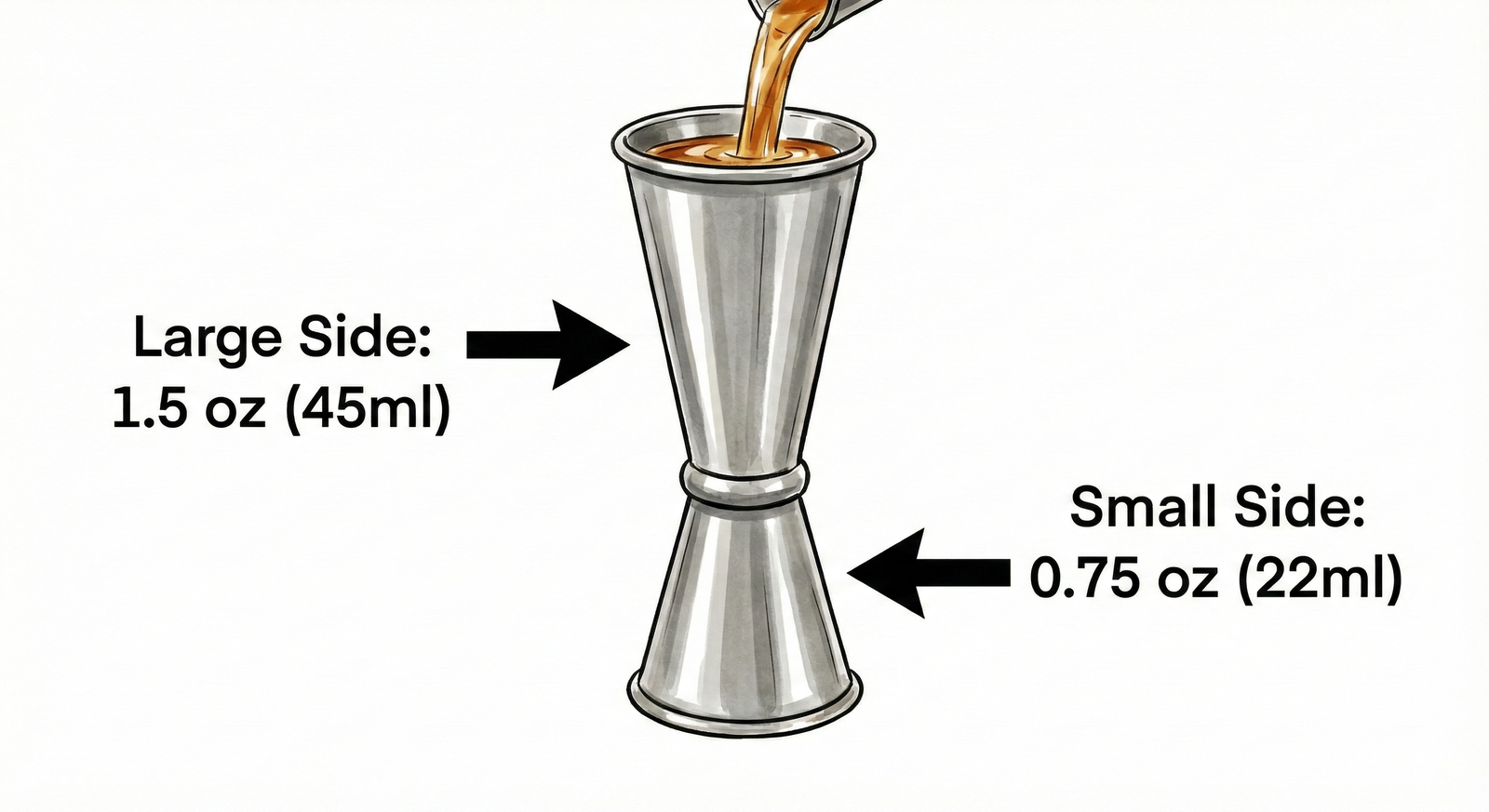
If you see bartenders using a jigger, the larger side usually measures 1.5 ounces, while the smaller end holds 0.75 or 1 ounce. This tool keeps drinks accurate and prevents overpouring. When a recipe simply says "one shot," the safest assumption is 1.5 ounces or 44 milliliters.
How Many ml Is a Shot?
For whisky specifically, an American neat pour is typically the same 44 ml, though many bars serve premium whiskey in a 2 oz (59 ml) pour. In the UK and Ireland, a single whisky measure is much smaller—25 ml to 35.5 ml—so the same order can look very different depending on where you are standing.
How Big Is a Shot Glass Really? The "Cheater" Glass
The capacity printed on a shot glass and the volume you actually get can differ. Some bar glasses look tall and full but still hold less than a standard shot. These are often called cheater glasses, and the difference comes down to design.
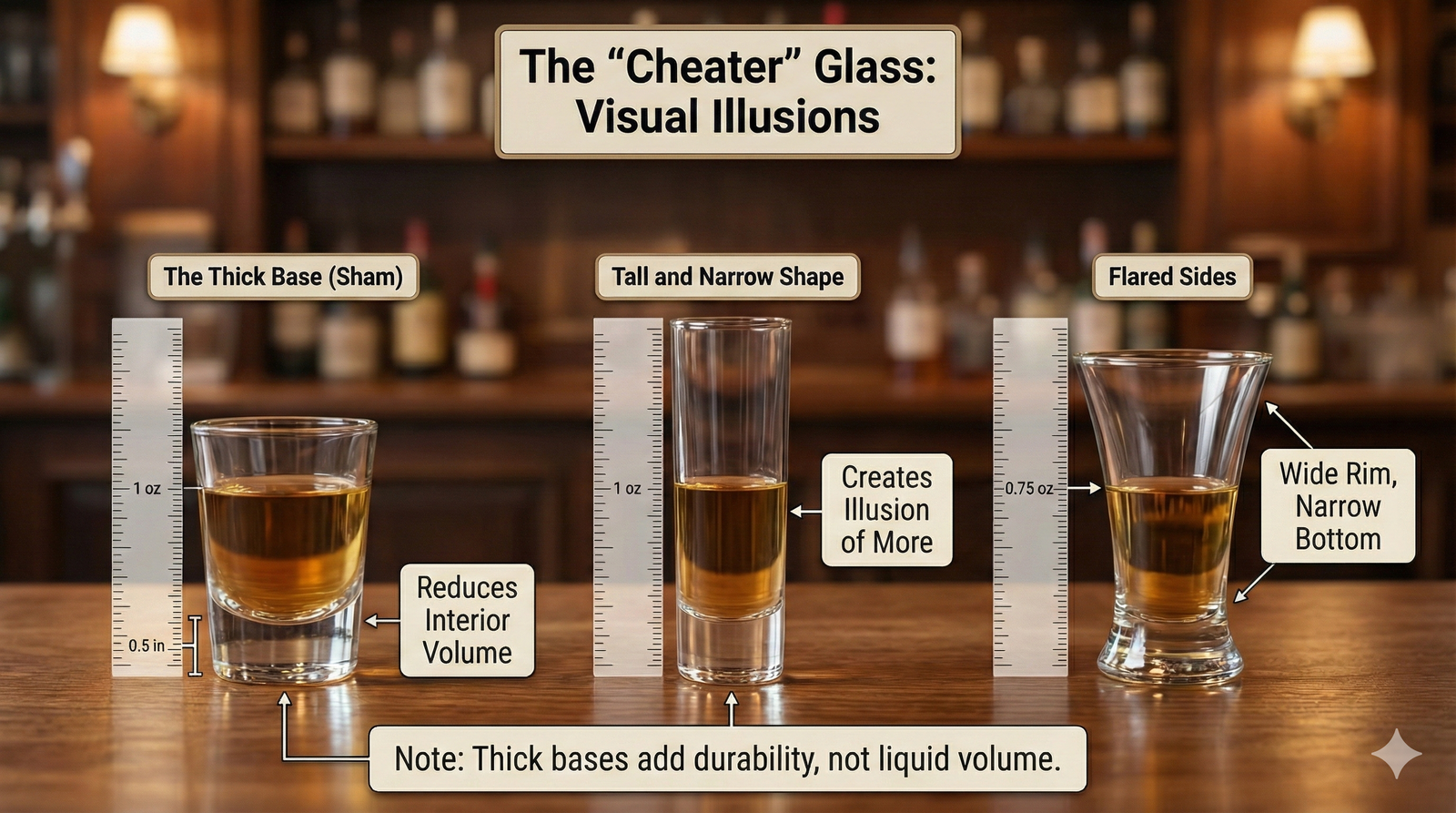
Here are the common design tricks:
- The Thick Base (Sham): A heavy bottom makes the glass feel solid, but it shortens the inside space where liquid goes. Some glasses that look like they hold a full shot may actually hold 1 ounce or less.
- Tall and Narrow Shape: A slim glass creates the illusion of more liquid, even when it measures the same as a wider shot cup.
- Flared Sides: A wide rim with a narrow bottom reduces interior volume while appearing larger.
These styles are not always meant to deceive—thick bases improve durability and protect the glass. But they do change the amount of liquid you get in a single pour, which is why a measured jigger is the most reliable tool. If you are ordering custom shot glasses for a bar or event, ask the supplier for the true fill capacity, not just the overall glass size.
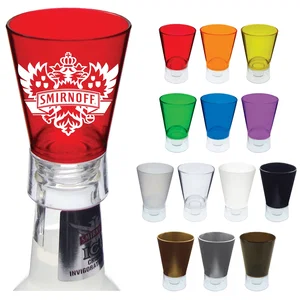
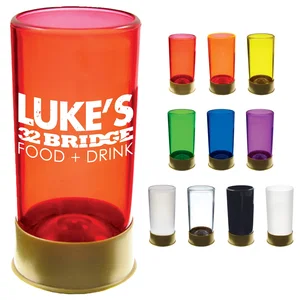
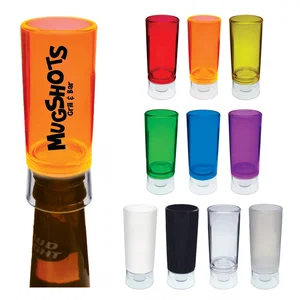
Shop Custom Shot Glasses
View all →
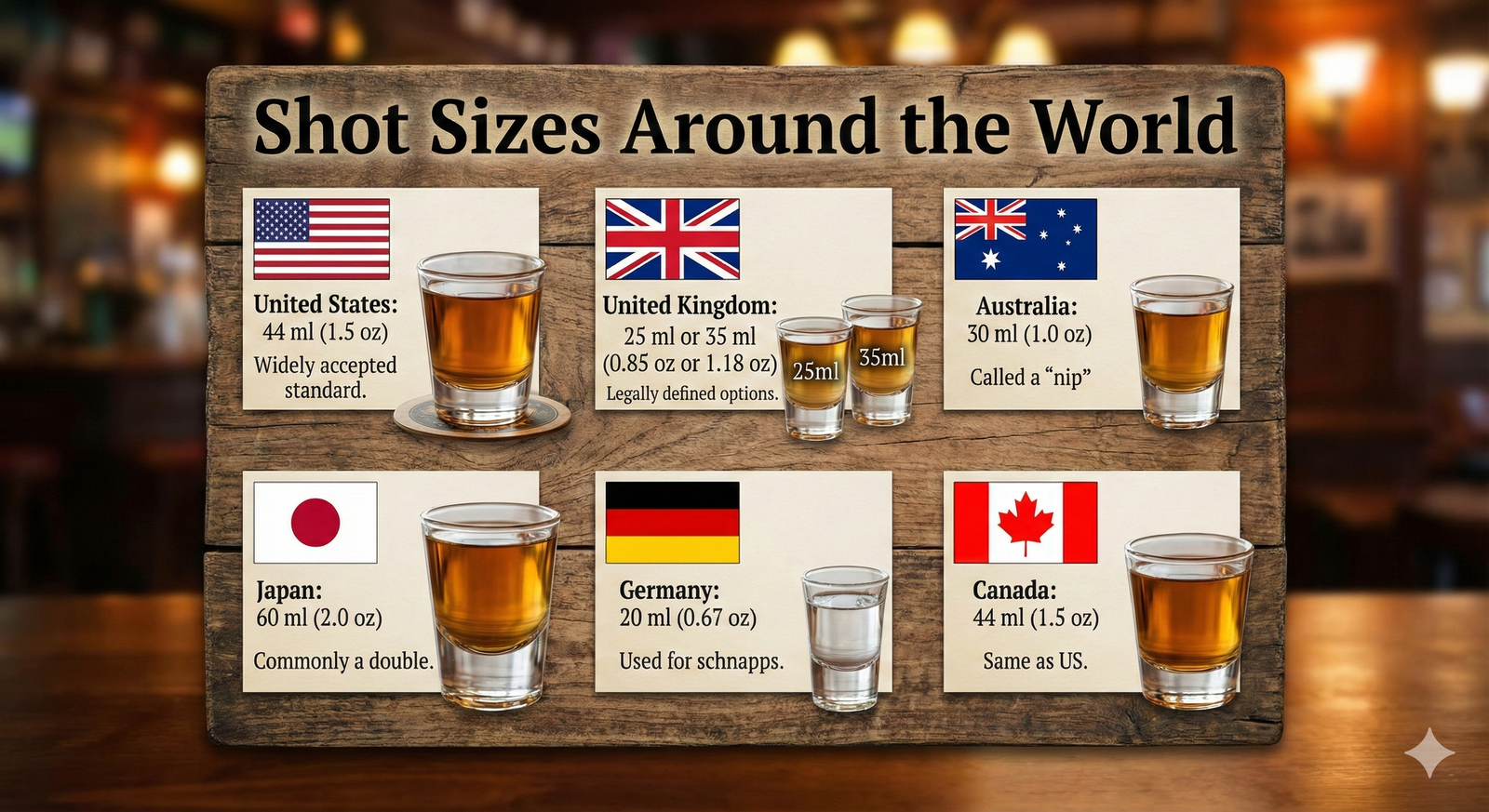
Shot Sizes Around the World
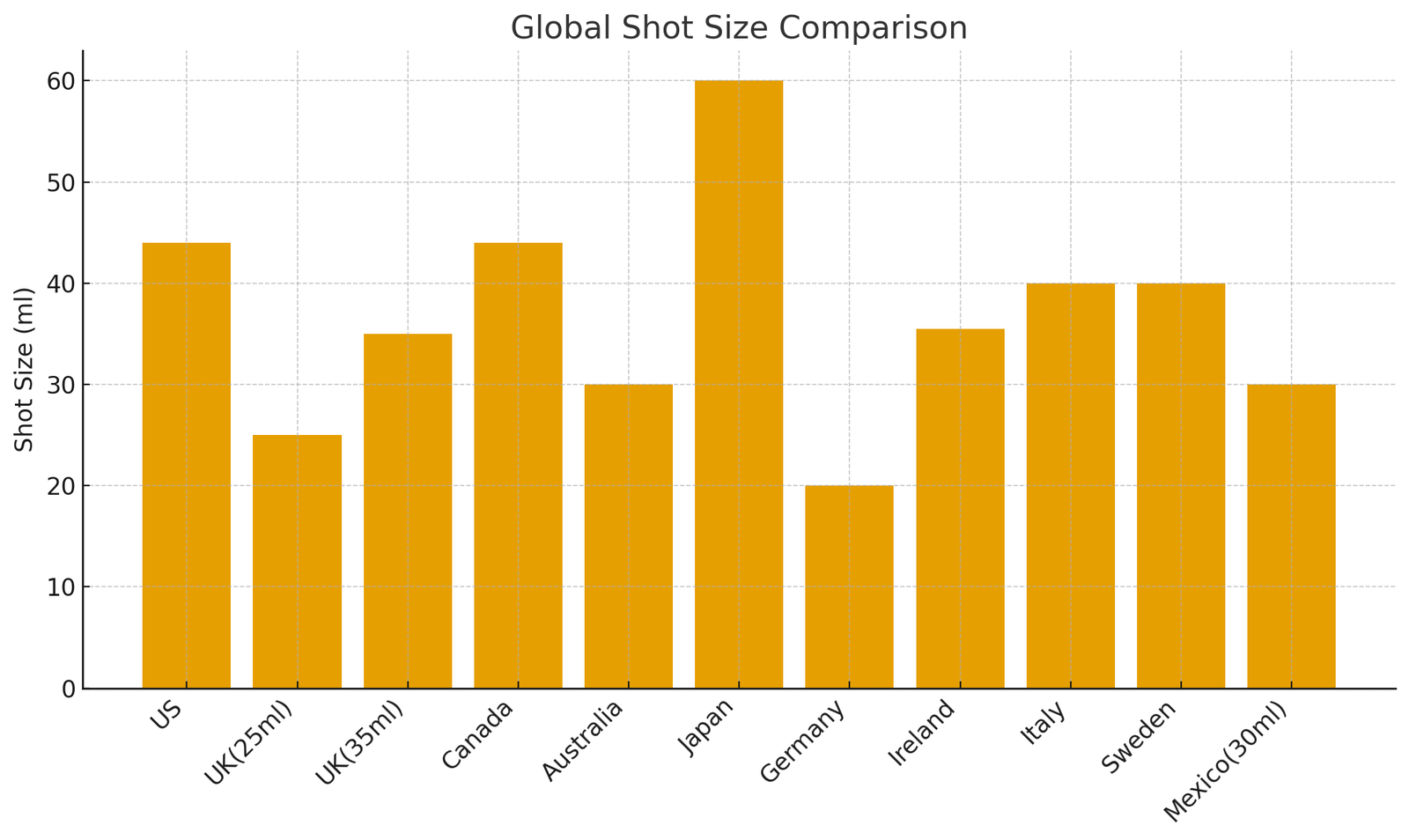
Here is a clear comparison of the most common verified measurements, drawn from each country's licensing rules and bartending standards:
| Country | Standard Shot | Notes |
|---|---|---|
| United States | 1.5 oz (44 ml) | Some states allow 1 oz pours |
| United Kingdom | 25 ml or 35 ml | England/Wales 25 ml; Scotland/NI 35 ml |
| Canada | 1.5 oz (44 ml) | Some provinces allow 1 oz |
| Australia | 30 ml ("nip") | A "double nip" is 60 ml |
| Japan | 60 ml | Treated like a double elsewhere |
| Germany | 20 ml | Schnapps; some bars pour 40 ml |
| Ireland | 35.5 ml | A "double measure" is 71 ml |
| Italy | ~40 ml | Grappa/amaro often 30 ml |
| Sweden | 40 ml | Strict government portion guidance |
| Mexico | 30–44 ml | Tequila varies by bar |
UK measures are set by the Weights and Measures Act, which requires spirits to be sold in fixed 25 ml or 35 ml quantities (UK Government guidance). These differences explain why a shot poured abroad might look smaller or larger than what you are used to. For a deeper look at the tall, layered styles common in nightlife, see what shooter glasses are and how to design them.
Types of Shot Glasses: Pony, Standard, Shooter
Shot glasses do not come in one size. The three most common types are:
- Pony Shot (1 ounce): A smaller 1 oz pour often used for liqueurs or tasting flights. The 1.25 oz Plastic Standard Shot Glass sits just above this range.
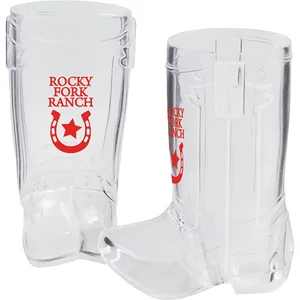
- Standard Shot (1.5 ounces): The most widely recognized size for cocktails and recipes—try the 1.5 oz Plastic Cowboy Boot Shot Glass for a novelty version of the classic pour.
- Shooter Glass (2–3 ounces): A taller, slimmer glass used for layered drinks, like the 2.5 oz Lexington Shooter Glass or the 2 oz Plastic Mason Jar Shot Glass. These work best for mixed shots that combine different flavors and colors.
Is a Shooter One Shot? How Many Shots in a Shooter
The word "shooter" gets used loosely. As a drink, a shooter is a small mixed or layered cocktail meant to be downed in one go. As a glass, a shooter is simply a 2–3 oz vessel. So whether a shooter counts as "one shot" depends on its size: a 1.5 oz shooter equals one shot, while a 3 oz shooter equals two. For the full breakdown of how many shots in a shooter, see our dedicated guide.
How to Measure a Shot Without a Shot Glass
If you do not have a jigger or shot glass handy, common household tools get you close:
- 3 tablespoons = 1.5 ounces (one standard shot)
- 9 teaspoons = 1.5 ounces
- A medicine cup from cold medicine usually marks 30 ml, which is 1 ounce
- A plastic party cup (Solo cup) bottom ridge equals about 1 ounce
This works well when making cocktail recipes at home and batching drinks for a crowd.
How Many Shots Are in a Bottle? (Liter, Fifth & More)
Knowing how many shots fit into a bottle helps with planning events or batching cocktails. Based on a standard 1.5 oz pour:
| Bottle Size | Common Name | Standard Shots |
|---|---|---|
| 375 ml | Pint / flask | ≈ 8 shots |
| 750 ml | Fifth | ≈ 17 shots |
| 1 liter | Liter | ≈ 22 shots |
| 1.75 liters | Handle | ≈ 39–40 shots |
These conversions apply to vodka, whiskey, tequila, rum, and most spirits at 40% alcohol. To estimate any size, divide the milliliters by 44 (the ml in one shot)—so a 1-liter (1,000 ml) bottle works out to about 22.5 shots. Hosting a party? Our complete promotional drinkware guide covers how to match glassware to the crowd, and the Bar Stools Can Maximize Seating by 25% breakdown helps you plan the space.
Want shot glasses that match the true 1.5 oz standard?
Conclusion
Shot size looks simple, but it shifts with location, glass style, and recipe. The most common answer to "how many ounces in a shot" is 1.5 ounces, a shot glass is not the same as 1/4 cup, and a shooter usually holds more than one shot. Understanding glass shapes, ml conversions, and tools like jiggers helps you pour accurately and follow recipes with confidence.
Need custom shot glasses with accurate 1.5 oz or 2 oz capacities for your bar, event, or promotional giveaway? Shop our collection of logo-ready shot glasses and promotional barware designed for consistent pours and lasting brand impressions.
Shop Related Categories
Related Articles
Custom Drinkware Gift Ideas for Employees & Clients
Looking for a gift your team and clients will actually use every day? Custom drinkware turns a simple thank-you into months of daily brand exposure.
Stainless Steel vs. Plastic Tumblers: Which Should You Pick?
Stainless steel keeps drinks cold for hours and feels premium; plastic costs less and ships colorful. Here's how to choose the right tumbler for your brand.
How Long Should a Wedding Toast Be? The 2-5 Minute Rule for Perfect Speeches
In this blog post, you'll learn why the ideal wedding toast runs between two and five minutes and how sticking to that sweet spot keeps guests attentive and the reception flowing.
Wedding Toast Structure: The 5-Part Formula (Template)
In this blog post, we break down a five‑part method for crafting a memorable wedding toast, guiding you through the introduction and hook, foundation, story, bridge and final toast.