
Promotional and Marketing Materials: How Businesses Can Use Them for Brand Building


Dive into the world of promotional materials, a core part of small business growth. Each item is more than a simple tool: it tells your brand's story. Think of everything from personalized pens to eye-catching trade show displays, each one leaving a mark on the people who receive it. This guide explores their impact and how they can help your business stand out.
Your brand is more than just your logo or tagline. It's every interaction a customer has with your business. That's where promotional and marketing materials come in. Whether it's a well-designed brochure, a useful branded product, or an engaging social media post, these touchpoints shape how customers see and remember you.
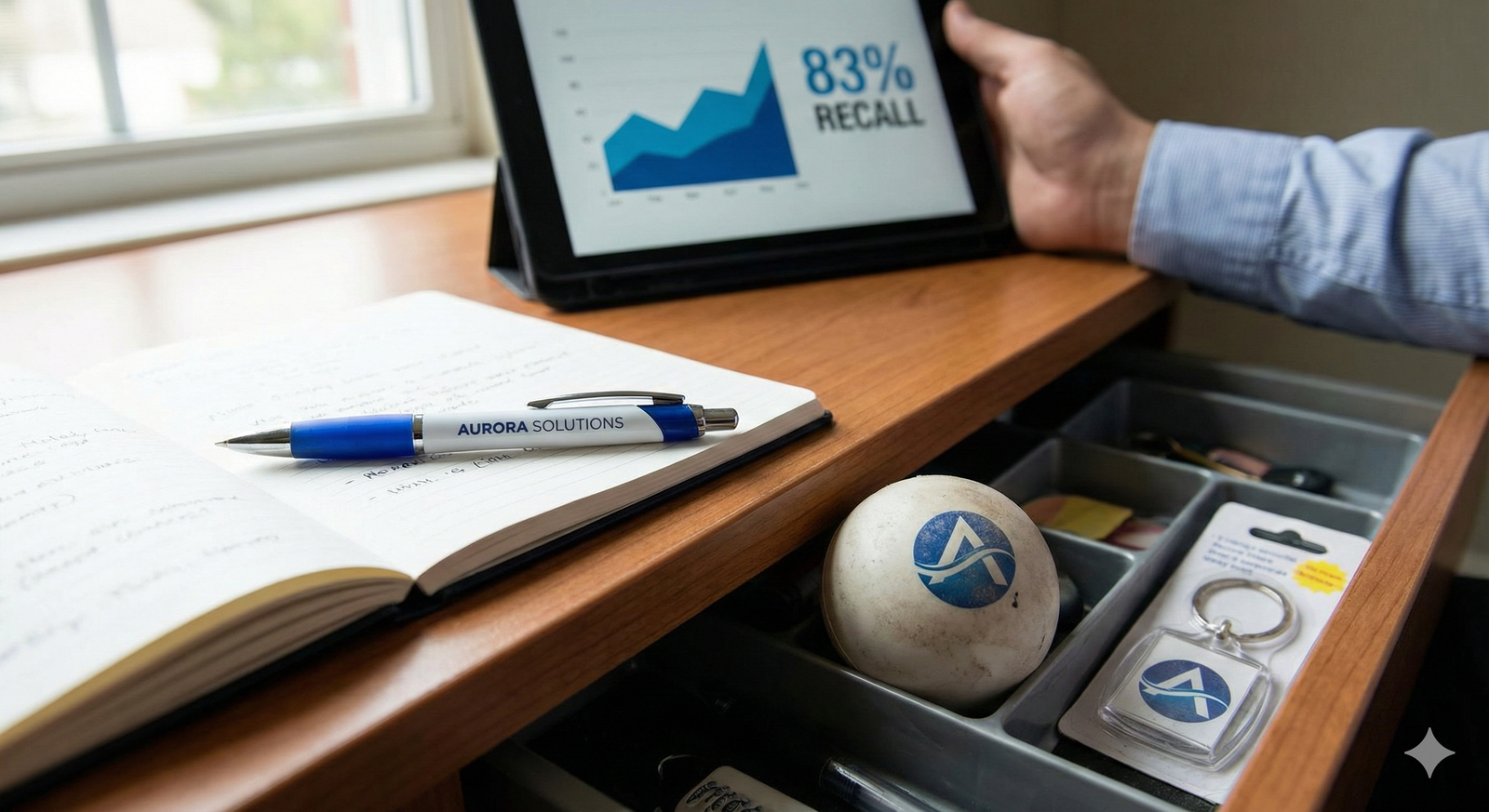
Branded products stand out because people keep and use them. In PPAI's 2016 Consumer Study, 83 percent of respondents said they recalled at least one brand from promotional products they had received, and when given options, nine in 10 on average correctly recalled the branding.
This guide breaks down the main types of promotional and branded marketing materials and explains how to use each one to build stronger brand recognition and customer relationships. For a wider look at the items themselves, our overview of what promotional products are pairs well with the strategy below.
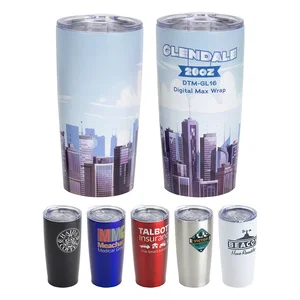
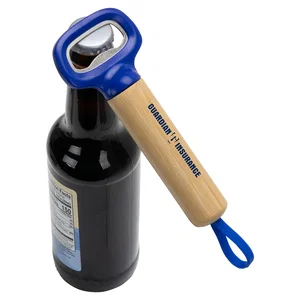
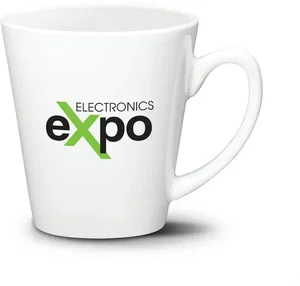
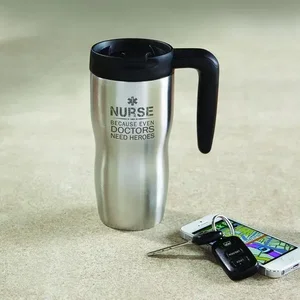
Shop Popular Branded Drinkware
View all →

What are promotional and marketing materials?
Promotional materials are items or content businesses create to promote their identity, products, or services. Effective marketing materials share three characteristics: they align with your visual identity, resonate with your target audience, and provide genuine value to recipients.
The difference between success and waste comes down to strategic selection and execution. A simple branded pen that gets used every day does more for your brand than a pricey novelty item collecting dust in a drawer.
It helps to separate two related ideas. Advertising is the paid placement of a message; promotional materials are the broader set of branded assets you own and distribute. If that line still feels fuzzy, our explainer on the difference between marketing and advertising breaks it down with examples.
What counts as branded marketing materials?
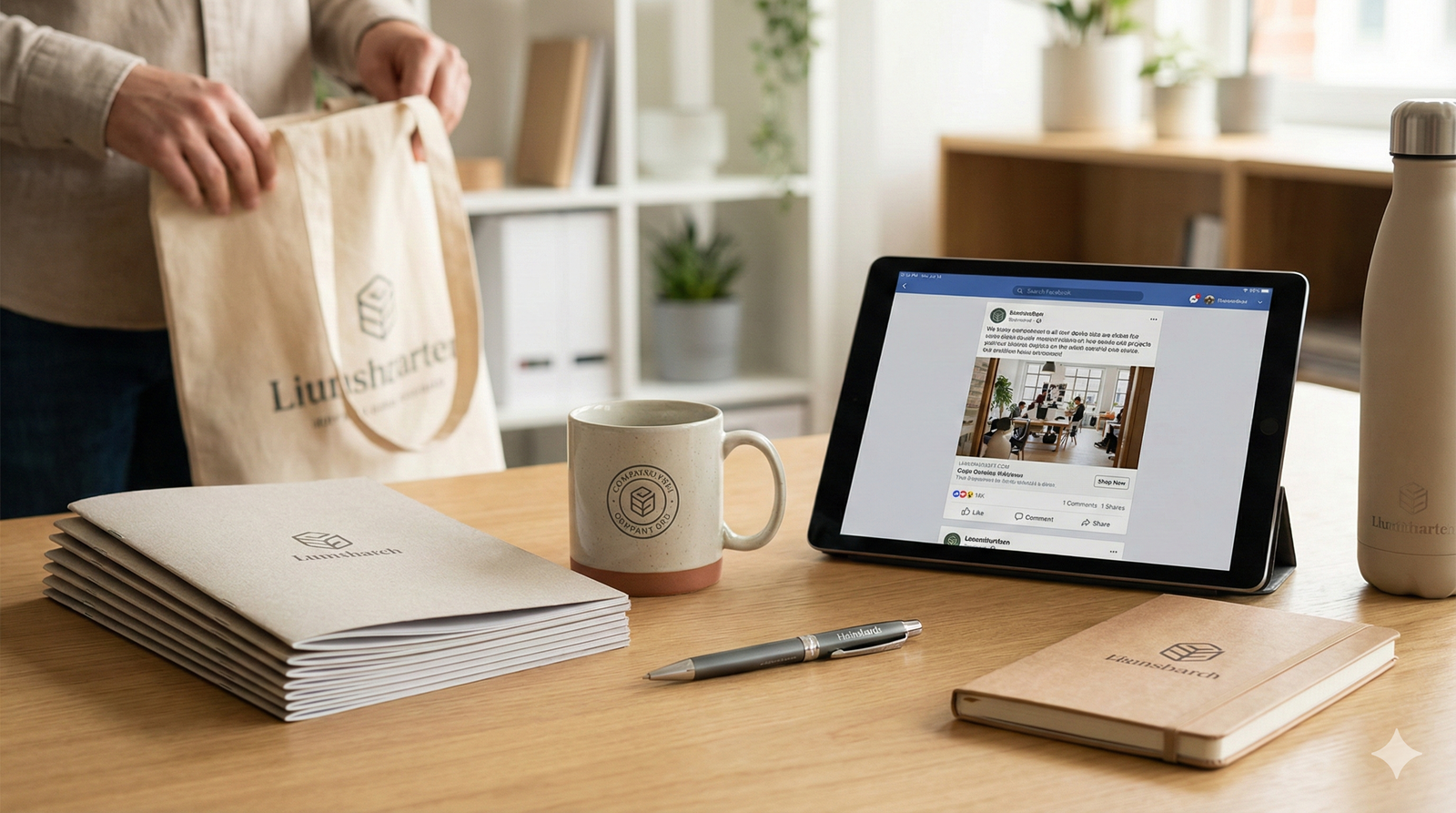
Branded marketing materials fall into four practical buckets, and most growing businesses use a mix of all four: print materials (brochures, flyers, postcards, and direct mail that put a tangible piece in someone's hands), branded products (drinkware, bags, apparel, tech accessories, and writing tools that carry your logo into daily life), digital content (your website, blog posts, social media, and email that reach audiences online), and events and experiences (trade show booths, sponsorships, and webinars that create face-to-face connection).
Want concrete inspiration before reading the strategy? See our roundup of promotional materials examples for modern campaigns, which includes a focused section on marketing materials for small businesses.
Do print materials still convert in the digital age?
Print remains powerful for targeted local marketing and high-value business communications. Physical materials cut through digital noise: no algorithm changes, no screen fatigue, no competing ads.
Which print formats should you use?
Use brochures for detailed offers, postcards and flyers for time-sensitive promotions, and direct mail for personalized outreach.
Brochures and Catalogs work for complex products requiring detailed explanation. Product specs, service tiers, and packages need space to breathe. A commercial HVAC company might use a multi-page brochure covering system options and energy savings, while a catering business benefits from a photo-rich menu catalog.
Flyers and Postcards drive immediate action for time-sensitive offers. Real estate agents use postcards for new listings in target neighborhoods, while restaurants distribute flyers for grand openings or seasonal promotions. The 4x6 postcard format hits the sweet spot: large enough to make an impact, affordable enough for volume distribution.
Direct Mail delivers personalized outreach at scale. Personalized pieces, such as appointment reminders with a birthday-month offer sent to nearby customers, give people a reason to act and a code you can track.
What makes print look professional?
Good design on sturdy paper stock is what makes print look professional. Cheap printing signals a cheap business. Include clear calls-to-action through QR codes linking to landing pages, promotional codes for tracking, or specific phone numbers, so you can compare each mail piece against your digital channels.
Which promotional products do people actually keep?
Useful products get seen again and again, which beats a one-time ad impression, but only if you choose items recipients find genuinely useful.
High-Performing Product Categories:
- Drinkware ranks among the most-kept promotional items. Stainless steel water bottles, insulated tumblers, and ceramic coffee mugs get daily use in offices, gyms, and homes. A real estate brokerage handing branded tumblers to new homebuyers earns years of visibility in kitchens and cars. Browse custom drinkware options like the 30 oz. stainless steel travel tumbler to see the range.
- Tech Accessories solve daily problems. Wireless chargers, phone stands, and USB drives provide immediate utility. Quality matters. A malfunctioning charger reflects poorly on your business, while a reliable one builds positive associations. Tech companies often gift portable power banks and wireless chargers at conferences, so recipients think of them whenever their phone battery runs low.
- Bags and Totes offer large branding real estate with practical value. Reusable shopping bags align with environmental consciousness, gym bags serve fitness enthusiasts, and laptop backpacks appeal to professionals. A university distributing branded bags and totes during freshman orientation gains campus-wide visibility throughout the academic year.
- Apparel and Headwear turns customers into walking billboards. Quality polo shirts, performance jackets, and baseball caps work when recipients actually want to wear them. A craft brewery creating stylish custom apparel and snapback hats can see customers wearing its logo to bars, concerts, and sporting events.
- Office Supplies maintain constant desk presence. Quality custom pens, notepads, and desk organizers keep your business in front of decision-makers during their workday. Financial advisors leaving branded leather portfolios after client meetings keep their contact information within arm's reach.
How do you choose the right promotional product?
Pick the product your specific audience will use most often, and favor quality over quantity.
Match products to your audience demographics. A tech startup targeting developers might choose mechanical keyboards or blue light glasses, while a landscaping company serves homeowners better with gardening tool sets or outdoor speakers.
Invest in quality over quantity. A smaller run of well-made items beats a large pile of cheap products that break or get discarded, because recipients associate product quality with business quality. If you're not sure where to start, our roundup of the best promotional products for small businesses ranks the highest-ROI categories by real-world use.
How do digital content and social media build your brand?
Digital content builds your brand by keeping you visible where customers already spend time online. DataReportal's Digital 2024 Global Overview Report counted 5.04 billion social media user identities at the start of 2024, and effective digital content serves specific purposes beyond filling feeds.
Website as Central Hub:
Your website anchors all promotional efforts. Clean design matching your visual guidelines builds immediate credibility, while optimized content drives organic traffic. SEO-focused blog posts, product descriptions, and resource pages help new customers find you through search.
Strategic calls-to-action guide visitors toward conversions: newsletter signups, quote requests, or product purchases. An e-commerce retailer might use exit-intent popups offering a first-order discount to capture hesitant browsers, while B2B companies feature clear "Request Demo" buttons above the fold.
Social Media Promotion:
Consistent posting builds audience relationships and reinforces messaging. The key isn't frequency alone. It's delivering content your audience actually wants to engage with.
Educational posts sharing industry insights position your business as a thought leader. A financial planning firm posting retirement savings tips builds credibility better than constant sales pitches.
Behind-the-scenes content humanizes your business and builds connections. A bakery showing its early-morning baking process or recipe development creates emotional investment beyond transactional relationships.
User-generated content leverages customer enthusiasm. Encouraging customers to share photos using your products, then reposting with credit, creates authentic social proof.
Content Distribution:
Optimize for organic search through keyword research, quality writing, and technical SEO. Create shareable resources that industry micro-influencers naturally want to distribute, exposing your business to targeted new audiences.
Promote content consistently across email lists, website updates, and social channels. A single blog post can feed several pieces of derivative content: social posts, email newsletters, and quote graphics.
How can paid advertising support your promotional materials?
Paid advertising puts your message in front of motivated audiences through precise targeting unavailable with traditional media.
Search Ads capture high-intent traffic: people actively searching for solutions you provide. A plumber bidding on "emergency water heater repair" plus their city reaches homeowners ready to hire immediately. Start with exact-match keywords for your core services, then expand to broader terms as you gather performance data.
Social Media Ads enable demographic targeting by age, location, interests, and behaviors. Facebook's detailed targeting reaches specific audiences like parents who recently moved to your area, while LinkedIn targets decision-makers by job title and company size.
Display Advertising builds broad awareness through visual ads on relevant websites. Retargeting visitors who browsed your site but didn't convert keeps your business top-of-mind as they continue researching.
Advertising Efficiency:
Test small budgets across channels before major investment. A modest test split between Google Ads and Facebook reveals which platform delivers better ROI for your specific business.
Track return on ad spend closely. If one platform returns more revenue per dollar spent than another, shift budget toward it.
Split test ad creative continuously. Test different headlines, images, and calls-to-action, letting performance data identify winners. Small improvements compound. A 10% better click-through rate and a 15% better conversion rate together increase results by 26.5%.
Why do events and experiential marketing work?
Events work because face-to-face interactions build relationships that digital channels can't replicate.
Trade Shows and Conferences connect with concentrated target audiences. A booth at an industry conference puts your business in front of many qualified prospects over a few days. Successful exhibitors focus on engagement over pitching: product demonstrations, interactive displays, and useful giveaways draw traffic and start conversations. If a show is on your calendar, our ultimate guide to trade show swag covers which giveaways pull traffic, and you can stock the booth from our trade show and expo products.
Webinars and Virtual Events deliver thought leadership at scale. A software company hosting quarterly webinars on industry trends establishes expertise while capturing lead information from registrants. Follow-up sequences convert attendees into customers over subsequent months.
Local Sponsorships and Community Events build regional presence. Sponsoring youth sports teams, charity runs, or community festivals creates positive associations and local visibility. A credit union sponsoring Little League teams reaches family-focused community members who match its target customers, and branded giveaways at the field keep its name in those homes afterward.
Event Success Factors:
Tailor events to audience interests and preferences. An outdoor gear retailer hosting hiking meetups resonates better than generic networking happy hours.
Feature subject matter experts establishing authority. Customers trust businesses demonstrating deep knowledge over those making unsupported claims.
Create memorable experiences through hands-on demonstrations, compelling speakers, and interactive elements. Attendees who remember your business weeks later are far more likely to buy than those who simply collected a brochure.
How do you measure success with marketing materials?
Measure success by tracking engagement, conversions, customer feedback, and return on investment for each material, then shifting budget to what performs.
Key Metrics:
Engagement rates show how audiences interact with your content. Social media likes, shares, and comments indicate resonance, while email open and click rates measure message effectiveness.
Conversion statistics reveal how many recipients take desired actions: purchases, quote requests, event registrations. A 2% conversion rate might sound low until you realize it represents 200 customers from 10,000 flyer recipients.
Customer feedback and perception surveys uncover how materials influence audience perceptions. Regular pulse checks identify messaging that resonates or falls flat.
Return on investment determines whether promotional efforts justify their cost. Calculate total campaign costs including design, production, and distribution against revenue generated. Materials that return the most deserve increased investment, while those underperforming need refinement or elimination. For the cost side of that calculation, our roundup of 25 promotional materials examples covers common options like pens, totes, drinkware, and apparel.
Continuous Improvement:
Use insights to refine approaches and allocate resources effectively. If branded tote bags at trade shows generate more qualified leads than booth demonstrations, shift resources toward high-impact giveaways.
Test variations systematically. Run A/B tests on email subject lines, try different promotional product categories, experiment with social media posting times. Small optimizations compound over time into significant performance improvements.
Should you match promotional materials to your region?
Yes, matching giveaways to local climate and lifestyle raises the odds an item gets kept and used.
In warm-weather, outdoor-leaning markets, water bottles, tumblers, and breathable shirts stay in constant use. In colder regions, fleece, beanies, and insulated mugs earn the same daily exposure.
Local businesses particularly benefit from community-focused tactics. Sponsorships, targeted direct mail to specific ZIP codes, and presence at regional events create stronger connections than broad national campaigns. A financial advisor distributing branded portfolios at local chamber events keeps a tangible reminder of their name on prospects' desks.
How do you turn materials into a brand-building strategy?
Turn individual materials into a strategy by tying every piece to one audience, one consistent look, and one way of measuring results.
- Understanding your target audience through demographic research, purchase behavior analysis, and direct feedback. Materials that resonate with young urban professionals differ dramatically from those that appeal to suburban homeowners.
- Maintaining consistency across all materials through unified colors, logos, fonts, and messaging. Inconsistent presentation confuses customers and dilutes marketing impact. Consistent presentation builds recognition and trust.
- Diversifying your approaches to reach audiences through multiple channels. Combining print, digital, promotional products, and events creates more touchpoints than any single channel alone.
- Communicating unique value propositions clearly and repeatedly. Customers need to understand what you offer and why they should choose you over competitors.
- Measuring impact continuously to identify what works and eliminate what doesn't. Marketing without measurement wastes money on ineffective tactics while missing opportunities to scale successful ones.
Start with modest budgets, test different materials, measure results, and invest more in proven performers. For local businesses, promotional products and print often earn their keep faster than broad ad campaigns.
Great execution turns materials into strategic investments in customer relationships that drive sustainable growth. Your promotional and marketing materials are more than advertisements. They're the foundation of how customers discover, remember, and choose your business.
Frequently asked questions
What are promotional and marketing materials?
Promotional and marketing materials are any items or content a business creates to promote its brand, products, or services. These include branded merchandise, print materials such as brochures and flyers, digital content like social media posts and blogs, and experiential marketing through events.
How do promotional products help build brand awareness?
Promotional products build awareness because people keep and use them, so your logo is seen again and again. In PPAI's 2016 Consumer Study, 83 percent of respondents recalled at least one brand from promotional products they had received.
Which promotional products get the best response?
Useful, well-made items that people want to use every day get the best response. Popular choices include reusable water bottles, phone chargers, quality apparel, office supplies, and tech accessories, chosen to fit your specific audience.
How can small businesses measure the ROI of promotional materials?
Track engagement, conversions, customer feedback, and sales tied to each campaign, then compare them against the full cost of design, production, and distribution. Unique promo codes, QR codes, and dedicated phone numbers make each material's results easy to separate.
How often should businesses update their promotional materials?
Review your materials at least once a year, or whenever your brand changes. Refresh digital content regularly and replace worn print pieces and products as needed, while keeping core brand elements the same to build long-term recognition.
Can promotional materials work for both B2B and B2C businesses?
Yes, both B2B and B2C businesses benefit, though the approach differs. B2C companies often focus on branded giveaways and social media, while B2B businesses lean on trade show materials, corporate gifts, and thought leadership content.
What should you do next?
Your next step depends on where your marketing is today: start small, audit what you have, or combine channels to scale.
Every interaction shapes how customers perceive and remember your business. The businesses that win aren't necessarily spending more on marketing. They're investing smarter in materials that deliver measurable returns.
- If you're just starting: Begin with one channel. Test a small run of quality promotional products at your next event or a targeted direct mail campaign to your best customer ZIP codes. Track results closely. Scale what works.
- If you're already marketing: Audit current spending. Which materials generate leads? Which collect dust? Reallocate budget from underperformers to proven winners. Add tracking mechanisms you're missing: QR codes, unique promo codes, dedicated phone numbers.
- If you're ready to scale: Combine channels strategically. Layer promotional products with digital retargeting. Send direct mail before events. Follow up trade show leads with dimensional mailers. Create integrated campaigns where each touchpoint reinforces the next.
How can we help you build your strategy?
Our team guides you from product selection through ROI tracking, whether you need custom tumblers for a local event or branded bags for a national trade show.
Call (888) 212-5501 to speak with a promotional products specialist, or browse our complete product catalog to explore options for your next campaign.
Not sure where to start? Request a free consultation and we'll look at your goals, audience, and budget to recommend products that fit.
Build your branded marketing materials
Shop Related Categories
Related Articles

New Hire Welcome Kit Ideas: What to Include and What It Costs
A new hire welcome kit is what turns day one into a signal that someone was expected rather than processed. Here is what to include, what each budget tier costs, and how to get kits shipped before the start date.

Is Company Swag Taxable? Your Complete Guide to Avoiding Tax Headaches
You ordered branded merchandise for your team or clients, and now tax season has you wondering: is company swag taxable?

25 Promotional Materials Examples for Modern Marketing Campaigns
25 promotional materials examples for modern marketing campaigns, organized by category, with lifetime impression data and a simple framework for matching each item to your audience and goal.

Bottom-Up vs. Top-Down Budgeting for Promotional Marketing
In this blog post, we’re breaking down the two most powerful budgeting methods, bottom-up vs. top-down, and showing you how each can shape your promotional product strategy.