
25 Promotional Materials Examples for Modern Marketing Campaigns

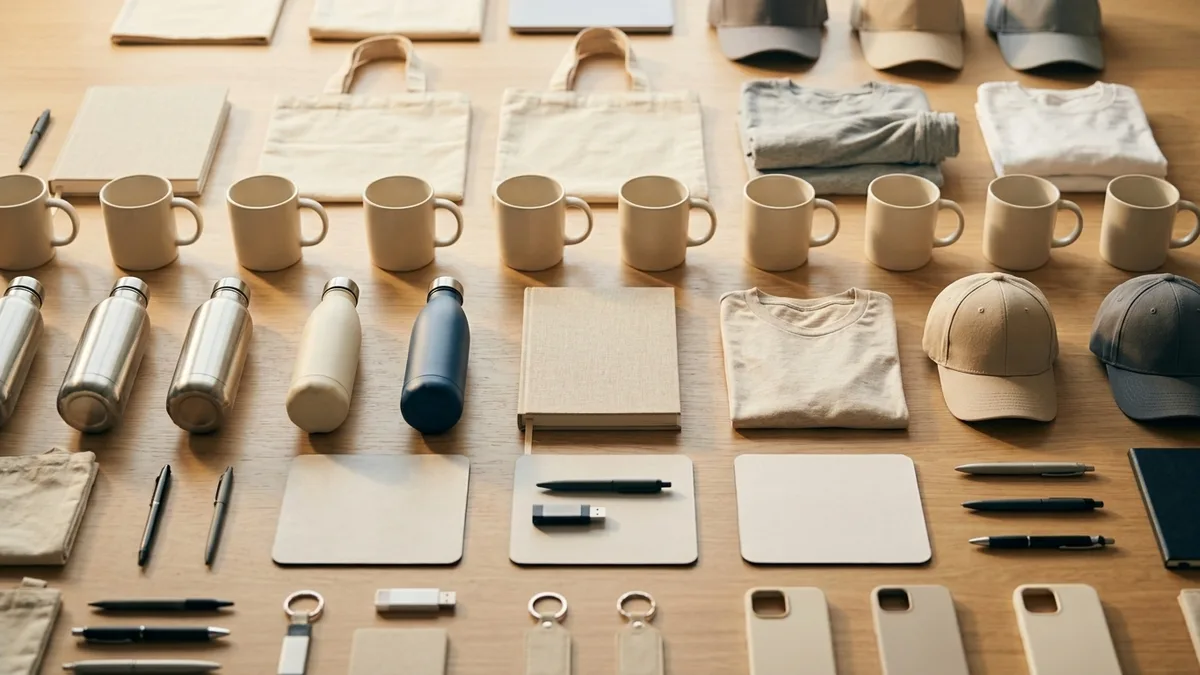
You’re planning a marketing campaign and someone brings up promotional materials — but what does that actually include, and which examples are worth your budget? This guide answers both. Below you’ll find 25 promotional materials examples organized by category, real cost-per-impression data, and a simple framework for matching each item to your audience and campaign goal.
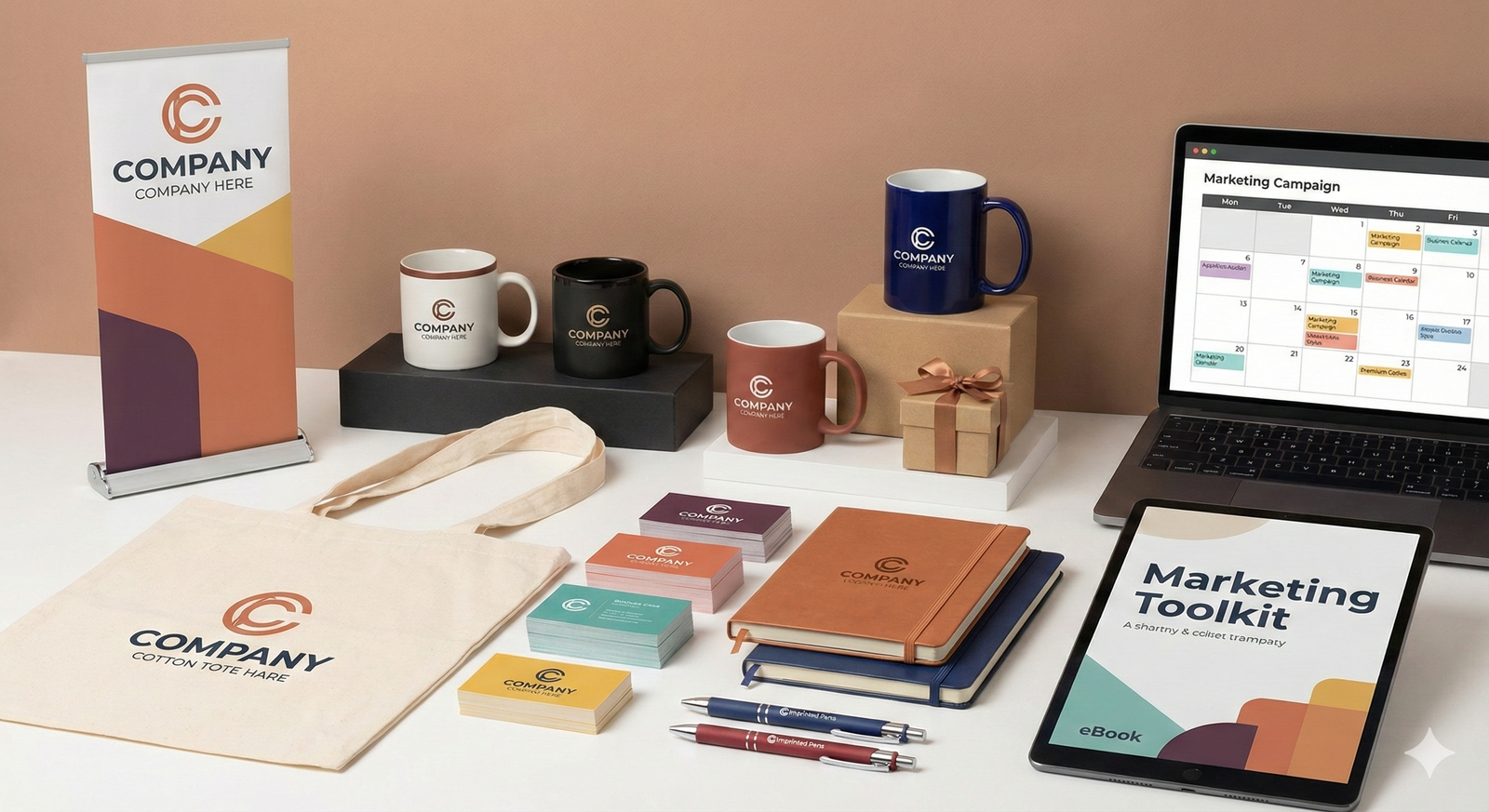
Modern marketing campaigns need tools that work both online and offline. That’s why many brands pair promotional materials with digital ads, email, and social to create more touchpoints and stronger recall. For a wider primer on the category, see our guide to what promotional products are and how they work, and if you run a smaller operation, our roundup of the best promotional products for small businesses.
What Are Promotional Materials?
Promotional materials are commonly used for trade shows, conferences, store promotions, school events, and community outreach because they help keep a brand visible beyond the first interaction. One advantage over many traditional ads is longer-lasting exposure: a banner may attract attention during an event, while a reusable item keeps your name in circulation long afterward. That makes them especially useful for event marketing, customer acquisition, and brand-building campaigns.
Browse the full promotional apparel, drinkware, and pens catalogs, or jump straight to the example categories below:
- T-Shirts
- Keychains
- Pins
- Fanny Packs
- Plastic Tumblers
- Coffee Mugs
- Pens
- Mint Tins
- Corporate Employee Gifts
- Stuffed Animals & Plush Toys
- Stress Balls
- Golf Balls
Types of Promotional Materials
Here is how those types break down in practice:
- Branded giveaway items: pens, mugs, water bottles, tote bags, notebooks
- Printed marketing collateral: business cards, brochures, postcards, flyers, catalogs
- Digital marketing assets: eBooks, infographics, downloadable guides, white papers
Most modern campaigns blend all three. The physical items below drive the bulk of long-term impressions, which is why this guide focuses on examples you can put in someone’s hand. For the broader marketing-versus-advertising picture, see the difference between marketing and advertising.
How to Choose the Right Promotional Materials
Before selecting promotional materials, answer one key question: What do you want the campaign to achieve? Some campaigns focus on lead generation, others aim to increase store traffic, improve retention, or support a product launch. Next, consider the audience and the setting, then focus on practicality, brand fit, and how often the item will realistically be used. When chosen strategically, promotional materials help you stay top-of-mind without relying on constant ad spend. For more inspiration tailored to your spend, browse our promotional gift ideas for business.
25 Promotional Materials Examples
I've organized the following 25 examples into categories so you can quickly find what fits your campaign, audience, and budget.
Branded Pens & Writing Instruments
Writing instruments consistently deliver the lowest cost-per-impression (CPI) in the promotional industry. From budget-friendly plastic stick pens for high-volume trade shows to laser-engraved metal executive pens for client appreciation, these daily essentials ensure your brand stays in hand. Customization options range from standard silk-screening to full-color digital wraps and soft-touch rubberized finishes.
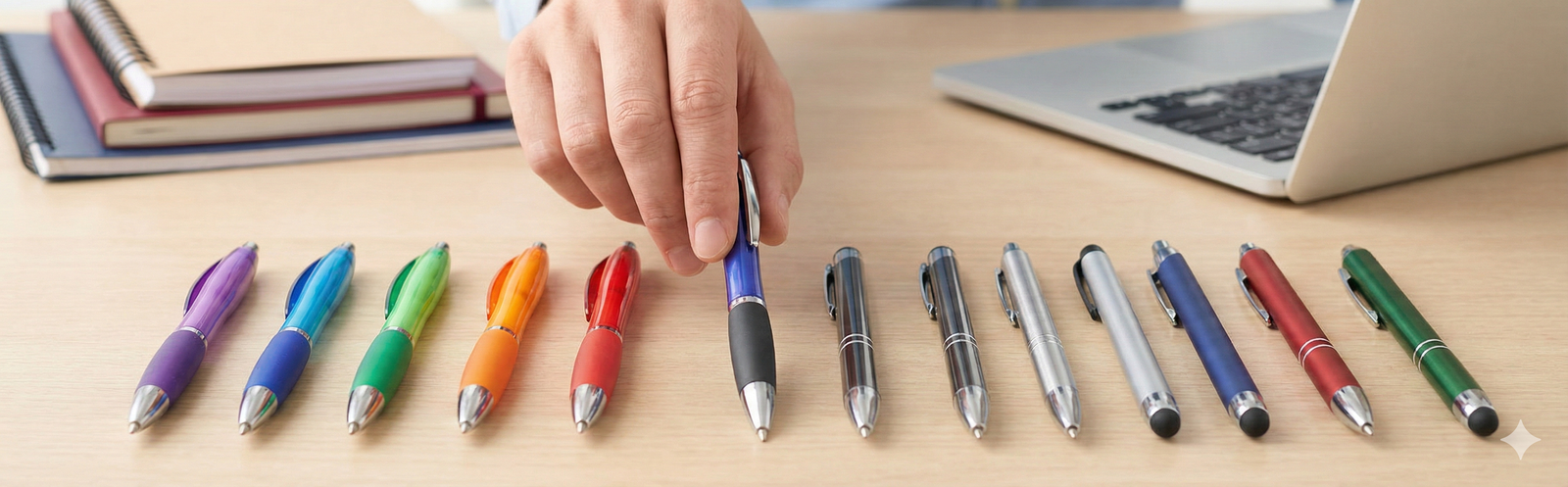
Writing instruments generate approximately 3,000 impressions over their lifetime and have a Cost-Per-Impression (CPI) of less than 1/10th of a cent. (Source: ASI Ad Impressions Study) For a step up in perceived value, a metal twist pen like the 7-in-1 Tool Kit Stylus Metal Twist Pen reads as a gift rather than a giveaway — and browse the full pens catalog for budget plastic through executive options.
Custom Printed Tote Bags
More than just a carrier, a custom tote bag acts as a mobile billboard with an expansive imprint area. We offer options ranging from lightweight non-woven polypropylene for conventions to heavy-duty cotton canvas and jute for premium retail merchandising. These reusable bags align with eco-conscious initiatives while providing high utility for grocery shopping, commuting, or gym use.
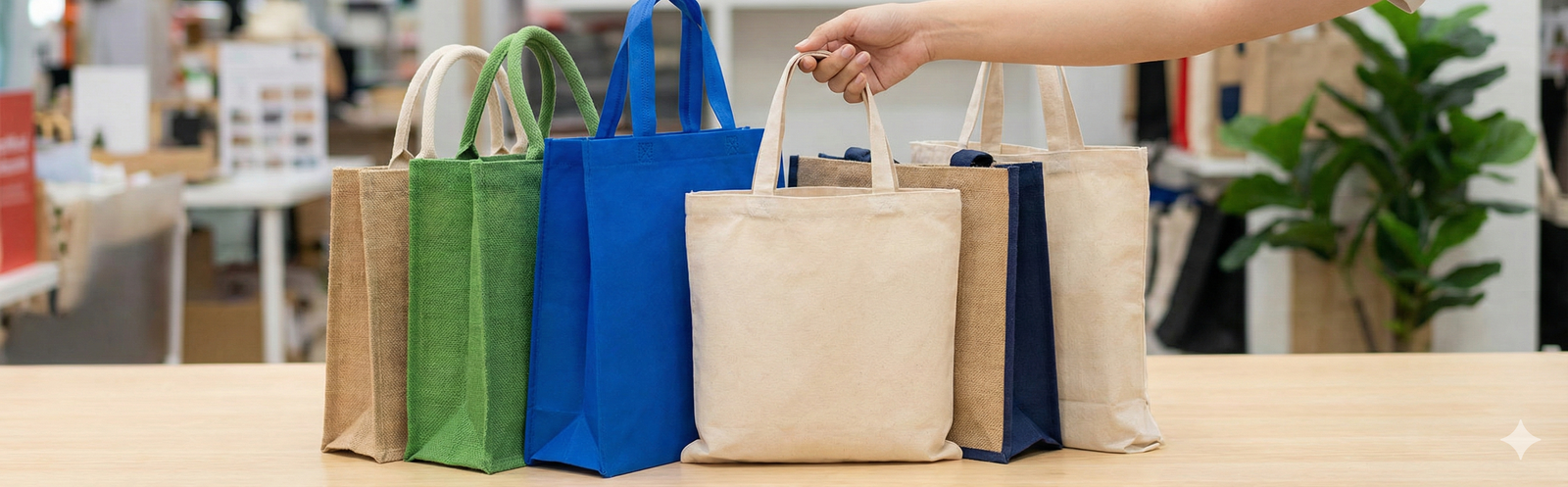
A single promotional bag generates nearly 6,000 impressions throughout its lifetime, more than any other product in the industry. (Source: ASI Ad Impressions Study) A sturdy everyday option like the 10 oz. Medford Cotton Canvas Tote hits the sweet spot of utility and imprint area; see the full bags and totes catalog for jute, non-woven, and grocery styles.
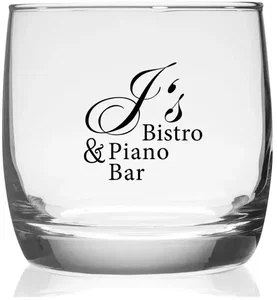
Shop Popular Promotional Drinkware
View all →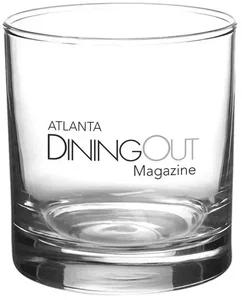
Promotional Apparel & Custom T-Shirts
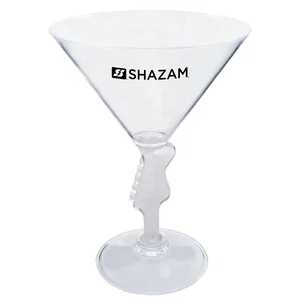
Apparel offers the highest brand visibility of any category. Beyond standard screen-printed cotton tees, our selection includes performance blends, moisture-wicking polos, and retail-quality hoodies suitable for corporate uniforms or lifestyle merchandising. We utilize advanced decoration methods—including embroidery, dye sublimation, and direct-to-film (DTF) transfer—to ensure your logo endures wash after wash.
80% of consumers own at least one promotional t-shirt, making it the most ubiquitous branded item in households. (Source: PPAI Consumer Study)
Logo Mugs & Ceramic Drinkware
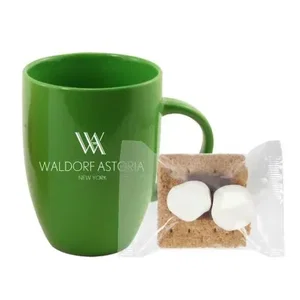
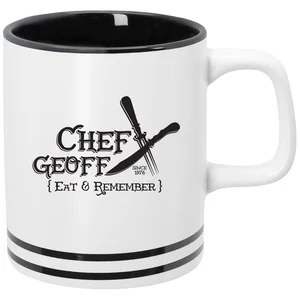
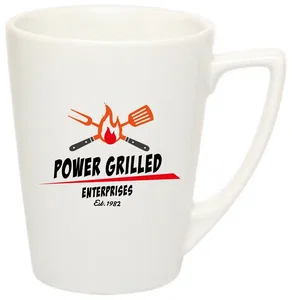
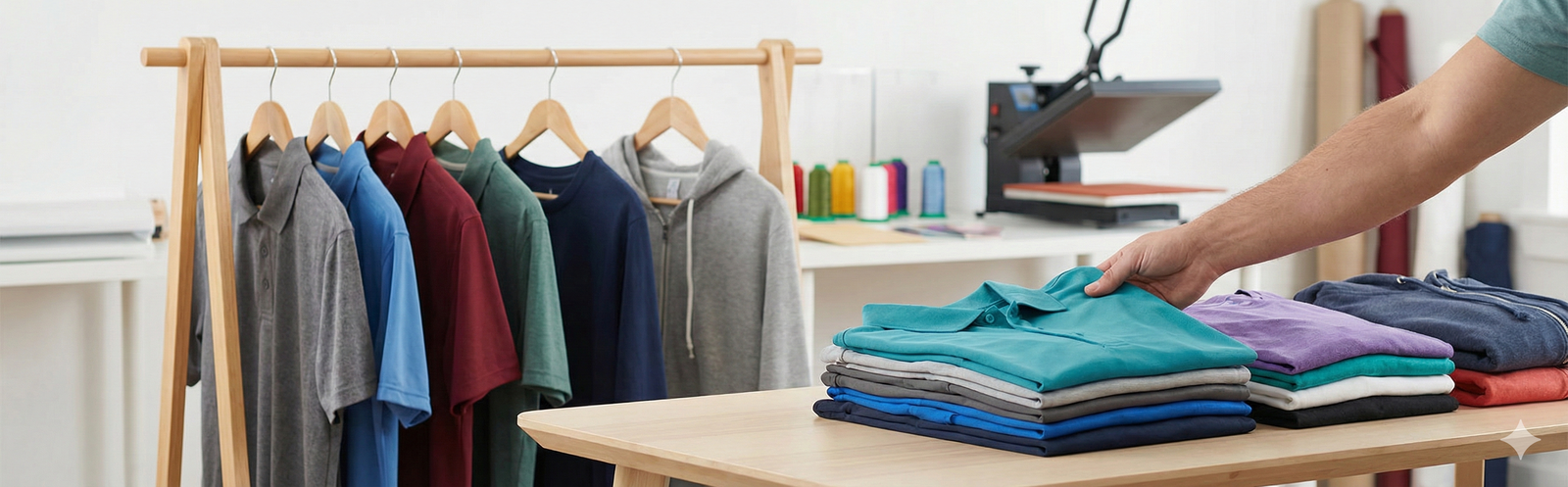
Secure prime real estate on your client's desk with custom ceramic mugs. High-retention items like bistro mugs, camper styles, and large-capacity steins become part of the recipient's morning routine. Our drinkware features kiln-fired imprints for durability, ensuring your message remains vibrant through daily dishwasher cycles and microwave use.
57% of people were able to recall the advertiser on a mug, compared to only 32% recall from radio advertising. (Source: ASI Ad Impressions Study)
Custom Notebooks & Professional Journals
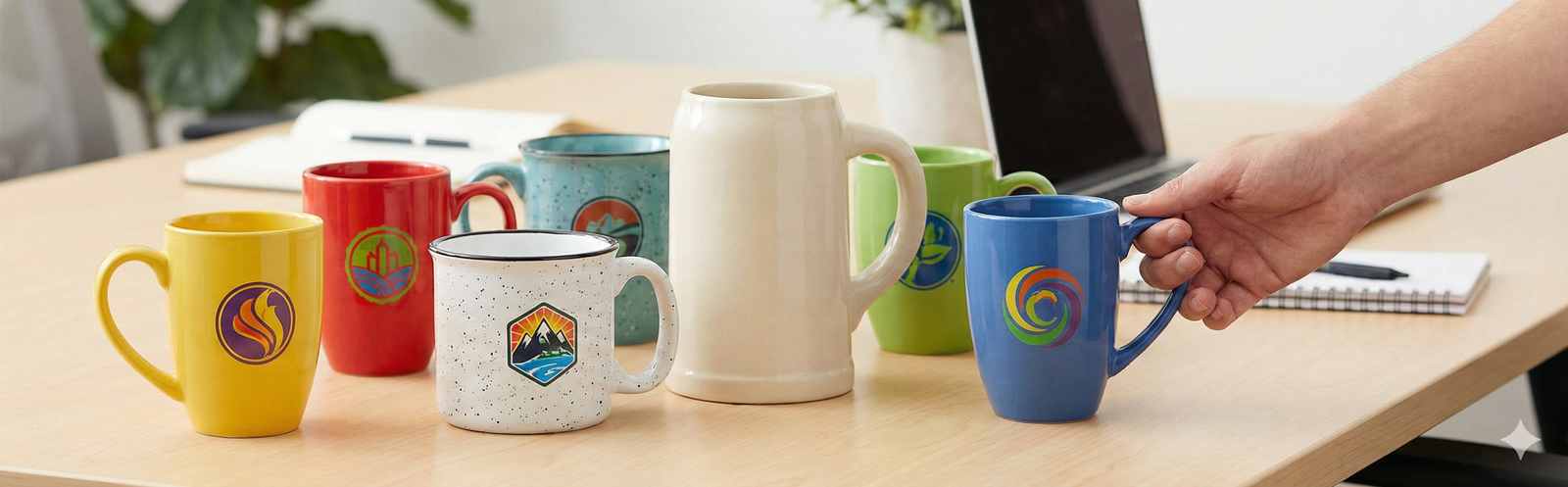
Ideal for B2B marketing and employee onboarding, branded notebooks offer high perceived value and functional utility. Options include hardcover Moleskine-style journals, spiral-bound jots, and eco-friendly recycled paper books. Debossing and foil stamping on leatherette covers add a sophisticated touch suitable for executive meetings and conferences.
People are 42% more likely to achieve their goals just by writing them down, making notebooks a high-utility gift for professionals. (Source: Dominican University Psychology Study)
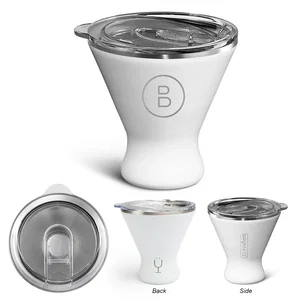
Insulated Tumblers & Travel Mugs
Driven by hydration trends, vacuum-insulated stainless steel tumblers are among the most coveted corporate gifts. Featuring double-wall copper construction, these vessels keep beverages hot for 12 hours or cold for 24+. High-end powder-coated finishes allow for laser engraving that reveals the stainless steel beneath for a permanent, premium look.
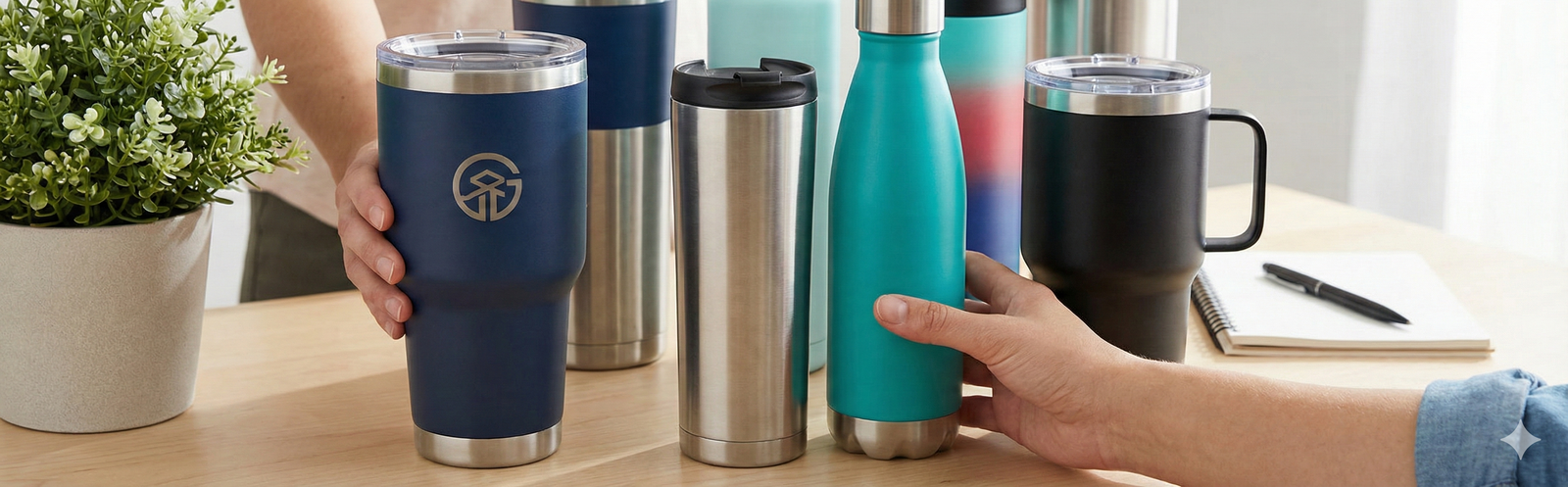
The global reusable water bottle market is projected to reach $12.6 billion by 2030, driven by the shift away from single-use plastics. (Source: Grand View Research) A double-wall option such as the 14 oz. Copper Vacuum Insulated K Mini Tumbler makes an in-demand desk companion, or compare styles in the drinkware catalog.
Wireless Chargers & Tech Accessories
Position your brand as tech-forward with Qi-certified wireless chargers and desktop tech organizers. As remote work and mobile reliance grow, accessories like multi-device charging pads and weighted cable organizers keep your logo visible in the modern workspace. These high-utility items are excellent for client retention gifts and tech-industry events.
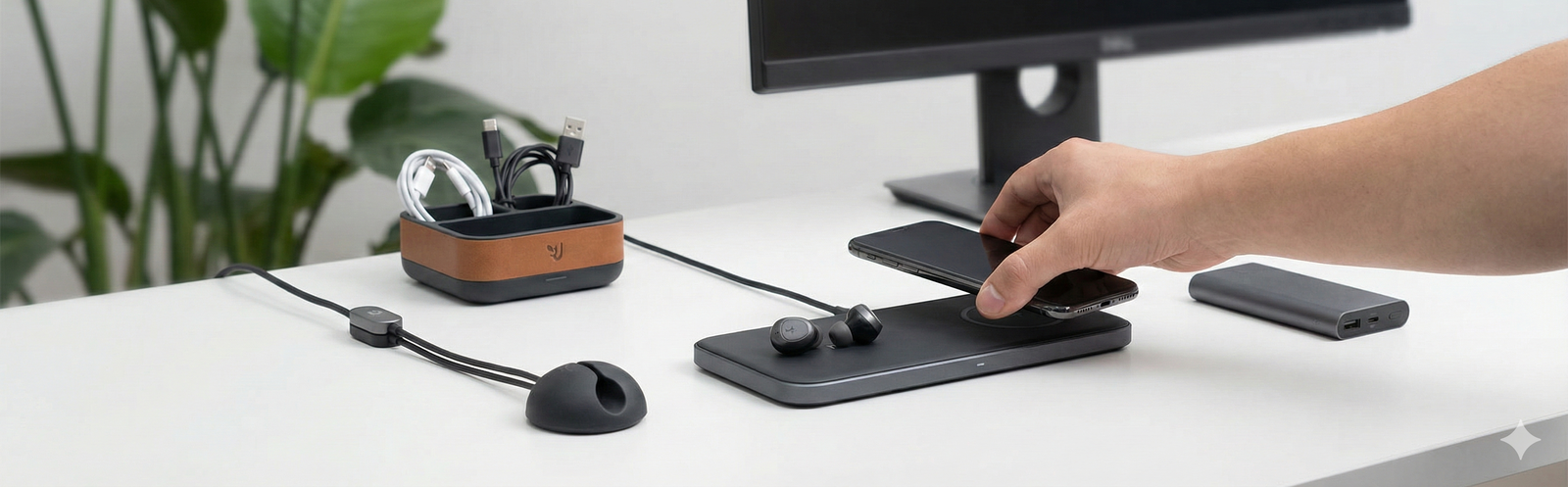
87% of consumers keep promotional power banks and tech accessories for more than one year because of their usefulness. (Source: ASI Ad Impressions Study)
Branded Phone Wallets & PopSockets
Capitalize on the device people look at most: their smartphone. Silicone phone wallets and genuine PopSockets offer high-frequency exposure at an affordable price point. These adhesive accessories are particularly effective for targeting younger demographics, university students, and festival attendees.
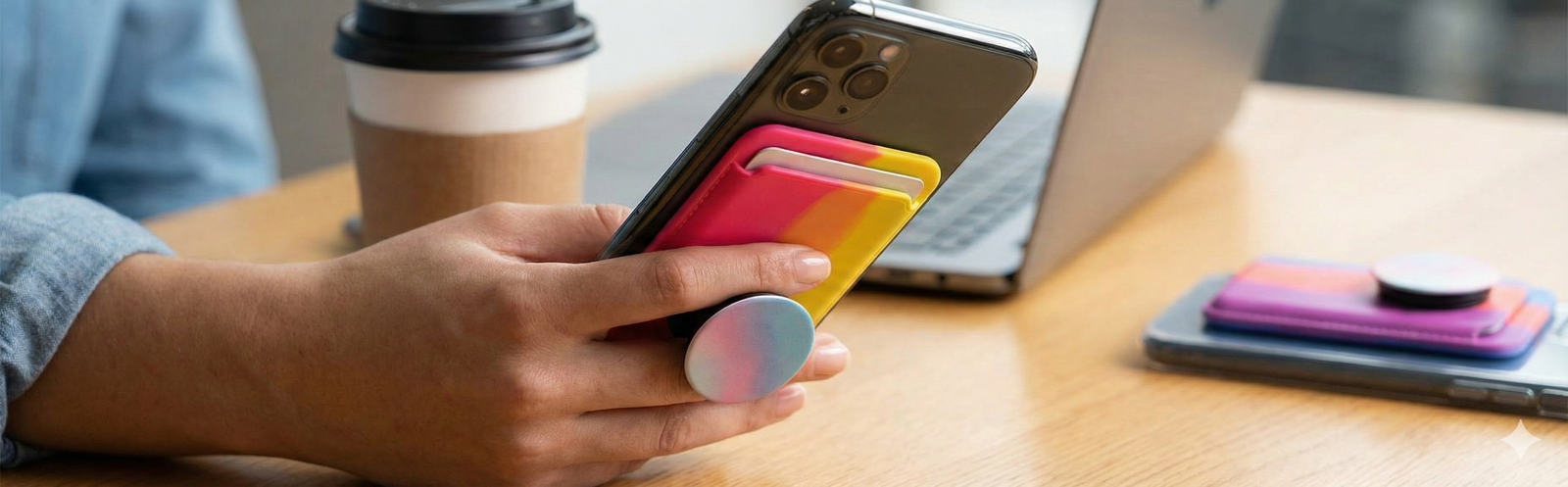
The average American checks their phone 96 times per day, providing nearly 100 daily brand impressions for phone accessories. (Source: Asurion Tech Survey)
Eco-Friendly & Sustainable Merchandise
Align your brand with corporate social responsibility (CSR) goals using our verified sustainable product lines. We source items made from RPET (recycled plastics), organic cotton, bamboo, and wheat straw. Authentically eco-friendly products not only reduce environmental impact but also resonate deeply with values-driven consumers.
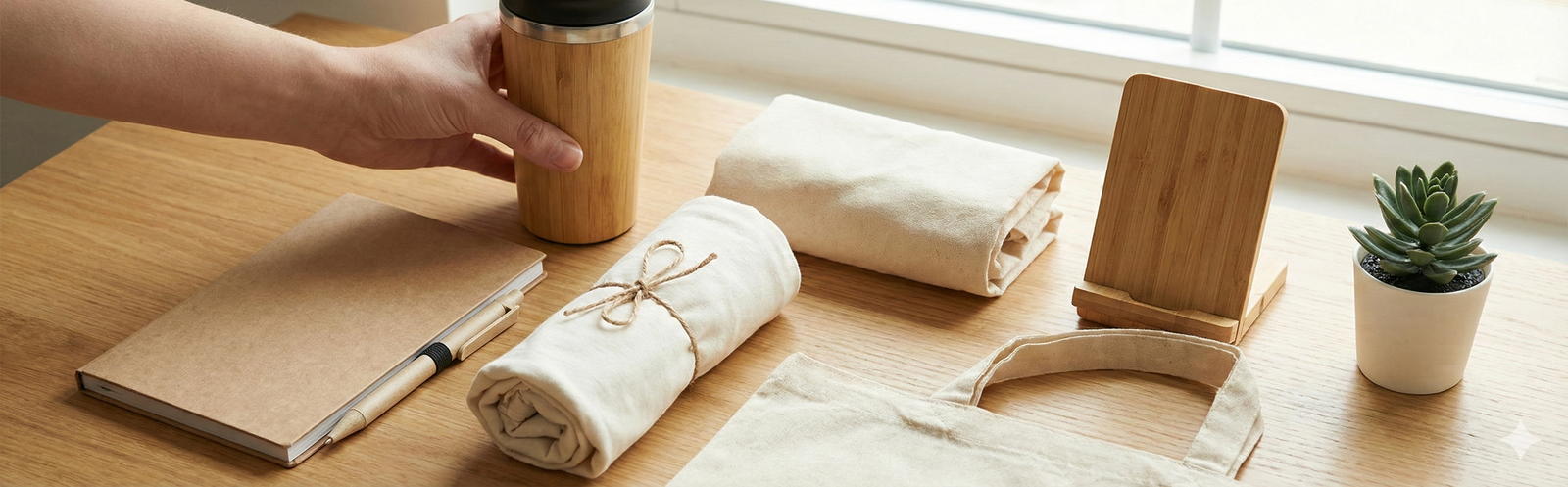
46% of consumers have a more favorable opinion of an advertiser if the promotional product they receive is environmentally friendly. (Source: ASI Ad Impressions Study)
Custom Wellness Kits & Hand Sanitizers
Demonstrate care for your customers and employees with branded health essentials. From FDA-approved hand sanitizers to SPF lip balms and compact first-aid kits, these items associate your brand with safety and preparedness. They are essential components for travel agencies, healthcare providers, and outdoor event coordinators.
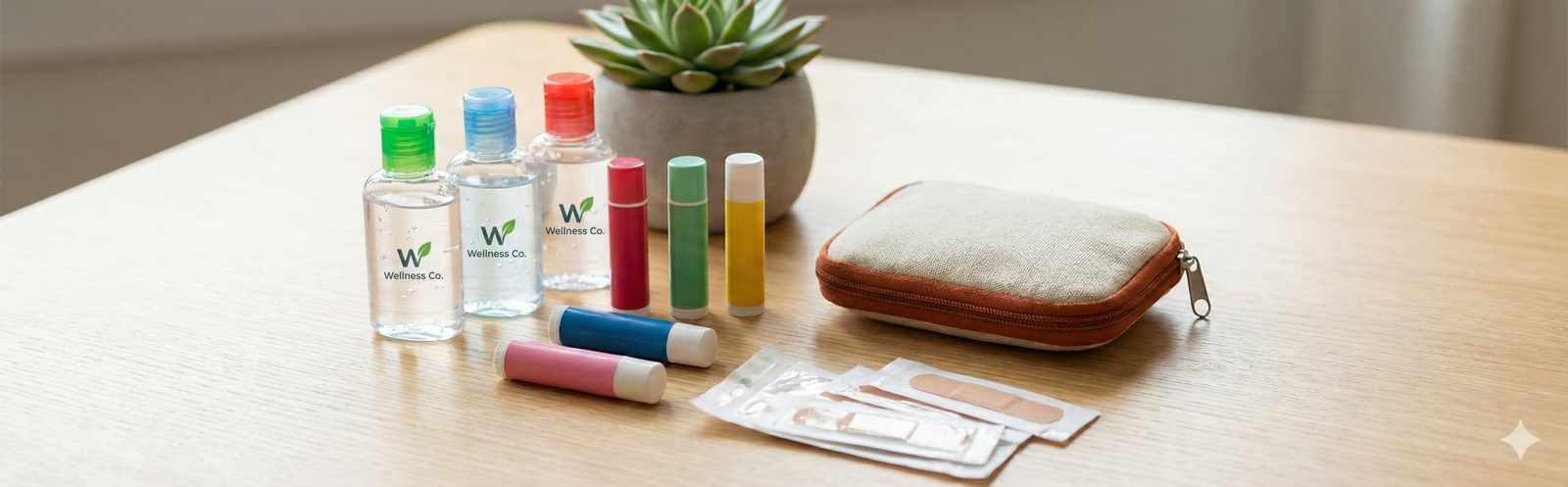
The corporate wellness market is expected to grow at a CAGR of 7% through 2028 as companies prioritize employee health and safety. (Source: Grand View Research)
Bluetooth Speakers & Audio Gear
High-fidelity Bluetooth speakers and noise-canceling earbuds are high-impact rewards perfect for sales incentives or VIP client gifting. Because audio gear is used during leisure time and travel, it builds a positive emotional connection with your brand outside of office hours.
High-end tech items like speakers generate high "pass-along" value, with 63% of consumers passing them on to others rather than throwing them away. (Source: PPAI Consumer Study)
Branded Puzzles & Brain Teasers
Don't just show your audience your brand message—make them build it. Custom jigsaw puzzles and logic games create a unique "lean-in" moment where the recipient actively focuses on assembling your logo or campaign imagery. This transforms a passive gift into an active experience.
Why it works: Interactive engagement and memory retention.
The Evidence: This approach is backed by the "Revelation Effect," a concept highlighted in the Journal of Applied Cognitive Psychology. The study confirms that when people actively solve a problem to reveal a word or image, they are significantly more likely to remember that brand later compared to simply reading it on a flyer.
Best usage:
- Direct Mail: Flat puzzles fit easily into standard envelopes for high-impact mailers.
- Wellness Kits: Position them as "desk-break" tools to encourage mental downtime.
- Event Invites: Send the pieces as a teaser that reveals the event location or date.
Featured Products
- Stack'D Up™ Tumble Tower Game
- Color Wood Shapes Challenge Puzzle
- Promotional Wooden Tower Puzzle
- Logo Wooden Snake Puzzle
- Customized 2-Sided Maze Puzzle
- Puzzle Picture Frame Magnet
- Imprinted Wooden Block Set
- New 3-in-1 Wooden Puzzle Boxed Set
- Promotional Wood Hexagon Puzzle
- Custom Wooden Elastic Cube Puzzle
- Personalized Wooden Star Puzzle
Desk Toys & Stress Relievers
Classic polyurethane stress balls and modern fidget devices serve a functional purpose in high-stress environments. By providing a tactile outlet during long calls or meetings, these items earn a permanent spot on the desktop, ensuring your contact information is always within arm's reach.
74% of office workers have at least one promotional item in their workspace, with desk accessories being the most common retention item. (Source: PPAI Research)
Plantable Seed Paper & Grow Kits
Create a lasting legacy with zero-waste marketing. Seed paper cards and biodegradable pots allow recipients to plant your promotional message, which grows into wildflowers or herbs. This "green" interaction creates a memorable brand experience that physically grows over time.
78% of consumers are more likely to buy from a brand with a proven focus on sustainability and waste reduction. (Source: Nielsen IQ)
Custom Snack Boxes & Edible Gifts
Food is a universal language that creates immediate gratification. Our curated snack boxes feature gourmet treats like chocolates, nuts, and popcorn in fully branded packaging. These are highly effective for holiday gifting, virtual event refreshments, or "welcome back" office kits.
The US corporate gifting market is valued at over $258 billion, with food and beverage being the leading category for client appreciation. (Source: Coresight Research)
Novelty Items & Viral Swag
Break through the noise with unique items designed to spark conversation. From branded sunglasses and retro fanny packs to light-up gadgets, novelty products are perfect for festivals, product launches, and experiential marketing campaigns where the goal is immediate engagement and social sharing.
Novelty items have the highest "social media share rate" of any promotional category, driving organic digital reach beyond the physical recipient. (Source: PPAI Social Media Trends)
Custom Padfolios & Presentation Folders
Equip your sales team and conference attendees with professional organizational tools. Leatherette padfolios and debossed presentation folders elevate the perceived value of your documents. These are staples for financial institutions, real estate closings, and educational seminars.
Industry Insight: Sales representatives using high-quality presentation materials are perceived as 50% more professional and prepared by prospective clients. (Source: Sales Management Association)
Custom USB Flash Drives
Bridge the physical and digital gap by distributing branded USB drives pre-loaded with your catalogs, presentations, or software demos. Available in swivel, credit card, or custom-molded shapes, these drives ensure your digital assets are delivered in a tangible, keepable format.
58% of consumers own a promotional USB drive, and 43% keep it for two years or longer—double the retention of standard print advertising. (Source: ASI Ad Impressions Study)
Executive Pen Gift Sets
For milestones and C-suite gifting, standard pens won't suffice. Our executive sets feature heavyweight brass or metal barrels, premium rollerball cartridges, and presentation gift boxes. Brands like Parker, Waterman, and Cross leverage established prestige to elevate your corporate reputation.
89% of consumers can recall the name of the advertiser who gave them a premium promotional product within the last 24 months. (Source: PPAI Consumer Study)
Leather Business Card Holders
A refined accessory for the networking professional. Laser-engraved leather or metal card holders protect business cards while adding a touch of class to every exchange. This is a sophisticated gift choice for legal professionals, consultants, and luxury service providers.
First impressions are formed within 7 seconds of meeting; premium accessories help establish immediate credibility in face-to-face networking. (Source: Forbes/Psychology Today)
Desktop Organizers & Office Accessories
Help your clients declutter while keeping your brand front and center. Multifunctional desk accessories—such as pen cups with built-in phone stands or digital clock organizers—provide daily utility that justifies the desk space they occupy.
The average employee spends 5 hours and 41 minutes per day at their desk, guaranteeing thousands of brand impressions per year for desktop items. (Source: U.S. Bureau of Labor Statistics)
Event Badges & Credentials
Security and networking rely on clear identification. We produce durable laminated credentials, PVC badges, and variable-data name tags for conferences and festivals. High-quality badging enhances the professionalism of your event and facilitates easier attendee interaction.
76% of event attendees say that networking is the primary driver for their participation, making readable, professional badges critical for ROI. (Source: IAEE)
Conference Swag Bags
Set the tone for your event with a fully stocked welcome bag. A well-curated swag bag serves as a starter kit for attendees, containing water bottles, schedules, lanyards, and local snacks. High-quality bags continue to be used long after the conference ends, extending event ROI.
71% of attendees share images of their event swag on social media, expanding the event’s reach far beyond the convention hall. (Source: EventMB) For a deeper playbook on booth giveaways and ROI, read our ultimate guide to trade show swag.
Custom Lanyards & Badge Reels
The most visible item at any event, lanyards offer continuous eye-level branding. We offer dye-sublimated lanyards for full-color graphics, as well as woven polyester and tubular styles. Attachments can be customized for keys, ID badges, or USB drives, making them practical for campus security and corporate offices.
Lanyards generate approximately 1,200 impressions per month during active use in corporate or campus environments. (Source: ASI Ad Impressions Study)
Custom Table Covers & Throws
Don't let a bare table undermine your professional presence. Our full-color, dye-sublimated table throws cover unsightly rental tables and turn your booth into a branded destination. Options include standard drapes, fitted covers, and stretch fabrics that provide a sleek, modern silhouette.
Exhibitors with professional booth branding (including table covers) attract 48% more traffic than those with unbranded or cluttered displays. (Source: CEIR)
Marketing Materials for Small Businesses Specifically
If you run a smaller operation, the calculus changes: you want the most brand impressions per dollar, not the flashiest single item. That means leaning on low-cost, frequently used products and pairing them with the print collateral that still closes deals in person.
Print Collateral Worth Budgeting For
The examples above focus on items you put in someone's hand, but small businesses still get real mileage from printed marketing materials:
- Business cards — expected, immediate, and effective. A professionally designed card on premium stock signals you're worth taking seriously, and every handoff at a networking event is another touchpoint. Keep the presentation polished with branded business card holders.
- Brochures — your chance to tell the full story. For a business with multiple services, a well-designed brochure answers common questions upfront and can reduce sales calls.
- Flyers — built for urgency. The one-page format forces a single clear message and call-to-action, which is exactly what a seasonal sale, new location, or event announcement needs.
- Presentation folders — for pitches, proposals, and contracts, a branded folder makes the same proposal feel higher-value than a plain document.
- Banners — for trade show booths and storefronts, high-quality banners turn the space into a branded destination.
What Promotional Materials Actually Cost in Bulk
Cost-per-impression tells you long-term value, but small businesses also need the up-front, real-dollar picture. (If you want to put real numbers behind it, here's how to measure promotional product ROI with the CPI formula and a payback worksheet.) Here's roughly what the workhorse items run per unit in bulk:
| Item | Typical bulk cost (each) |
|---|---|
| Custom pens | $0.50 – $2.00 |
| Tote bags | $2 – $6 |
| Drinkware | $3 (basic stadium cup) – $20+ (insulated stainless bottle) |
| Branded apparel | $5 – $15 (depending on fabric and decoration) |
The sweet spot for small-business ROI is items in the $1–$5 range that get used daily — you can give them to dozens or hundreds of people without the per-unit cost spiraling. A pen like the Aurora Frost retractable click pen or a bottle like the 22 oz. Thor copper vacuum insulated water bottle both earn their keep through frequency of use. For a curated shortlist, see our roundup of the best promotional items for small business, and for the strategy behind it, why custom promotional products are essential for small business success.
Match the Item to Your Business Type
- Customer-facing businesses (retail, restaurants, salons): items customers use daily or weekly — branded bags, water bottles, apparel, drinkware.
- B2B service providers (consultants, agencies, accountants): professional collateral — business cards, folders, brochures — plus useful desk items like branded notebooks or pens.
- Event-based businesses (venues, nonprofits, event planners): materials that drive attendance — flyers, giveaways, banners.
- Online businesses: don't skip physical materials. Branded packaging, thank-you cards, and inserts create memorable unboxing moments that lead to repeat business.
The strongest small-business play is choosing 2–3 materials that reinforce each other: hand out a branded pen with a brochure, or drop a branded tote in the bag at checkout.
The 5 Things Found on Most Promotional Materials
Nearly every effective promotional material includes five elements: (1) your logo, (2) your brand colors, (3) a tagline or key message, (4) contact information (website, phone, or social handle), and (5) a clear call-to-action. Skip the call-to-action and you have a giveaway; include it and you have a lead generator. Keep the design simple — one clear message, one strong visual, one next step.
FAQs About Promotional Materials
1) What imprint method should I choose for different items?
For drinkware and metal products, laser engraving is durable and premium. For apparel, screen printing works for large runs, while embroidery feels higher-end. For full-color logos on flat items, UV print or digital printing is a strong choice.
2) How do I make sure my logo looks good on every product?
Ask for a digital proof and confirm size, placement, and colors. If your logo has fine details, request a simplified version for small items like pens and phone accessories.
3) What file format do printers need for the best results?
Vector files are best (AI, EPS, or PDF). If you only have a PNG or JPG, it may need to be redrawn for clean edges and accurate colors, especially for embroidery or engraving.
4) What’s the best way to match brand colors accurately?
Provide Pantone (PMS) color codes when possible. Screen colors can look different on fabric, metal, and paper, so ask for color-matching guidance or a pre-production sample for larger orders.
5) How do I choose the right item for a specific audience?
Start with lifestyle: office workers love desk and tech items, commuters value drinkware and bags, and event crowds respond well to lightweight giveaways. Relevance beats trendiness.
6) Are eco-friendly options actually sustainable, or just marketing?
Look for proof points like recycled-material details (RPET), certifications, and transparent sourcing. A product can be “green” in concept but still wasteful if it breaks quickly or gets tossed.
7) What are the most common hidden costs to plan for?
Shipping, setup fees, proofs, rush production, and import tariffs (on some items) can change totals. Packaging upgrades and kitting also add cost if you’re building gift boxes.
8) How far in advance should I order for events and launches?
For standard production, many orders take 2 to 4 weeks after proof approval. For large quantities, complex decoration, or overseas sourcing, plan 6 to 10 weeks to avoid rush fees and limited options.
9) Should I include QR codes on items, and where do they work best?
Yes, when you have a clear next step like a landing page, discount, or event signup. QR codes work best on flat, readable surfaces like postcards, stickers, packaging inserts, and tote bags.
10) What are smart ways to distribute items beyond trade shows?
Try direct mail kits, customer onboarding boxes, employee welcome kits, referral rewards, appointment follow-ups, and local partnerships. Distribution matters as much as the product choice.
Ready to Create Your Promotional Materials Campaign?
Finding the right promotional materials doesn't have to be complicated. Whether you're planning a trade show presence, building employee welcome kits, or creating client appreciation gifts, the right products make all the difference. Start with your campaign goal, match the item to your audience, and lean on high-impression staples like pens, bags, and drinkware to stretch every dollar.
Ready to build your promotional materials lineup?
Our team can help you select items that fit your budget, match your brand, and achieve your marketing goals.
Shop Related Categories
Related Articles
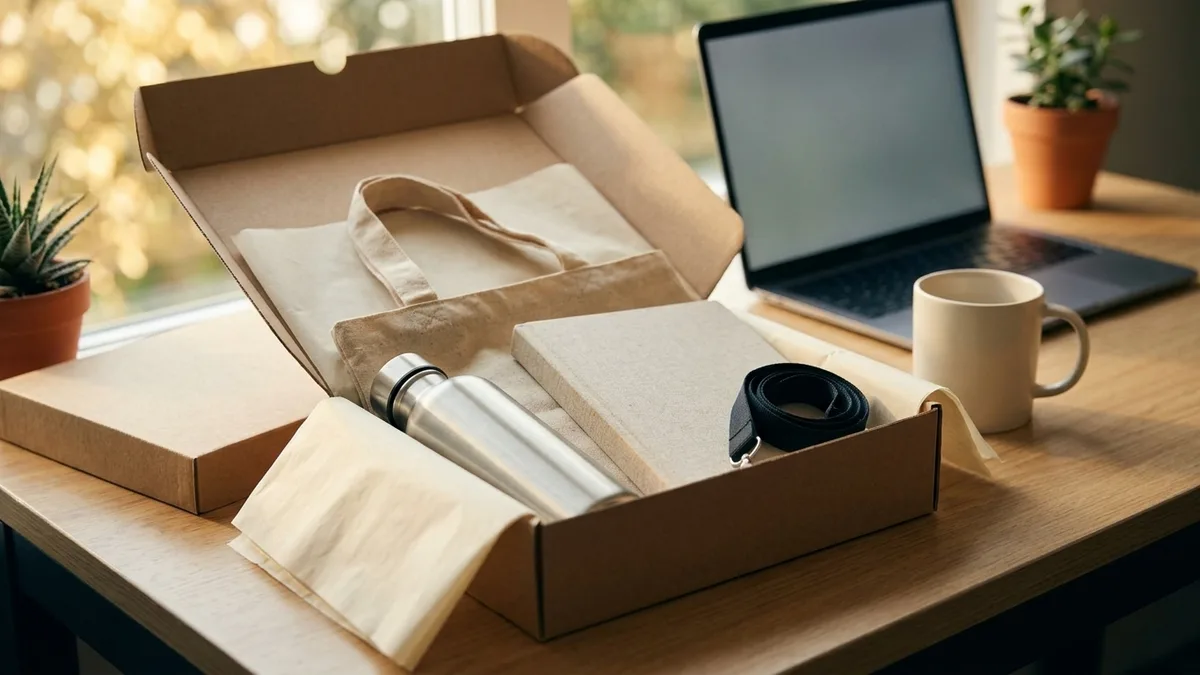
Employee Welcome Kit Ideas for Small Businesses (That New Hires Keep)
A practical guide to employee welcome kit ideas for small businesses—what to include, ideas by budget, remote vs. in-office kits, and how to assemble and ship them without an in-house team.

How to Choose a Promotional Products Company (Buyer's Guide)
Picking the wrong promo vendor costs you money, time, and a botched logo on 500 shirts. Here's how to evaluate companies, what to ask, and the red flags that signal trouble.

How to Measure Promotional Product ROI (Without Guessing)
Promotional products feel hard to measure—but they don't have to be. This guide shows you the exact formulas, tracking setup, and worksheet to prove the ROI on your next branded order.
Is Company Swag Taxable? Your Complete Guide to Avoiding Tax Headaches
You ordered branded merchandise for your team or clients, and now tax season has you wondering: is company swag taxable?