
How to Wash a Weighted Blanket: Complete Care Guide

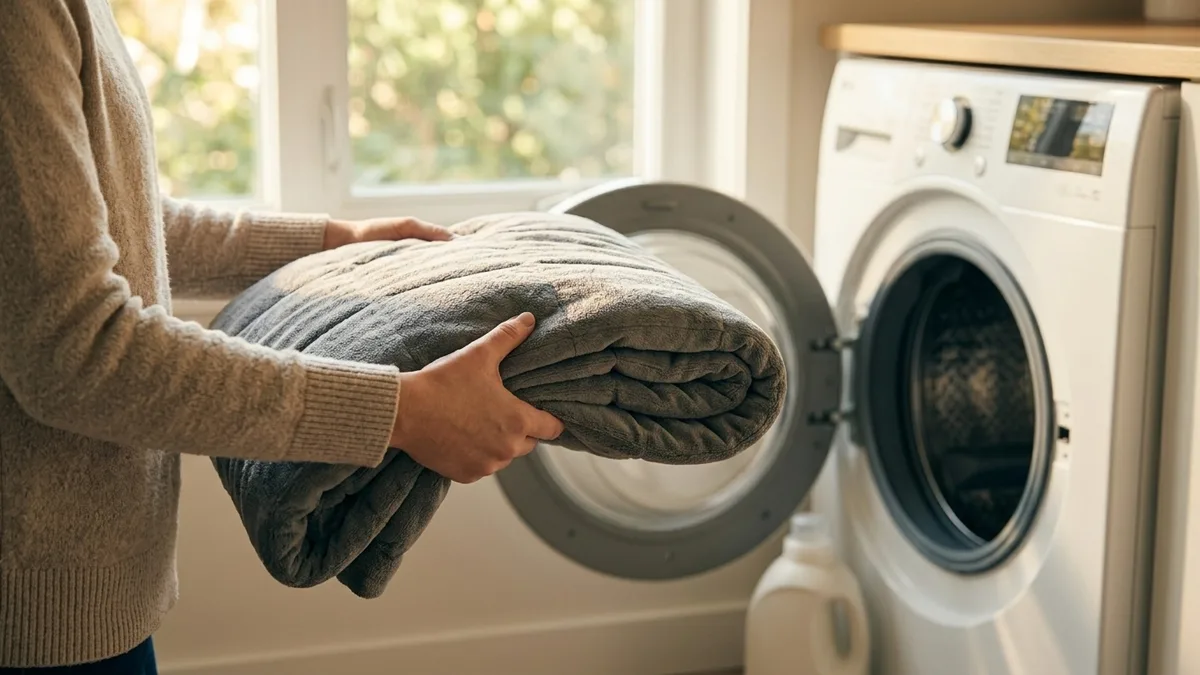
Most weighted blanket care guides tell you to check the care label and use a gentle cycle. That advice is correct and mostly useless, because it skips the thing that actually decides the outcome: whether your washer can physically handle the blanket once it is soaked.
A 15 lb blanket comes out of the rinse cycle weighing close to 30 lb. That is the number your machine has to survive, and it is why two people can follow the same care label and get two different results: one gets a clean blanket, the other gets a bearing failure and an unbalanced drum. This guide is organized around weight and washer capacity first, because that is the variable that breaks blankets and machines.
Shop Custom Blankets & Throws
View all →

Can You Wash a Weighted Blanket?
The fear that a blanket will clump, leak beads, or break the washer keeps a lot of them sitting unwashed far longer than they should. Bead- and pellet-filled blankets, which make up the vast majority of the market, are built to survive routine washing. What they do not survive is being crammed into a machine that is too small, or dried on high heat.
So before anything else, weigh your blanket and find your washer's capacity rating. Everything else follows from those two numbers.
What Size Washer Do You Need for a Weighted Blanket?
Wet weight is the reason those numbers look conservative. Cotton and polyester covers absorb a lot of water, and a saturated blanket typically weighs 1.8-2× its dry weight. The drum has to spin that mass at several hundred RPM without going out of balance.
| Blanket weight | Approx. wet weight | Where to wash it |
|---|---|---|
| 10-12 lb | 18-24 lb | Any home washer, including top-loaders |
| 15 lb | 27-30 lb | Standard home washer, 3.5 cu ft or larger |
| 20 lb | 36-40 lb | Large front-loader, 4.5 cu ft or larger |
| 25 lb | 45-50 lb | Laundromat recommended |
| 30-40 lb | 54-80 lb | Commercial machine only, 5+ cu ft |
The one rule worth memorizing: if the blanket weighs more than 40% of your washer's capacity rating, take it to a laundromat. A single laundromat trip costs a few dollars. A replacement washer bearing does not.
Why agitators are the hidden problem
A center-post agitator works by twisting fabric around itself. With a duvet or a comforter that is merely annoying. With a weighted blanket it concentrates force on the stitched compartment seams that hold the beads in place, which is exactly where blankets fail. If a top-loader with an agitator is your only machine, cap it at about 12 lb and use the bathtub method for anything heavier.
Impeller top-loaders (a low disc instead of a tall post) and front-loaders both tumble rather than twist, and are considerably safer.
How to Wash a Weighted Blanket in the Washing Machine
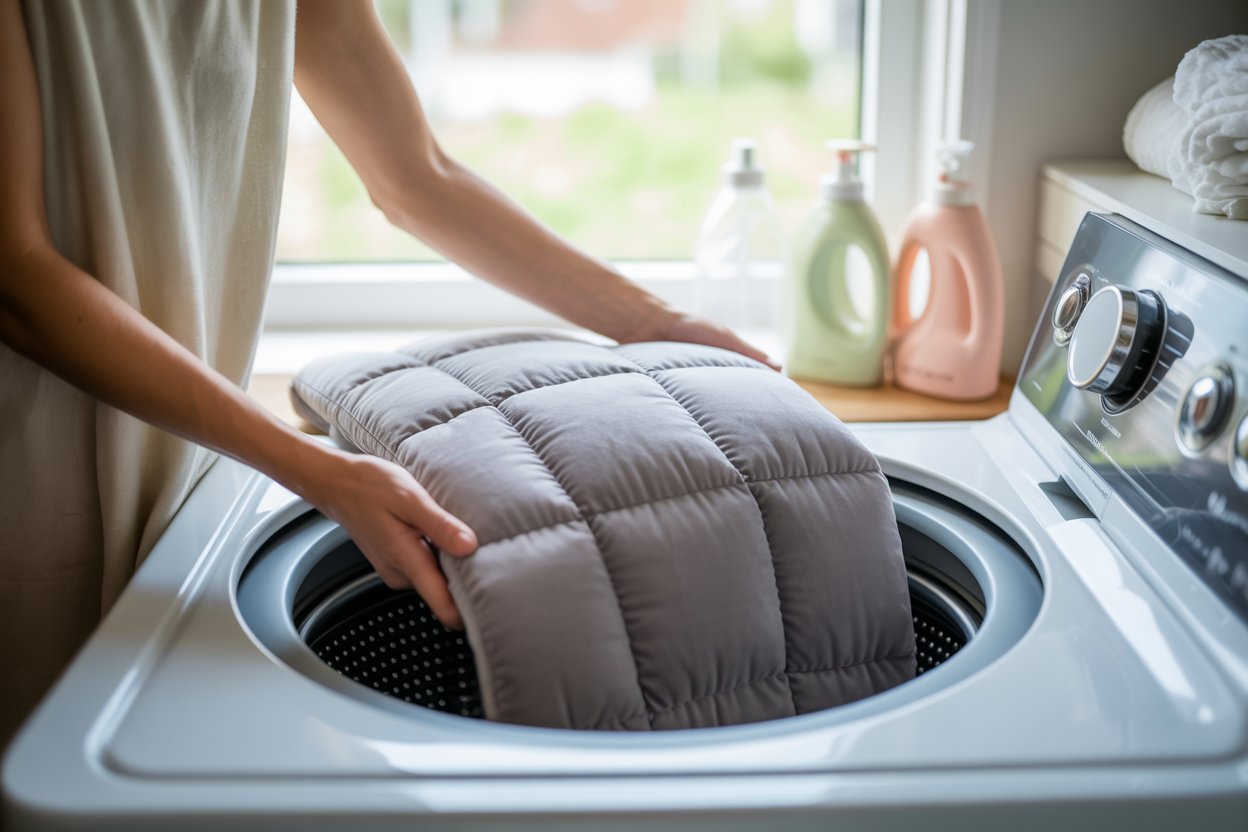
Step 1: Strip the cover. If your blanket has a removable duvet cover, take it off and wash it separately as normal bedding. The cover does the vast majority of the dirty work and can be washed weekly; the weighted insert underneath usually needs a wash only every few months.
Step 2: Inspect every seam. Run your hands along the edges and compartment stitching looking for tears, thin spots, or loose threads. A pinhole opening becomes a bead leak inside your drum, and once beads escape into the machine they are very difficult to retrieve. Repair anything questionable with upholstery thread before it goes in the water.
Step 3: Pre-treat stains. Apply an enzyme-based stain remover to spots and let it sit 10-15 minutes. Enzyme cleaners break down the protein in sweat, body oil, and accidents, which is what most weighted blanket staining actually is.
Step 4: Load it loosely and evenly. Spread the blanket around the drum rather than dropping it in as a ball. A balled-up blanket will trigger an unbalanced load error and get you a half-rinsed blanket.
Step 5: Gentle or bulky cycle, cold water. Hot water shrinks covers and softens plastic pellets. Use about half your normal detergent: liquid, not powder, since powder leaves gritty residue trapped in the compartments.
Step 6: Run a second rinse. Detergent hides inside the filling pockets, and leftover soap makes a blanket stiff and scratchy. This step is the difference between a blanket that feels new and one that feels crunchy.
Step 7: Take it out immediately. A wet weighted blanket left sitting in the drum grows mildew inside the filling compartments within hours, and that smell does not wash out.
How to Wash a 15 lb Weighted Blanket
The 15 lb blanket is the most common size sold, because it suits adults in the 140-160 lb range under the widely used "10% of body weight" guideline. It is also the largest size that reliably fits a normal household washer, which makes it the easiest weighted blanket to own. If you are still choosing a weight, this is the size that will cause you the fewest laundry problems over its lifetime.
How to Wash a 20 lb Weighted Blanket
Twenty pounds is the genuine dividing line for home laundry. Below it, most people can wash at home indefinitely. At or above it, machine capacity starts making the decision for you, and pushing through anyway is how both blankets and washers get destroyed. Check the sticker inside your washer door or the model number in the manual before assuming yours qualifies.
How to Wash a 25 lb Weighted Blanket
A useful hybrid approach for heavy blankets: wash at the laundromat, dry at home. Commercial dryers run hot and are the single most common way heavy blankets get ruined. Bring it home damp, lay it flat, and let it finish over a day or two.
For blankets in the 30 to 40 lb range the same rule applies, only more so: commercial machines for washing, air drying for the rest. Hand washing a blanket this heavy is genuinely difficult, since a soaked 40 lb blanket approaches 80 lb and is a real lifting hazard for one person.
How to Wash a Weighted Blanket Without a Washing Machine
Hand washing makes sense when the blanket is too heavy for your machine, when the cover fabric is too delicate for agitation, or when the filling cannot take a spin cycle. It is slower and more physical than machine washing, but it is also the gentlest option available.
The critical technique point is never twist or wring. Wringing forces beads through the compartment stitching and permanently redistributes the weight, leaving heavy lumps and bare patches. Press downward instead, folding the blanket in sections against the side of the tub to squeeze water out.
Spot cleaning between washes
For isolated spills, skip the full wash entirely. Mix a little mild detergent into water, work it into the spot with a cloth, then go over the area with a second cloth dampened with clean water to lift the soap back out. Blot dry and let it air out completely. Done promptly, spot cleaning handles most incidents and can stretch the interval between full washes considerably.
How to Get Stains and Smells Out of a Weighted Blanket
| Problem | Treatment |
|---|---|
| Sweat and body oil | Enzyme cleaner, 15 minutes before washing |
| Urine or pet accidents | Enzyme cleaner, then a cold soak with a splash of white vinegar |
| Food and drink | Blot immediately, then dish soap and cool water |
| Musty or stale smell | Dry baking soda, one hour, vacuum off; then air outdoors |
| Mildew smell that persists | The filling is contaminated: replace the blanket |
That last row is not a shortcut. Once mildew reaches the filling inside sealed compartments, there is no way to get cleaner into the pockets and dry them fully, and a mildewed blanket is a genuine respiratory irritant. Persistent musty odor after a proper wash and full dry means the blanket is finished.
Does the Filling Change How You Wash It?
- Glass beads are the most common filling in well-made blankets. They are small, smooth, non-absorbent, and safe for gentle machine washing. Because glass is dense, a glass-bead blanket is thinner than a pellet blanket of the same weight, and it dries noticeably faster.
- Plastic poly pellets are cheaper, slightly larger, and a little noisier. They wash exactly like glass beads but are far less forgiving in the dryer. Poly pellets soften, clump, and can fuse together well below the temperature of a normal hot cycle. For pellet blankets, low heat or air drying is not a suggestion.
- Sand absorbs water, becomes enormously heavy, and can take several days to dry. Sand also migrates through stitching more easily than beads. Most sand-filled blankets should be spot cleaned only.
- Organic fillings (rice, corn, beans, buckwheat) cannot get wet under any circumstances. Water makes them swell, then rot. Spot clean or use a professional cleaner.
- Knitted weighted blankets contain no filling at all; the weight comes from dense cotton yarn. They generally machine wash gently and should be dried flat, since hanging stretches the knit out of shape permanently.
Cover fabric matters too
The outer fabric sets your temperature ceiling independently of the filling. Cotton is the most forgiving and tolerates warm water. Bamboo and rayon blends need cold water only. Heat degrades the fiber's cooling properties. Minky and fleece are polyester, so they melt and pill at high dryer heat. Silk or silk-blend covers should be hand washed or professionally cleaned.
How to Dry a Weighted Blanket
More weighted blankets die in the dryer than in the washer. High heat does three separate kinds of damage at once: it softens and fuses plastic pellets, it shrinks the cover fabric around a filling that does not shrink, and it stresses the compartment stitching where the two now disagree in size.
Air drying, in order of preference:
- Flat on a clean surface: a drying rack, a spare bed covered in towels, or outdoors on a dry day. Flip every few hours so both sides get airflow. This is the only method that never distorts the blanket.
- Over multiple lines or rails: spread the load across two or three points so the weight is not hanging from one edge. Draping a heavy wet blanket over a single line stretches the fabric and can pull compartments apart.
- Indoors with a fan: lay flat on towels and point a fan across the surface. Adds airflow when the weather will not cooperate.
The one thing to be genuinely strict about is confirming it is fully dry. Press firmly into several compartments, especially corners and the center. Filling pockets hold moisture long after the surface feels dry, and a blanket stored slightly damp will smell of mildew within a week.
How Often Should You Wash a Weighted Blanket?
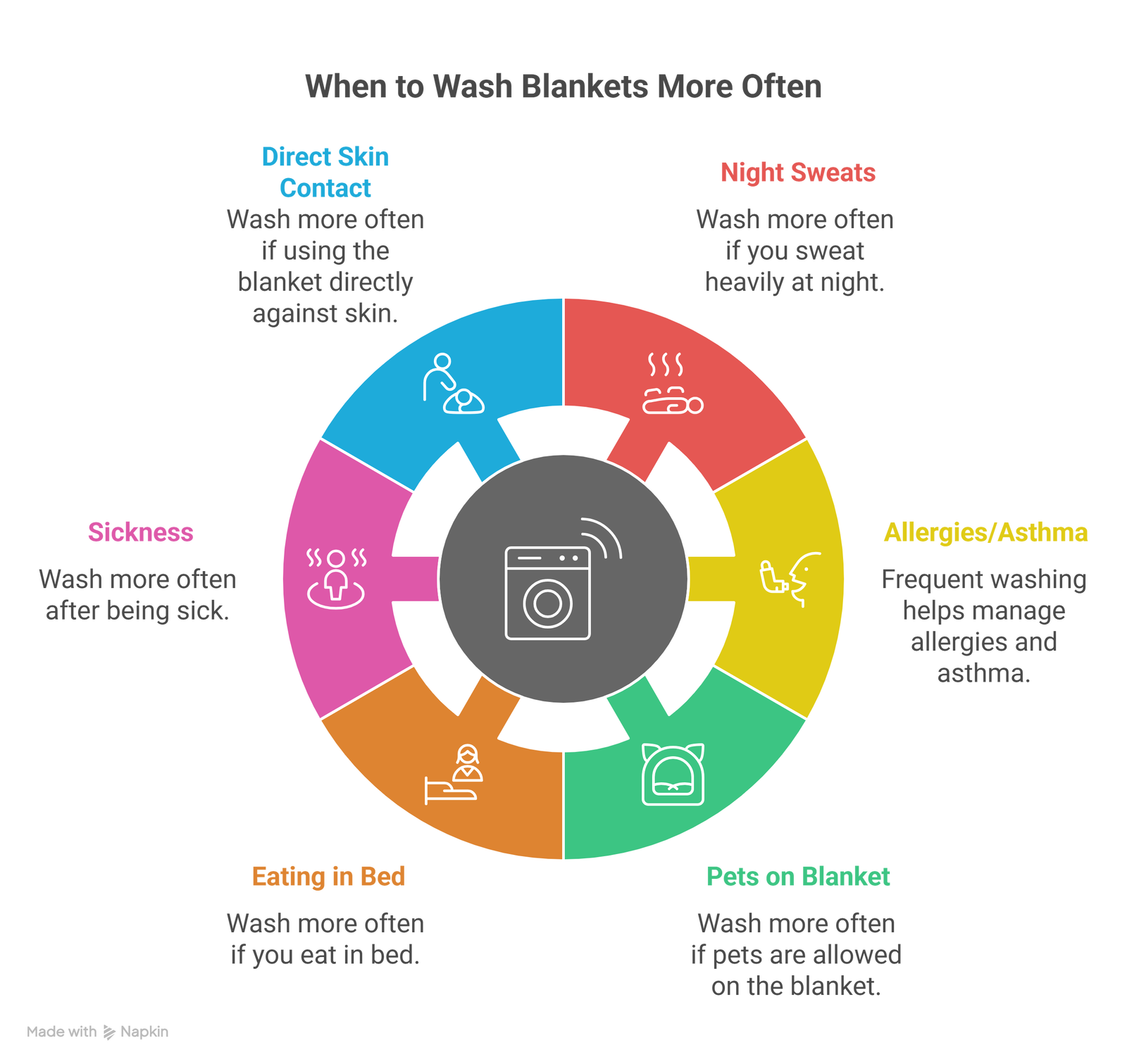
A removable duvet cover is the single highest-value weighted blanket accessory, and it is worth buying one on day one. It absorbs the sweat, skin oil, and dust that would otherwise work into the filling compartments, and it goes in the wash as easily as a pillowcase. Owners who use a cover wash the insert two or three times a year. Owners who do not are washing a 20 lb blanket every few weeks, which, given everything above about capacity and drying, is a genuinely tedious way to live.
Between washes, air the blanket out weekly near an open window or outdoors. Ten minutes of airflow does more for freshness than most people expect.
Common Mistakes That Ruin Weighted Blankets
- Hot water. Shrinks covers, softens pellets, sets protein stains. Cold or warm, never hot.
- Overloading the machine. The most expensive mistake on this list, because it can take the washer with it.
- Too much detergent. Excess soap lodges in the filling compartments where rinse water struggles to reach it, leaving the blanket stiff and sometimes irritating to skin. Half your normal dose.
- Fabric softener or bleach. Softener coats fibers and kills breathability, which defeats the point of a cooling cover. Bleach weakens both fabric and stitching.
- High dryer heat. The leading cause of dead weighted blankets. Low heat or air dry, always.
- Storing it damp. Mildew inside the compartments is unrecoverable.
- Wringing or twisting. Permanently redistributes the filling and blows out compartment seams.
- Washing it with other laundry. The blanket needs the entire drum to tumble. Anything else in there guarantees a poor wash and an unbalanced spin.
How Do You Fix a Weighted Blanket?
Repairing a seam. Turn the blanket so the opening faces up and the beads settle away from it. Use upholstery or button thread (regular sewing thread is not strong enough to hold against the weight) and work a tight backstitch along the opening, going slightly past the tear at both ends. Compartment seams carry constant load, so overlapping the intact stitching on either side is what keeps the repair from reopening.
Fixing clumped or shifted filling. Lay the blanket flat and work the beads back across the compartment with your palms, pushing from the heavy area toward the bare one. A dryer cycle on the no-heat or air-fluff setting with a couple of wool dryer balls helps loosen compacted filling. If the beads will not move at all, the compartment stitching has likely failed internally and the fill has migrated between chambers.
When to replace it instead
- Odor that survives a proper wash and full dry. Mildew has reached the filling.
- Torn seams beyond a simple repair, or repeated failures in the same area.
- Clumping that will not redistribute, leaving hard lumps and bare patches.
- Noticeable weight loss: if a 15 lb blanket now feels like 12, enough beads have escaped that it is no longer delivering the pressure it was sized for.
- Fabric thinning, pilling through, or holes from ordinary wear.
Well-made weighted blankets last 3-5 years with proper care. Budget blankets often manage only 1-2, while double-stitched blankets with quality covers can pass 7. Nearly all of that variance comes down to two things: whether a duvet cover was used, and whether the blanket was ever dried on high heat.
Is It Okay to Sleep With a Weighted Blanket Every Night?
Nightly use does mean the blanket accumulates sweat and skin oil faster than occasional use, which is the practical argument for a duvet cover. Wash the cover weekly, deep clean the insert quarterly, and nightly use costs you nothing in blanket lifespan.
Buying Weighted Blankets for a Team, Client, or Event
Everything above applies to a blanket you own. If you are buying blankets in quantity (employee wellness kits, client gifts, patient comfort programs, conference giveaways), washability becomes a purchasing decision rather than a laundry one, because you are choosing on behalf of people who will never read a care label.
Three things to specify when ordering in bulk:
- Machine-washable cover fabric. Cotton and fleece are the safe defaults. Anything requiring hand washing or dry cleaning will simply go unwashed by most recipients.
- A weight under 15 lb. Recipients have ordinary home washers. A 20 lb blanket creates a laundry problem your recipients did not sign up for.
- A removable cover where budget allows. It roughly triples the practical lifespan of the blanket in real households.
Our custom weighted blanket is built around exactly these constraints, a machine-washable cover in a weight that fits a standard home washer, and imprints with your logo for wellness programs and client gifting. For lighter and lower-cost options, the full promotional blankets and throws range covers fleece, sherpa, jersey, and picnic styles.
Custom Blankets Worth Keeping

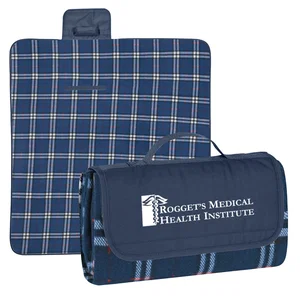
Need custom blankets for your team or event?
Tell us your quantity and timeline and we'll come back with options, pricing, and a free virtual proof.
Frequently Asked Questions
Can I wash a weighted blanket in the washing machine?
Yes, provided the blanket fits your machine with room to tumble and the filling is glass beads or poly pellets. Wash it alone on a gentle cold cycle with half your normal dose of mild liquid detergent, then run an extra rinse.
Can you wash a 20 lb weighted blanket at home?
Only in a large-capacity front-loader of 4.5 cu ft or more. A 20 lb blanket weighs 36-40 lb once saturated, which is beyond what compact machines and agitator top-loaders can safely spin. Smaller machine, use a laundromat.
Can I put my 15 lb weighted blanket in the washer?
Yes. A 15 lb blanket reaches roughly 27-30 lb wet and fits comfortably in any washer of 3.5 cu ft or larger. It is the heaviest size that reliably works in a standard household machine.
How do you clean a 15 lb weighted blanket?
Remove the duvet cover and wash it separately, pre-treat stains with an enzyme cleaner, then machine wash the insert alone on gentle with cold water and half the usual detergent. Add a second rinse, and dry flat or tumble on low heat with wool dryer balls.
How to clean a 25 pound weighted blanket?
Use a commercial laundromat machine rated 5 cu ft or larger. At 45-50 lb wet, a 25 lb blanket exceeds nearly every residential washer. Wash cold on gentle, then bring it home and air dry flat rather than using a hot commercial dryer.
What is the easiest way to clean a weighted blanket?
Use a removable duvet cover and wash that instead. The cover absorbs nearly all the sweat and skin oil, washes like normal bedding, and cuts the weighted insert down to a quarterly deep clean. For spills between washes, spot clean with mild detergent and a damp cloth.
Can you dry a weighted blanket in the dryer?
Only on low heat, and only if the care label allows it. High heat softens and fuses plastic poly pellets and shrinks cover fabric around filling that does not shrink. Add wool dryer balls, pull the blanket out every 30 minutes to redistribute the filling, and expect 2-4 hours.
The Short Version
If you remember nothing else from this guide, remember the capacity rule: a weighted blanket should be under about 40% of your washer's rated capacity. Under 15 lb, wash at home. At 20 lb, you need a large front-loader. At 25 lb and above, go to a laundromat and bring it home to air dry.
Beyond that, the method is simple and hard to get wrong: cold water, gentle cycle, half the detergent, no softener, extra rinse, low heat or flat drying, and completely dry before it goes back on the bed. Buy a duvet cover, wash it weekly, and the blanket itself will need your attention about four times a year.
The same care-label-first logic applies to plenty of other gear you clean at home. If this approach was useful, our guides on washing a backpack at home, cleaning nylon totes and backpacks, and cleaning hair brushes at home follow the same principles of gentle washing and patient drying.
Shop Related Categories
Related Articles
How to Clean Nylon Totes & Backpacks: Expert Maintenance Tips
If you are searching for how to clean a nylon tote bag or how to wash a nylon backpack, you are in the right place.
How to Wash a Backpack in the Washing Machine at Home
Can you wash a backpack in the washing machine? Often yes, if it is nylon or polyester without a frame, leather trim, or electronics. Here is how to do it safely, step by step.
How to Wash a Backpack at Home: Easy Hand Wash Guide
Backpacks are used daily for school, work, travel, hiking, and the gym. Over time, they collect dirt, sweat, crumbs, and odors.

How to Remove Coffee Stains from Mugs
In this blog, we walk through simple, practical ways to remove coffee stains from cups and mugs so your favorite cup looks brand new again.