

11/25/2025
Learning how to draw is a skill anyone can develop when you follow a structured process. Research has shown that drawing not only sparks creativity but also strengthens memory; in one experiment undergraduates recalled only 20 percent of words they had written but remembered 45 percent of the same words when they drew them.
Another study comparing doodlers with a non‑drawing control group found that the doodling group remembered 29 percent more names and places from a recorded message.These results demonstrate that drawing engages multiple brain systems and can dramatically boost attention and recall.
This blog post breaks down how to learn how to draw into four clear steps and answers common questions beginners ask, such as how long it takes to get good, whether anyone can learn how to draw, and where to find quality resources. It also introduces additional topics like drawing faces, anime and cartoons, so readers can explore different styles as they progress.
Step 1: Choose the right supplies to learn how to draw for beginners
Your learning journey starts with assembling a simple set of tools. You do not need expensive materials when you first learn how to draw; basic pencils, erasers and paper will support most practice exercises.
A range of graphite pencils (HB, 2B and 4B) lets you create light outlines as well as darker shading. A kneaded eraser is handy for lifting graphite gently, while a vinyl eraser offers precise corrections without smudging. Medium‑weight sketching paper (around 80–100 gsm) provides a smooth surface that withstands repeated erasing and layering.
Keep your pencils sharp with a manual sharpener and use a spiral‑bound sketchbook to organise your work and track your progress. Once you feel more comfortable, you can add darker pencils (6B to 10B) for deep shadows, blending stumps for smooth transitions, heavy paper for charcoal and ink, and fine mechanical pencils for crisp details.
These upgrades are optional: when you first learn how to draw, simplicity helps you focus on developing core skills rather than worrying about equipment. When you learn how to draw, having reliable tools ensures you can focus on technique rather than fighting with materials.
Essential drawing supplies for beginners starting to learn how to draw
- Graphite pencils (HB, 2B, 4B) – cover the full range of light to dark marks.
- Kneaded and vinyl erasers – one for soft lifting and one for clean corrections.
- Medium‑weight sketch paper – supports repeated erasing and shading.
- Manual sharpener and spiral sketchbook – maintain sharp points and keep work organised.
Affordable tools to help you start drawing as a beginner
Begin with economical materials such as a 24‑sheet sketchbook and a small pencil set. Many art supply brands offer starter kits that include pencils, erasers and paper for less than the cost of a restaurant meal. When you learn how to draw on a budget, you can spend your energy on practice rather than worrying about expensive supplies. These affordable supplies support you when you learn how to draw every day.
Step 2: Learn how to draw basic shapes and lines step by step
Drawing is fundamentally about observing and reproducing shapes. Almost every subject—whether a cup, a cat or a human face—can be deconstructed into simple forms. Practising these forms trains your eye to see structure and your hand to reproduce it accurately. Start by filling pages with straight, curved and angled lines. Make them as smooth and even as possible; this improves hand control and builds the muscle memory you will rely on when you draw more complex subjects.
Next, draw basic shapes repeatedly: circles, ovals, rectangles, squares and triangles. Aim for consistency in size and symmetry. These exercises might seem simple, but they establish the foundation for everything you will draw later. When you learn how to draw anime, cartoons or realistic portraits, your ability to recognise and build shapes will make the process easier. Practising these drills is fundamental when you learn how to draw because they build muscle memory and visual recognition.
How to draw basic shapes for beginners
To practise shapes, choose a blank page and fill it with rows of circles or squares of varying sizes. Try to keep the spacing even. Do not worry about perfection; instead, pay attention to how your wrist and fingers move. You can use a light touch to ghost the shape in the air before putting pencil to paper. Repeat this exercise daily when you learn how to draw so that drawing shapes becomes automatic.
Line practice exercises to improve hand control when learning to draw
Take another page and draw horizontal, vertical and diagonal lines that extend from one side of the page to the other. Keep your eyes on where the line is going rather than where your pencil is. Use your entire arm and shoulder rather than just your fingers. This technique helps you create long, confident strokes that are essential for figure drawing and perspective work.
Step 3: Practice drawing simple objects to learn how to draw realistically
Once you are comfortable with shapes and lines, apply those skills to tangible subjects. Choose stationary items such as mugs, fruit or books. These objects stay still, so you can study them carefully without worrying about them moving out of frame. Begin by sketching the basic forms that make up each object. For example, a mug can be represented as a cylinder with a curved handle. An apple is essentially a sphere with a small indentation at the top. Sketch these forms lightly using your HB pencil. Practising this breakdown reinforces the way you learn how to draw any subject.
After establishing the underlying shapes, check and refine their proportions. Compare widths to heights, angles and relative sizes. Hold your pencil at arm’s length and align it with different parts of the object to measure relationships. Adjust your drawing until it looks balanced. Once the proportions feel right, darken the true contours where different shapes meet and remove construction lines that are no longer needed.
Shading gives your drawing depth and makes simple forms look realistic. Determine where your light source is. Shade the areas furthest from the light with soft, even strokes using your 2B or 4B pencil. Build the tone gradually rather than pressing hard; this prevents indented lines that are difficult to erase. Create smooth transitions between light and dark by controlling the pressure on your pencil or using a blending stump. Add a shadow beneath the object to ground it on the surface. Only after the forms and shading are established should you add finer details such as textures or reflections. This incremental approach is essential when you learn how to draw realistically.
How to break objects into simple shapes when learning to draw
Break down complex subjects by identifying their basic geometric components. For example, when drawing a human head you can start with an oval for the skull and cylinders for the neck. When you learn how to draw anatomy, noticing these underlying shapes will help you construct accurate figures. Similarly, when drawing flowers, begin with circles for petals and cylinders for stems before refining contours.
How to refine proportions in beginner drawings
Use comparative measurement: align your pencil vertically or horizontally to compare the length of one part of the object to another. Ask yourself questions such as “Is the handle of the mug taller or shorter than its width?” By regularly checking proportions you avoid distortions and build the habit of constant observation.
Shading techniques for beginners learning how to draw
Start with simple hatching by drawing parallel lines close together to indicate dark areas. Cross‑hatching involves layering lines at different angles to build up darker values. Stippling uses small dots to create tone. Blending can be done with a paper stump or clean fingertip to smooth pencil strokes. These techniques apply across styles, whether you learn how to draw manga hair or the shadows on a classical bust.
Identifying light sources for beginner shading practice
Before shading, determine which direction the light is coming from. Light from above creates shadows under objects and under curves. Light from one side produces a gradient from bright highlights to deep shadows across the object. Observing light sources is particularly important when you learn how to draw faces, where subtle shading defines features.
Adding final details to beginner sketches
Once the basic forms and shading are in place, add details such as textures on a mug, the veins on a leaf, or the shine on an apple. Focus on a few key elements rather than every tiny mark; too many details can overwhelm the structure you have carefully built.
Step 4: Build a daily drawing routine to learn how to draw faster
The most effective way to learn how to draw is through regular, deliberate practice. Short daily sessions will improve your skills more quickly than sporadic long sessions because they create consistent neural pathways. Start with five to ten minutes each day, gradually increasing the time as drawing becomes part of your routine. Set a specific goal for each session, such as practising ellipses, shading spheres or drawing a face from a reference photograph. Rotate subjects frequently—draw the same mug from different angles one day, a cartoon character the next, and a human eye on another day. Variety keeps practice interesting and builds versatility. Consistency is the secret ingredient when you learn how to draw, so treat each practice session as a step forward.
Keep all your sketches in one sketchbook. At the end of each week, review your pages to see how your lines, shapes and shading have improved. This self‑reflection helps you identify areas that need more work and reinforces positive progress. If you ever feel stuck, return to basic exercises or try copying a drawing from a favourite artist to learn new techniques.
Daily beginner drawing exercises to improve skills
Timed gesture drawing: set a timer for 30 seconds and quickly sketch the pose of a person or animal from a photo. This trains you to capture essential forms without getting bogged down in detail.
- Contour drawing: slowly outline the edges of an object without lifting your pencil. This develops observational focus and hand–eye coordination.
- Value scales: draw a row of boxes and shade them from very light to very dark. Practice controlling pressure and smoothness across each step.
- Texture studies: choose a texture (wood grain, fabric folds, hair, fur) and fill a page with studies of how to render it.
How to track your progress while learning how to draw
Use dates in your sketchbook or maintain a digital folder with scanned drawings to see improvement over time. Consider photographing your early and later attempts at the same subject; comparing them side by side illustrates how consistent practice strengthens your skills. Sharing your drawings in a supportive online community can also provide constructive feedback and motivation. Seeing your own progress reinforces your drive to learn how to draw and encourages you to keep going.
How long does it take to learn how to draw?
Beginners often wonder how long it will take before their drawings look “good.” There is no fixed timeline because everyone starts with different experiences and available practice time. Some people see noticeable improvements within a few weeks, especially when they practise daily and focus on fundamentals. Achieving mastery—whether in realistic portraits, anime characters or dynamic comic panels—can take years. Think of learning to draw like learning a language or musical instrument: progress is gradual and requires consistent effort. Use short‑ and long‑term goals to stay motivated. For example, set a goal to draw a human eye convincingly in your first month, a complete face by the third month, and a full figure by the end of the year. Celebrate small milestones along the way, such as smoother lines or more accurate proportions. Your timeline will vary, but if you continue to learn how to draw with disciplined practice your improvements will compound.
Can anyone learn how to draw?
Yes. Research shows that drawing ability is not limited to those who show early talent. In the University of Waterloo studies, participants of all drawing skill levels experienced nearly double the recall when they drew information instead of writing it. The doodling experiment also demonstrated that a simple form of drawing increased memory performance by almost 30 percent. These findings suggest that drawing skills develop through practice and engagement, not innate talent. Anyone who is willing to observe carefully, break subjects into basic shapes and practise consistently can learn how to draw. The ability to learn how to draw is universal.
Recommended books and resources to learn how to draw
Numerous books and online resources can support your learning. Classic texts like “Drawing on the Right Side of the Brain” by Betty Edwards teach you to see shapes and negative space. Andrew Loomis’s “Figure Drawing for All It’s Worth” and “Fun with a Pencil” provide step‑by‑step guidance on constructing the human body and cartoon characters. For those interested in manga and anime, Christopher Hart’s “Manga for the Beginner” outlines stylised proportions and expressions. Many free tutorials and courses are available on platforms such as YouTube, Proko and Draw with Jazza; they cover topics from gesture drawing to digital art. When choosing a resource, make sure it covers fundamentals and encourages hands‑on practice rather than passive watching. Reading and practising from these guides helps you learn how to draw systematically.
Here are 5 great, beginner‑friendly websites where you can start learning how to draw step by step.
Drawspace: Offers structured lessons created by professional artists and art teachers, starting from absolute beginner level. Includes printable lessons and a free tier of courses that cover basics like shapes, shading, and drawing what you see.
Website: https://www.drawspace.com/
Drawing Now: Focuses on very simple, step‑by‑step tutorials that are perfect for kids and total beginners. You can learn to draw animals, cartoons, anime, and more, with free video lessons and printable coloring pages.
Website: https://www.drawingnow.com/
How to Draw for Kids: Designed specifically for children and beginners, with very easy, short lessons that you can follow one step at a time. All guides, videos, and printable worksheets are free, and they teach basic drawing skills using simple shapes.
Website: https://howtodrawforkids.com/
Drawing Desk (online/app): Provides an online drawing pad plus an app with more than 800 step‑by‑step drawing lessons. Includes beginner‑friendly tutorials, AI tools, and themed lessons (like superheroes) so you can practice both fun characters and basic skills.
Website: https://drawingdesk.com/
Cursa – Drawing for Beginners: Hosts multiple free “Drawing for Beginners” courses that teach basic techniques like lines, shapes, shading, and perspective. Courses are video‑based, include free certificates, and are made for both complete beginners and people who want to improve their basic skills.
Website: https://cursa.app/free-courses-drawing-and-painting-online
Pro Tip: Checkout Youtube for some great videos on how to draw.
Exploring styles: anime, cartoons, faces, flowers and animals
After you have mastered basic shapes and shading, you may want to learn how to draw specific subjects such as anime or cartoon characters, realistic faces, flowers, cats or other animals.
Regardless of style, the underlying approach remains the same: identify the simple forms first, then refine proportions and add details. For example, when drawing anime heads, start with a circle for the skull and a triangle for the chin. Place guidelines to position the eyes, nose and mouth. Simplify hair into large shapes before drawing individual strands.
When drawing cartoon animals like a cat or a cute dragon, break the body into circles and ovals, exaggerating certain features for a playful look. For realistic faces, pay close attention to the proportions between facial features; the eyes are typically halfway down the head, the bottom of the nose is halfway between the eyes and the chin, and the mouth sits about one‑third of the way between the nose and the chin.
Drawing flowers involves observing the radial symmetry of petals and practising different angles; each petal can begin as an elongated oval or teardrop shape. Whether you learn how to draw anime, cartoons or realistic portraits, the process always begins with simple forms. The more you practise these variations, the more fluent you will become at switching styles.
Learning to draw people and anatomy
As your confidence grows, you might want to learn how to draw people and the human body. Human figures are complex, but they are built from the same simple shapes you used earlier. Start with gesture drawings: quick, loose sketches that capture the motion and posture of the figure. These drawings help you understand the overall flow before focusing on details. When you learn how to draw people, break the body into basic forms — cylinders for limbs, boxes for the ribcage and pelvis, and spheres for joints. Study proportions, such as how many heads tall the figure is or how wide the shoulders are relative to the hips. Practising these fundamentals will help you learn how to draw bodies accurately. When you learn how to draw people, patience and careful observation are key.
Eyes and faces require special attention because small changes in proportion can dramatically alter a likeness. To learn how to draw eyes, start with the almond‑shaped outline, add the iris and pupil, and observe the way eyelids wrap around the eyeball. When you learn how to draw faces, map guidelines across the head to position the eyes halfway down, the nose midway between the eyes and chin, and the mouth roughly a third of the way between the nose and chin. For anatomy, familiarise yourself with the underlying muscles and bones; this knowledge allows you to simplify complex poses into manageable shapes. Resources such as figure‑drawing books and anatomy courses can support you as you learn how to draw people more convincingly.
Digital drawing tools and apps for learning how to draw
Traditional media such as pencil and paper provide a solid foundation, but you can also learn how to draw using digital tools. Many beginners explore drawing apps that feature built‑in tutorials and step‑by‑step lessons. Applications like Procreate, Clip Studio Paint and CorelDRAW offer layers, undo functions and an endless palette, allowing you to experiment freely without wasting paper. When you learn how to draw digitally, the same fundamentals apply: start with basic shapes, practise lines and build forms gradually. Some apps include trace‑over features and guided exercises that help you learn how to draw step by step. Even if you prefer traditional drawing, using a tablet or stylus can be a convenient way to practise on the go. You can also find “how to learn how to draw” apps designed for kids and adults that provide structured lessons on drawing animals, faces and cartoons. These digital resources are optional, but they can make it easier to learn how to draw consistently and track your progress over time. In short, digital tools can support you as you learn how to draw.
How did Renaissance artists learn how to draw?
Modern students are not the first to ask how to learn how to draw. During the Renaissance, apprenticeships and workshops provided a structured path for aspiring artists. According to a historical overview of artist training, young students entered formal agreements with established masters for several years and began their education with the basics of drawing, composition and colour theory. Only after they had mastered these fundamentals did they move on to preparing canvases, mixing pigments and executing detailed sketches. Apprentices benefited from close mentorship; masters offered feedback and guidance, transmitting both technical skills and artistic vision.
Drawing was considered the cornerstone of Renaissance education. Students practised tirelessly from life, refining their ability to observe and replicate the world around them. They studied anatomy in depth, recognising that a strong command of the human form was essential for convincing compositions. Famous artists such as Leonardo da Vinci and Michelangelo began their careers in workshops where they learned to paint, sculpt and draw under the guidance of masters. Leonardo trained in the workshop of Andrea del Verrocchio, while Michelangelo apprenticed with Domenico Ghirlandaio. These examples show that even the Old Masters learned how to draw through systematic study and practice. Their experiences highlight the enduring value of foundational exercises and mentorship. By adopting a similar approach — focusing on fundamentals, seeking feedback and practising consistently — you can learn how to draw and grow your skills over time. The Renaissance workshops demonstrate that there has always been a structured way to learn how to draw, and modern learners can benefit from adopting similar habits.
Is tracing a good way to learn how to draw?
Tracing can be helpful in moderation when you are learning how to draw complex subjects like human faces or hands. It allows you to observe proportions and lines closely. However, overreliance on tracing does not develop observational skills or hand control. Use tracing as a tool to understand structure, then challenge yourself to draw the same subject freehand.
Learning how to draw as an adult or child
It is never too late or too early to start drawing. Adults may progress quickly because they bring patience and focus to practice. Children benefit from exploring drawing as play; simple exercises like connecting dots, copying favourite cartoon characters or filling colouring pages build hand‑eye coordination and confidence. Encourage kids to experiment without worrying about making “mistakes.” Adults should also embrace a playful attitude; drawing should feel like a discovery rather than a test.
Final thoughts: start your journey and learn how to draw with confidence
Learning how to draw is a lifelong journey that offers cognitive benefits and creative fulfilment. By following the steps in this guide—gathering the right tools, practising basic shapes and lines, drawing simple objects, maintaining a daily routine, and exploring various subjects—you will gradually build the skills needed to create art you are proud of. Remember that progress comes from consistent, focused practice rather than occasional bursts of effort. The research cited earlier shows that drawing strengthens memory and attention; as you learn how to draw, you will notice these benefits in other areas of your life. Pick up your pencil today, commit to a few minutes of drawing daily, and watch your abilities grow.
Continuing to learn how to draw through regular practice will transform your abilities and help you meet your goals.
Realted Promotional Product Categories
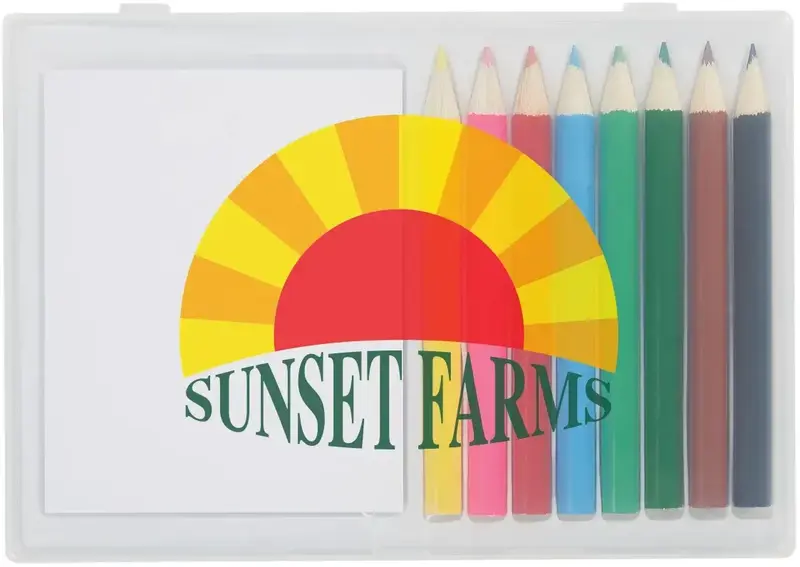
Crayons & Colored Pencils

Markers

Mechanical Pencils
Wooden Pencils

Fun Pens
Highlighters
Gel Pens
Pencil Cases & Pouches
Pencil Sharpeners
Erasers

Spiral Notebooks & Journals

Memo Pads, Notepads & Journals

Writing Pads

Clipboards

Kids Activity Pads

Painting Kits for Adults & Kids

Adult Coloring & Painting Kits
Coloring & Activity Books
Olivia Smith
Lead Content Strategist
Olivia Smith is a marketing and design expert who specializes in transforming spaces to maximize impact and functionality. With a deep understanding of promotional product trends, Olivia helps brands create stylish, space-efficient environments that attract and engage.